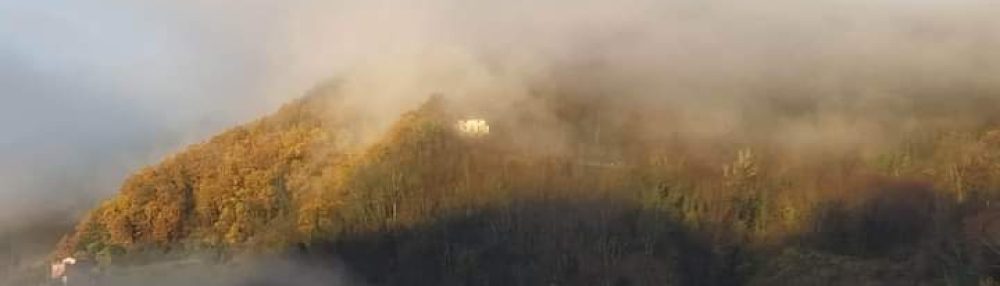
Looking for the Tuscan House of your Dreams?

Recently we visited a friend’s particularly beautiful property situated by the Apennines between Barga and Coreglia Antelminelli. It has a plot size of 80,000 square metres, five bedrooms with five bathrooms, 100 square metres of parking space and heating which ranges from wood, photovoltaic, solar and GPL

This property is in effect, three houses for the price of one. It’s in immaculate condition and it’s for sale at an asking price which wouldn’t even buy you an undistinguished semi-detached in not a very good condition in an ordinary London borough in zone 4.

It has been a hard decision for the owner to arrive at, especially since so much love and work has been expended on ‘Grifoglia’ – the name of the house suggesting ‘quadrifoglio’, or four leafed clover, which traditionally brings luck and also has an Irish connection.

The property is fully described at

http://www.italianpropertygallery.com/property/casa-grifoglia/

And one can also read trip-advisor notices about staying at Grifoglia at

https://www.tripadvisor.it/ShowUserReviews-g654703-d296303-r47626030-Grifoglia-Barga_Province_of_Lucca_Tuscany.html

There’s a nice video of Grifoglia at

https://www.youtube.com/watch?v=nBSMPDvS09g

And, of course, a facebook page at

https://www.facebook.com/grifoglia/

Do also look at the blogspot at

http://grifoglia.blogspot.com/

During our visit we were able to collect some magnificently sized quinces useful for making jelly. (Quince in Italian is ‘mela cotogna’ and the tree bearing the fruit is called ‘cotogno’.)

The house, which comes with a swimming pool, would be most suitable for agriturismo or farmhouse holidays and would be particularly attractive for those persons with a strong ecological leaning.

Mentioning quinces here is our favourite recipe for making quince crumble cake:

Ingredients

For the quince puree

  • 1kg quinces, cored and roughly chopped
  • 175g caster sugar
  • zest and juice ½ lemon
  • 1 tsp ground cinnamon
  • 2 tbsp cornflour

For the pastry

  • 140g butter, diced
  • 200g plain flour
  • 50g ground almonds
  • 75g caster sugar
  • zest 1 lemon
  • egg, plus 1 egg yolk

For the crumble topping

  • 100g plain flour
  • 75g rolled oats
  • 75g caster sugar
  • 140g butter, diced

Method

  1. To make the quince purée, put the quinces into a large pan with 350 ml water. Cover with a lid and simmer for 1 hr or until the quinces change colour and are pulpy. Remove from the heat and allow to cool slightly, then whizz with a stick blender until smooth. Pass the quince purée through a sieve into a clean pan and stir in the sugar, lemon zest and juice, and cinnamon. Cook the purée until it is reduced by one-third, then mix the cornflour with a little water and stir into the purée until it’s thick. Remove from the heat and allow to cool.
  2. Heat oven to 160C/140C fan/gas 3. To make the pastry, rub the butter into the flour and almonds. Add the sugar and zest, then the egg and the egg yolk. Bring everything together, wrap in cling film and chill for 15 mins.
  3. Roll out the pastry on a lightly floured surface to line a 22cm tart tin. Place in the tin, trim the edges of the pastry if required, and chill for 15 mins. Line the pastry with baking parchment and baking beans, then bake blind for 20 mins. Remove the beans and paper, then cook for a further 15 mins until the base is biscuity. Remove from the oven and allow to cool slightly.
  4. Increase oven to 180C/160C fan/gas 4. Meanwhile, to make the crumble topping, mix the flour, oats and sugar with a pinch of salt, then rub in the butter until you have an uneven crumbly mix.
  5. To assemble the tart, pour the quince purée into the tart shell so it comes just below the top, sprinkle over the crumble topping and cook for 25-30 mins or until the crumble is golden and the quince is bubbling around the edges. Serve warm with cream or custard if you like.

As soon as it’s out of the oven we’ll post our photo of the result here. Meanwhile, here are some pictures we took of this astoundingly charming Grifoglia:


Happy, happy shall we be!

This year, thanks to an exceptionally dry spell, la Vendemmia, or grape-picking for wine-making, has been going swimmingly well. It’s an occasion for bringing friends and family together and returning to one’s rural roots.

Fortunately, many Italians have kept ancestral homes and lands in the country as Italy, unlike the UK, with its nineteenth century industrial revolution, has only become a predominantly urban centred society since the last war. In 1945 over half the population was engaged as agricultural workers. Now it’s just over 5%.

I joined in a vendemmia last week-end in the beautiful hills of the Compitese between Lucca and Pisa. Since they are rather gentler than the slopes we have around here it meant that the vineyards were much easier to work.

dscn2552-128071945.jpg

The grapes were transported to a press which cleverly separated the grapes from their stems and leaves and formed a must which was poured into a fermenting vat.

Here it will stay for some weeks and be stirred daily to encourage the fermentation process.

We had a beautifully extended lunch break with some excellent samples from that other harvest’, the spaghetti one (!)

The end product is, of course, Bacchus’ gift to mankind.

As the final lines of Handel’s ‘Bawdy’ (to use the eighteenth century’s description) oratorio ‘Semele’ puts it neatly:

From Semele’s ashes a phoenix shall rise,
The joy of this earth, and delight of the skies:
A God he shall prove
More mighty than Love,
And sighing and sorrow for ever prevent.

Happy, happy shall we be,
Free from care, from sorrow free.
Guiltless pleasures we’ll enjoy,
Virtuous love will never cloy;
All that’s good and just we’ll prove,
And Bacchus crown the joys of love.


It was as an eight-year old that I discovered the obvious difference between Italy and the United Kingdom. One was a wine country and the other wasn’t (although it’s fair to say it’s making rapid progress to catch up in that direction, thanks to climate change and cultural tastes).

dscn2541981510449.jpg


Taking the Waters

Bagni di Lucca, as its name implies, is famous for its waters. In the sixteenth century Montaigne, after vainly searching throughout Europe for a beverage that could cure his ills, found it at Bagni di Lucca which he declared were the most efficacious waters he’d ever drunk. Queen Victoria had the waters imported to Buckingham palace as she found they solved many of her gynaecological problems.

I wonder how many residents and visitors to Bagni di Lucca today regularly take its waters. There’s no way one can buy a bottle of the tincture since it’s never been commercialised like the stuff from many other Italian watering holes such as San Pellegrino, for example.

Is it because there’s something dubious about Bagni’s waters’ mineral contents I wonder? I’m sure that Bagni di Lucca could make a mint out of selling its most famous natural product and help subsidise council services, improve the lamentable state of many of its roads and even use it as a mixer in its own brand of cocktails.

La Cova (meaning ‘the nest’) is the usual place where people stop and drink the waters which are here very hot testifying to their provenance from deep within the earth’s core (and not necessarily because of anything volcanic as a geologist friend told me).

Image00047


The heat of the waters may put some people off from drinking them but it’s been very useful to me when passing that part of Bagni di Lucca in winter on a scooter when the cold can really freeze one’s hands in spite of the thick gloves one is wearing.

The waters can also put into the fridge and their efficacy is in no way diminished if drunk cold.

What is the waters’ efficacy then? A plaque installed in the foyer of the Bagni alla Villa and reproduced at the back of the pond in front of the Circolo dei Forestieri explains all:

Image00049


ACRI DE VILLA BALNEI HEC PRECIPUE SUNT VIRTUTES. CONFERT CUNCTIS CAPITIS MEMBRIS.CURAT OMNES STOMACI MORBOS. APETITUM EXCITAT. DIGESTIONEM PROCURAT. VOMITUM RESTRINGIT. SANAT CUNCTA EPATIS VITIA. EPATIS ET VENARUM OPILATIONEM APERIT. COLOREM OPTIMUM FACIT. CONFERT PASSIONIBUS SPLENIS. SANAT ULCERA PULMONIS. MUNDAT RENES. LAPIDEM MINUIT. ARENULAS PROHIBET. MACROS IMPINGUAT. LEPRAM CURAT NON CONFIRMATAM. BIBITA ANTIQUAS FEBRES EXPELLIT. ET MATRICIS ETIAM ANTERIUS CHRISTERIZATA. TRIGINTA BALNEATUR DIEBUS OCTO VEL DECEM BIBITUR PURGATIONE PREMISSA. A CONTRARIIS CAVEATUR. TOTO CORPORE ULCERA SANAT CUR. DO. BER. COMM. VI VI MCCCCLXXI. KL. MAII

The almost dog Latin is quite easy to understand but here is a very rough translation – or least what I can understand of it, not having done any Latin since school.

These are the virtues of the waters: They cure all illnesses of the stomach. They excite the appetite. They help the digestion. They restrict vomiting. They heal all stages of complaints of the liver and veins. They give a good colour to one’s complexion. They contribute to the passions. They heal an enlarged spleen. They cure ulcers and lungs. They take away kidney stones. Fevers are alleviated. They heal ulcers throughout one’s body.

1471

I would be most interested in knowing of visitors or local people who regularly take the waters and whether their life and health has improved as a result. I’m going to be testing the waters myself with a glass a day for the next month and will let you know of any changes they may wreak upon my own well-being…


A Pleasant Circular Tour from Longoio

Up to 1965 there were still some working mills in the Fegana valley. Now they have all been converted into private residences or holiday accommodation. One of these mills was restored in 1990 and, until relatively recently, provided not so much B n B but home hospitality as its extrovert host liked to term it.

Here are some views around the mill. In particular note the bridge which has had to be rebuilt no less than seven times because of the river flood waters which have swept previous versions away.

A fine round trip to do either on two wheels or four from Longoio is to go down to Bagni di Lucca and go towards Calavorno but turn right at the big roundabout and head up the very attractive Fegana valley.

There are two main villages to discover: Tereglio and Vitiana. Tereglio is a particularly fine ‘borgo’ stretched along a ridge, possessing a very beautiful church and holding an annual violoncello master class under Sebastian Comberti and Raphael Wallfisch, all described in my post at https://longoio.wordpress.com/2013/09/09/the-violoncelli-of-tereglio/

The road one is travelling on forms part of the old grand ducal road, described in another of my posts at https://longoio2.wordpress.com/2015/09/18/foce-a-giovo/

However, for the circular tour one should turn right at the sign for the Orrido di Botri canyon and Montefegatesi. Here it’s possible to stop at the Nido dell ’Aquila restaurant (see http://www.ilnidodell-aquila.com/cms/ ).

From the Nido the road proceeds uphill towards Montefegatesi through a magical chestnut forest. Be warned, however, that the road is from this point mostly unmetalled and can be a bit skiddy in wet weather unless one has appropriate tyres.

From Montefegatesi it’s an easy ride down into Val di Lima to Longoio.

The possibilities of this route are endless. Here are some of them:

  1. A visit to Tereglio
  2. An exploration of the orrido di Botri canyon.
  3. A visit to Montefegatesi
  4. A sortie up to Albereta and a climb to the top of the Prato Fiorito which, at this time of year is full of an intoxicating species of wild daffodils. (See my post at https://longoio2.wordpress.com/2017/05/18/elysium-on-earth/ for more of this amazing sight.
  5. A walk through the chestnut forest.
  6. A continuation up the grand ducal road to the Foce a Giovo pass and a ramble on the grand Apennine ridgeway path number 00.

Why go on a world tour when a whole miniature world is displayed for you here in the space of just one day?


Browning’s Chapel at Refubbri

Close to home, on the way up to Gombereto, there is a ruined chapel at Refubbri (the name of the nearby stream). It’s the Oratory of the Visitation of The Virgin Mary to Saint Elizabeth, and is mentioned in a famous poem by Robert Browning (‘By the Fireside”: for full text see

https://www.poemhunter.com/poem/by-the-fire-side/

Sadly, the chapel is fast succumbing to creepers and (now that its roof has largely gone) to the elements. (For more information and photographs on this sad situation do visit my special web site at http://refubbri.tripod.com/engstart.htm).

The chapel is one of Gombereto’s three little churches (or chiesine) in its religious purlieus: San Giuseppe, standing outside the southern entrance to the village, Santa Maria dei Dolori, at the northern end, and Refubbri’s chiesina Della Visitazione

As I returned from my shopping yesterday I stopped to look at this melancholic chapel. Recently the woodland area around it has been cleared and the chapel is clearly visible once more. It was almost totally covered by foliage. Although the roof has long since collapsed the inner arch supporting it was still intact, for how long goodness knows. The little bridge connecting it to the road was still seemingly solid but, again, I wondered for how long – I wasn’t quite sure if the bridge was safe to cross.

And yonder, at foot of the fronting ridge
That takes the turn to a range beyond,
Is the chapel reached by the one-arched bridge
Where the water is stopped in a stagnant pond
Danced over by the midge.

(From ‘By the Fireside’, Robert Browning)

Image00020

I explored the area round it and realised that the chapel had a semi-circular apse, perhaps pointing to more ancient origins as this feature is associated with Romanesque churches. Sandra also noted this date stone which has been uncovered beneath the ivy. Sixteen hundred, certainly.

Image00047

The corner quoins are particularly well finished.

And the path leading up from the chapel certainly reflects this stanza in Browning’s poem with its precipitous foliage-hidden drop.

The path leads to a crag’s sheer edge with them;
Youth, flowery all the way, there stops—
Not they; age threatens and they contemn,
Till they reach the gulf wherein youth drops,
One inch from life’s safe hem!

There was talk at one time of restoring the chapel at Refubbri and use it for non RC Christian celebrations (especially weddings) but, to date, nothing has come of this. While there are many worthy causes to donate money to and many more distinguished buildings needing help I remain dejected at the thought that, for the thirteen-plus years that I have lived here, the little woodland chapel of Refubbri has no-one to love it and help it live again in some form whether that be even a hiker’s shelter from the rain.


Cat Meets Rat

Is it a very large mouse or a small rat? We did notice some scuffling going on in our back passage where we stored food for our two Muscovy ducks, Flip and Flop. We then saw who was doing the scuffling. Our cats were not much use at dealing with the problem. They are good at mice but this one seemed a real mouthful for them.

Image00064


We didn’t want the usual mousetrap method which does not necessarily kill the offender but leaves them with serious injuries.

Poison was no use as the cats and duck might have eaten it. Sticky paper was too ghastly to ponder on. We therefore settled for a ‘humane’ rat-trap which caught the culprit.

Cheeky, although sometimes a very aggressive cat, was not amused by our capture.

The next thing to do was to dispatch the felon to the other world before we could catch the Black Death. We could not do it ourselves so we sought help from a local who was good at dispatching larger rodents like rabbits. The only difference here was that he couldn’t make a nice pie with it. Or did he and fed it to his worst enemy I wonder?

The decisions one has to reach in country life among the Italian Apennines!

PS Ratty in that immortal book ‘The Wind in the Willows’ was a water vole.

Our one was definitely not!

Bagni di Lucca’s Elysian Fields

Prato Fiorito is a miraculously tree-less mountain just behind me.  It was beloved of Shelley who, while a resident of Bagni di Lucca, visited it often and recollects it in that ecstatic love poem Epipsychidion.


I wanted to be at the Prato yesterday and, despite the uncertain weather, made my way to the foce Del Lago (where in heavy rain a lake forms.) I reached the crucifix which marks the start of the path to the top of the flowering meadow…

Image00050

Above, clouds were forming and reforming, sometimes threatening, sometimes shimmering. Percy Bysshe would have loved it – he loved clouds!


All around me was a display of flowers guaranteed to put even the Chelsea Flower show to shame:


Shelley writes:

the odours deep
Of flowers, which, like lips murmuring in their sleep
Of the sweet kisses which had lulled them there,
Breathed but of her to the enamoured air;
And from the breezes whether low or loud,
And from the rain of every passing cloud,
And from the singing of the summer-birds,
And from all sounds, all silence.

…………

And all the place is peopled with sweet airs;
The light clear element which the hill wears
Is heavy with the scent of lemon-flowers,
Which floats like mist laden with unseen showers,
And falls upon the eyelids like faint sleep;
And from the moss violets and jonquils peep
And dart their arrowy odour through the brain
Till you might faint with that delicious pain.

It is a hill ‘twixt Heaven, Air, Earth and Sea,
Cradled and hung in clear tranquillity;

The jonquils, even in this wretched start to the summer, made my heart leap. They are brave little flowers and their presence all around filled me with an intense warmth and joy. They seemed to breathe true love and their perfume was quite intoxicating! I was so glad that Sandra was able to be with me and see them on the Prato Fiorito for the very first time.

There were several other flower species besides the jonquils:


I always look forwards to seeing the jonquils – also known as the poet’s narcissus in Italy – every year and, when my time comes, I would like my ashes to be scattered on this mountain sacred to poets and to all lovers of nature (if Italian bureaucracy allows it, that is!)


Toll-Free Super-road to Florence from Lucca Plus a Great Eating Place

Clearly the quickest way to motor from Bagni di Lucca to Florence is to drive to Marlia and then catch the autostrada at Altopascio. However, there is a much more interesting way to get to Florence, free of autostrada tolls, with a fine place to eat en-route and with a journey time not much longer.

This route is to reach Altopascio but not to take the autostrada from thence. Instead, follow the signs to Empoli and when nearing Empoli watch out for the FI-PI-LI superstrada signs. The sign clearly alludes to Firenze, Pisa and Livorno and when you get onto the superstrada you just follow the direction for Florence and exit practically at the entrance to the wonderful Viale dei Colli. Within minutes you are admiring this classic view of the Lily city.

Image00029

From Altopascio the route crosses some of the most beautiful parts of the Val D’Arno. The first section takes one through the Cerbaie which are quite similar to the heathlands of the North Downs near Guildford in the UK. In fact, both are geologically of the same structure. Le Cerbaie is, however, the morainic uplands deposited at the end of the ice-age glaciers which once covered Tuscany and formed the Arno valley. You’ll know when you enter the Cerbaie since beautiful woodland spreads along much of it. Here is the protected natural area of Montefalcone which rises west of the Fucecchio Lake (great for bird-watching) and reaches up to 500 feet in height.

At some stage in the journey there’s a sign to Galleno. Take it to reach a typical Tuscan trattoria since the main road by-passes Galleno.

In Galleno, noted more for its hunters than for any historical masterpieces, there’s the ‘Gola di Bacco’, a trattoria with a great atmosphere.

What’s on offer? First the host Fernando and his wife, whose welcoming is truly heart-warming.

Image00147

Then, but only if you understand Italian since there’s no written menu and certainly no prices mentioned, Fernando will offer you a list of items including ‘selvaggina’, which is locally hunted wild-life.

We opted for maltagliate (in our area known as maccheroni) with sauces made of venison and wild boar.

Sandra’s mum took the wild mushroom soup:

Image00142

This was followed by a variety of meats including bistecca (beef steak) and pheasant.

At this stage we were more than replete so we asked for our doggy bags which lasted us well into the next day when we returned home.

While one misses the great artistic cities of Pistoia and Prato which one can get to on the autostrada there are still plenty of amazing sights (some of which we‘ve described in previous posts) including Empoli, San Miniato del Tedesco (birthplace of the classic filmmakers Taviani brothers, one of whom, Vittorio, has sadly died recently), Vinci (birthplace of Leonardo)  and the great Caruso’s villa.

You can follow these places up in my posts at:

https://longoio2.wordpress.com/2017/04/02/make-it-an-interesting-journey-from-bdl-to-florence/

https://longoio2.wordpress.com/2014/10/09/the-biggest-wetland-in-italy/

https://longoio2.wordpress.com/2017/03/30/the-greatest-of-all-singers-his-villa/

One Reason not to Cut the Grass

April showers in May and temperatures changing by over ten degrees from one morning to the next. The seasons seem to be all over the place in our part of the world and it’s not difficult to see why. At least, there’s cold comfort in knowing that if the North and South Poles are beginning a melt-down we’ll be, at our height of around 1,500 feet, well above the threatened flood levels (if we’re still around that is).

We went down to one of our fields in the company of our calico cat, Carlotta, yesterday afternoon between one thunderclap and the other, one brisk shower after another. The object of the exercise was to cut the grass but (apart from the lawnmower refusing to start) I didn’t cut it.

The reason is easy to see. The meadows were a rainbow of colours filled with wild-flowers that in England would be National Trust protected. So I left well-alone and gazed in admiration at nature’s gorgeous spectacle.


Our Lucca Marathon for 2018

The ‘Marcia delle Ville’ is our nearest equivalent to the London Marathon. It’s a marcia podistica, which means that you can either walk or run or do a little of both. (‘Podismo’ means the discipline of race walking and running). The only differences are that there was a competitive and non-competitive section (this meant that anyone could join in from the ages of 8 to over 80), that there was a choice of routes depending upon one’s fitness and inclination and that the idyllic rural landscape we were going through was rather different from the built-up landscape of London.

Image00002

(Possible routes: we opted for the 16 – so-called! – kilometre route)

In fact, the Marcia delle Ville is older than the London Marathon, having started in 1977, while the first London Marathon took place in 1981. It’s organised by the comune di Marlia together with the local club podistico and has grown from strength to strength over the years. It’s truly one of Italy’s largest and most popular family sporting events.

Image00001

‘La Marcia delle Ville’ is a lovely occasion to immerse oneself in a completely Italian social atmosphere. My friend from the same school of Dulwich college first invited me for the Marcia, having been enthralled by it on a previous occasion. He said that we would probably be the only brits taking part on it and, indeed, we only heard Italian spoken by those taking part although this year we heard a couple of English voices. Was it any of you from BDL?

La Marcia delle Ville is also a wonderful chance to walk through the exquisite gardens of villas of the Luccan nobility which are normally closed to the public, to wander across succulent vineyards and silver olive groves, to pass by isolated Romanesque chapels, to gaze on colourful wild flowers, to witness some of the most stratospheric views of Lucca, to enjoy the social fun of a largely non-competitive event and to witness Italian gregariousness at its very best.

(Romanesque church and a time warp with concert at the grand Villa Guinigi)

I did this most convivial and spectacular walk last time in 2016. My wife spotted the marathon for this year in a leaflet (she is brilliant at finding out about things) and, at first, I was doubtful because of our lack of fitness that we would be able to achieve more than the ‘baby walk’. In fact, it turned out that we managed the sixteen kilometre one (which I’m sure measured rather more than sixteen…..) and were so glad we did it because it assured us that our degree of fitness was still up to it! Apart from the kilometres we both managed to lose some kilos as well which was truly welcome!

There is, of course, the final point that la Marcia truly gives one even more yearning to do a decent, daily walk of not less than two hours. Most of people’s health troubles arise from lack of proper exercise and there’s nothing better than walking, especially if the countryside is as glorious as the Luccan hills.

The weather treated us well. Unlike 2016, when the participants were threatened by storm clouds which eventually resolved themselves in a hail shower, this year we had comfortably overcast skies, mostly dried out paths and it was only towards our triumphal finish that the temperature rose to 30 degrees centigrade.

Our itinerary took us through gravelled paths, some tarmac, some very stony mule-tracks, slippery grass stretches and, of course, the lovely paths of the Luccan villa gardens.

There were free refreshment points (water, panunto bread soaked in olive oil, lemon tea, loads of nutella) and even some first aid which was useful for me as an unknown insect bite had turned my left arm red.

I was particularly excited to see the villa called La Specola, which is an observatory  built for the rulers of Lucca and designed by that great architect Nottolini. It’s such an attractive building and saved in the 1980’s from total dereliction by a baron with some cash to spend…. I wish!

(Framed! But the wine butt had already been depleted)

We returned to the starting point at Marlia’s farmers’ market where we’d got our participant numbers and walked triumphantly through the finishing line. We then collected our complementary gifts. Since the Marcia delle Ville is sponsored by a paper mill producing toilet paper, our gift bag included four very fine rolls of … toilet paper. (What else? – actually when we unwrapped it we found it was equally useful kitchen roll).

We went to be fed and watered with everything from water to wine to bruschetta to pasta. The scene was most breezy and it was lovely to see thousands of Italians of all ages having a really good time. There’s a special word to describe country walks and country enjoyments in Italian. It’s ‘scampagnata’ which means a day’s jaunt into the countryside.

Everyone had a great ‘scampagnata’ it seems! We even met the lady Doctor-in-charge of Bagni di Lucca terme who’d entered the marathon for the first time.

It’s wonderful how on a local level there’s nothing to beat an event organised by Italians. Why the government can’t learn from its people how to really do things well is something I shall never understand (there still isn’t a government in Italy yet….probably best that way, some people say).

For me the best thing was that both of us (aged seventy according to the calendar it seems, to our shock horror) were together to achieve this best of Lucca social sportive events. Thanks Sandra for being my wife and being with me and for being a truly sporty girl!


PS Noi TV  chronicled our marathon here: