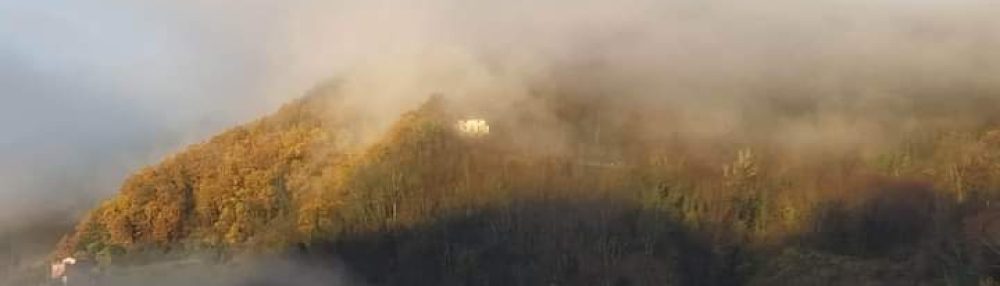
The sweet or Spanish chestnut tree (Castanea Sativa) was introduced into Europe from Sardis in Turkey. Sardis was one of the richest cities of the ancient world and is famed for having invented the concept of currency. We visited the ruins of the ancient city in 1991, a journey which inspired this sonnet.
SARDIS
Amid scorched stones, the sordid root sprang here
in heaps of monoliths and pediments,
and drowned a childlike earth in blooded fear,
emasculated priests and bare laments.
Where is your gold and silver now, great King?
That burnished stroke has crumbled into dust
the temple votaries no longer sing
and all your treasury is turned to rust.
White columns’ tempest-shaken marble staves
against a broken sky, a raven screech
across the ether of uncoded waves:
this is the city wrecked upon a beach.
And yet what brilliance shines upon these stones
above dusk graves, beyond the vanished bones.


Sometimes disparagingly called ‘the poor person’s flour’, like the potato in Ireland and oats in Scotland, the chestnut once supported half the population in the hill villages around Lucca. Indeed it has been a staple food in southern Europe, Turkey, and southwestern and eastern Asia for millennia, replacing cereal crops where these were unable to grow well in mountainous Mediterranean areas.
Nowhere is this more apparent than in the Serchio and Lima valleys. Although unfortunately vast forests of chestnut trees have been largely abandoned since the last war as people have moved to the urban centres in increasing numbers and have replaced chestnut for cereal flour there are still areas with the most wonderful specimens of this noble tree, some of which are hundreds of years old (the Italian word for this is ‘secolare’).


Going beyond Albereta by the Prato Fiorito near Bagni di Lucca and descending into the Scesta valley I came across these stupendous trees with girths exceeding several yards. Some of them had hollowed out trunks into which one could easily enter as you can see!

I count the Apennine chestnut forest as one of the most beautiful sights to be found on Earth. There is much emphasis and effort now in saving Earth’s rare fauna. I believe that the same emphasis should be given to these stupendous examples of our planet’s flora which should be properly protected against both encroaching disease and the vandal’s axe; they are in all senses of the word irreplaceable.
To the early Christians, chestnuts symbolized chastity. The tree enters into the religious celebrations of several European countries. For example, in France, the marron glacé, a candied chestnut is served at Christmas and New Year’s time. In Tuscany ‘marroni canditi’ are traditionally eaten on Saint Simon’s Day which is the 4th of July.
There is a fine museum at Colognora which illustrates the social and economic history of the sweet chestnut tree which I’ve written about at:
https://longoio.wordpress.com/2013/10/11/old-chestnuts/
There’s also a post I’ve written regarding specialties made from chestnut flour and the local festivals associated with it at:
https://longoio3.com/2018/09/21/nuts-about-chestnuts/
There’s more about taking walks in chestnut forests in my post at
https://longoio2.wordpress.com/2016/04/20/a-walk-up-the-scesta-valley/
Sadly what was brought to the UK was not the sweet chestnut but the other variety horse chestnut which nuts are used for conker tournaments. The same happened with the Mulberry Tree variety the red fruit was imported rather than the white which was clearly the correct type to feed the hungry silkworms with their leaves. There is still living the Charlton House Mulberry Tree circa 1600 imported by King James.