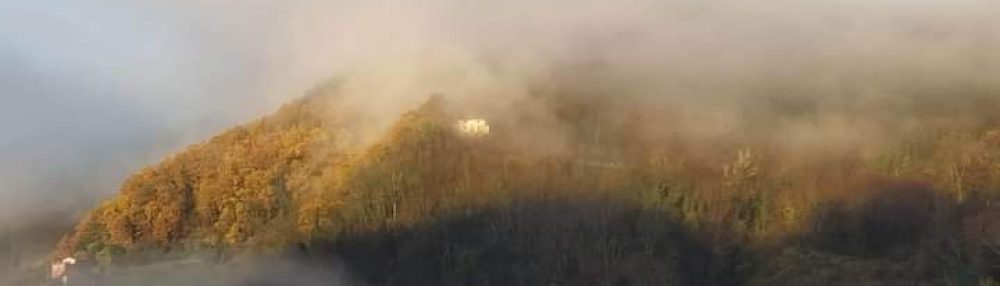
I recently received a whatsapp message from my friend Giovanni Ranieri Fascetti, well regarded for his books on local history, his guardianship of the fortress of Vicopisano and his full moon conducted tours to the temple of Minerva. Giovanni and his partner have a property at Montecatini Val di Cecina, not to be confused with Montecatini Terme, and have become much involved in the history of this picturesque town.
The message attached a photo of the memorial plaque to Francesco Sloane who was instrumental in contributing the major part of funds required for the marble facade of Florence’s Santa Croce Church in the nineteenth century.

Sloane became rich by managing the Caporciano copper mine at Montecatini Val di Cecina for its Russian owner Count Dmitri Boutourline. Born as Francis Joseph Sloane to an expat Scottish family he bought the Medici Villa Careggi, part of the hospital where I had my heart operation last year, and got it restored by an architect called Niccolò Matas, the designer of the Santa Croce marble facade.

Another Russian family, the Demidoffs, employed the same architect to build for them the massive palazzo San Donato (not to be confused with the Villa Demidoff at Pratolino). The palazzo, badly damaged during World War Two and for long neglected, was restored in 2018 to its former glory by Florence City council.

Matas also restored Napoleons villa in Elba used by the Demidoffs as their holiday retreat. Matas designed many other buildings including the Porte Sante cemetery surrounding San Miniato sul Monte and it is here where, among other illustrious Florentines including Franco Zeffirelli, Francis Sloane lies buried. Matas himself is in Santa Croce. Bagni di Lucca has its Demidoff connection with the hospital which the great philanthropist had built and which is now an holistic well-being centre.
There is an interesting relationship between the Demidoff chapel at Bagni and the Demidoff chapel in Florence: with their round domed shape and columned porticoes they are both inspired by Rome's Pantheon.


I’m glad that my friend sent me that note about Sloane. It goes to demonstrate how interconnected people could be in the 19th century: Francis Sloane, the principal contributor to Santa Croce`s facade; Matas its designer and builder of the Demidoff palace and the strong connection between the great Russian family and Bagni di Lucca. As precursors of modern-day philanthropic magnates like Bill Gates and Elon Musk they show how they managed to give something back to the communities which had made them so rich in the first place. As Francis Sloane so aptly put it:
Thank you so very much for a most fascinating blog. It is great as always to learn about the connections of these great creatives. I adore the Demidoff Temple and we have been privileged to have visited this fine mini Pantheon which is nestled in the leafy area high rise bank by the Fegana river with the connecting bridge leading to the Holistic structure opposite where one can attend very many diverse courses to improve ones physical and psychological health as well as just to relax and unwind there with and amongst like-minded people. One should also visit the Villa Demidoff at Pratolino which is in acres of parkland and you can admire the Gianbologna il Gigante colossal statue named the Colossus of the Apennines with its lilley pond. Here there are acres of parkland to ramble and very many diverse trees local species as well as English Oak and even conker trees!
Thank you for your kind comment Alexandra. You may be interested in the following I received from the last princess Demidoff by medium transmission.
https://longoio3.wordpress.com/2019/09/09/the-last-princess-demidoff/