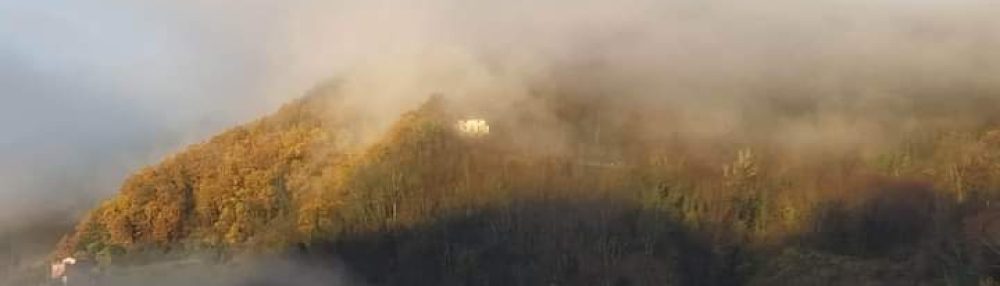
Fiesole is well known for its classic grandstand view of Florence. It is also visited for its ancient ruins which date back to the Etruscan era and its picturesque Franciscan monastery. For us this beautiful and tranquil place has another location whose special significance will become evident at the end of this post.
Fiesole cemetery, situated by a hillside between the town’s cathedral and the monastery, was founded in 1792. It remained relatively bare of monuments until the late nineteenth century when Michelangelo Maiorfi expanded its area and built a loggia designed to accommodate loculae and private chapels.

One of the odd things about this loggia is the sudden abrupt change in the design of the arches at two points. I don’t know this should be so; perhaps the architect couldn’t make his minds up. Which arch design do you prefer?
Between 1913 and 1915 five municipal chapels were also built at the base of the loggia. These are named after saints linked to Fiesole and its territory: Antonino Pierozzi, Bernardino da Siena, Alessandro di Fiesole, Andrea Corsini and Saint Romulus. They were all decorated by the Chini pottery and ceramics manufacturers. Galileo Chini was the firm’s leading light and I have discussed this major art nouveau creator in my post at https://longoio2.wordpress.com/2016/03/21/tiger-hunting-in-viareggios-most-exquisite-art-nouveau-villa/
Galileo Chini himself lavishly decorated the Fiocchi chapel, with glazed ceramic inserts which suggest a Viennese secessionist style.


Between 1930 and 1947, the entrance was completed with the addition of a bay to the loggia intended to contain the fallen of the First World War. Finally, in the 1950s, the last extension was completed with a modern building, loculae and ossuaries.


There are some notable citizens buried In the cemetery, not only Italian but also from the large community of foreigners residing in the surrounding area. These include the chapels dedicated to the Spence and Dupré families.
The first contains the memorial to Luisa Teresa Renard, the wife of the painter William Blundel Spence who lived at the Villa Medici. Her sensitively modelled effigy is among the most significant works of the sculptor Odoardo Fantacchiotti. The two little children are particularly charming.


The second chapel contains the tomb of the sculptor Giovanni Dupré and his family, including his daughter Amali who was also a sculptor. On Giovanni’s grave is a copy of a ‘Pieta’ (term used to describe the figure of the dead Christ) which he carved for Siena cemetery while Amalia carved the monument for her sister Luisina, who died at a young age. There are also other sculptures and a painting of the resurrected Christ by Antonio Ciseri.

However, despite the fine art displayed by these memorials we are drawn towards a more intimate plaque placed on the inner face of the entrance wall and shaded by a cypress.

It is the last resting place of my wife’s parents.