I am so troubled by what is happening to Afghanistan during these days that memories of this amazing country have returned to haunt me. I have only a few photographs I took all those years ago to remind me of what I saw as I cast my mind’s eye back to Sergeant Pepper’s Year…..
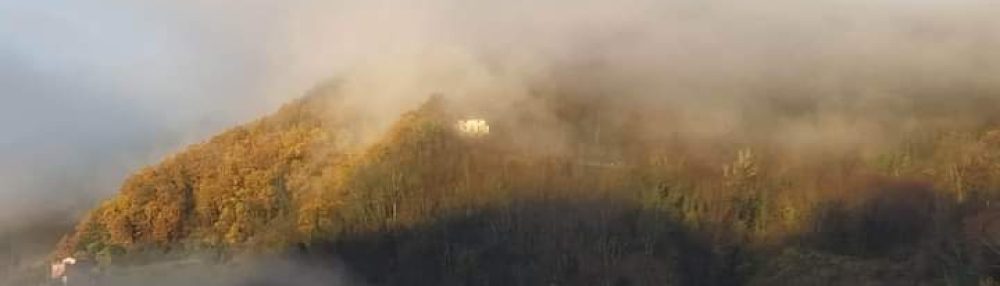
The journey from Teheran to the Caspian sea across the Elburz mountains was on a Land Rover driven by an English guy who was wearing a thick woollen polo neck sweater despite the above forty degree temperatures we were experiencing. For days we had been travelling through the largely arid and dusty Iranian landscape broken only by patches of green encircling settlements. However, within a short time we were exchanging the grey tones for increasingly green ones until it seemed that just by driving past a couple of bends we were immersed into lush pine forests and emerald fields. It was a truly refreshing experience to be plunged suddenly into this verdant foliage after the austere landscapes of central Iran.
And then there it was: the Caspian, the world’s largest inland sea shimmering with silvery hues and spreading vastly towards northern horizons where it embraced the Russian Steppes.
We didn’t stay long in Mashhad; perhaps Iran’s most sacred city and the country’s centre of Islamic learning with clerics to this day dogmatising its religious policy. We’d already made a somewhat unwise decision in the city of Qom when we chose to hide ourselves under cloaks and enter the Fatima Masoumeh Shrine dedicated to the sister of the eight Imam Reza , daughter of the seventh Imam Musa al-Kadhim and regarded as a saint by Shia Muslims. Qom is considered Iran’s second most holy city but we could only get so far in admiring its shrine’s superb ceramic work as our disguises were soon discovered and we were advised for our own safety to remove ourselves from this sacred area.
Disappointed we did, however, comfort ourselves by buying Qom’s famous sweet ‘Sohan’, a sort of hard brittle biscuit made from sprouted wheat , flour, egg yolks, rose water, sugar, butter, saffron, cardamom, almond and pistachio. There’s a good recipe for it at http://www.ahueats.com/2016/06/sohan-e-qom-persian-saffron-brittle.html but I’m not going to try it out unless I want cracked teeth or a bulging waistline!
After Mashhad we headed for Afghanistan and Herat. Leaving the leafy Caspian coast we found ourselves once more in arid surroundings tinged with tawny desert sands.
Crossing the border we spent the night in this (or then?) beautiful city. Next morning we were proudly shown around the stunning great Friday mosque by a religious aide and were pleasantly surprised by the friendliness shown to us non-Muslim visitors. It made a change from the rather hostile treatment towards us in Qom. (The majority of Afghanis are Sunni) When the area was under the Taliban between 1998 and 2001 and, sadly, again now, Herat’s mosque and all its religious buildings have been closed to non-Muslims.

Herat: Great Mosque
The long journey to Kabul took us across interminable desert landscapes with few signs of life in it. The first part of the concrete road had been built by the Russians and led to Kandahar.

At one particularly desolate point we came across a hotel but found it was unfinished and had been so for several years.

Opposite the hotel were the ruins of one of Afghanistan’s many abandoned ancient cities:


The second part of the highway, built by the Americans, led to our destination, Kabul. Even then we could see that, as part of a kiplingesque ‘great game’, the two main players which would be involved in the devastation of a country with such a prodigious past and such proud traditions were lining up their forces and influence in the forlorn hope that they would drag Afghanistan into the twentieth (as it was then) century rather than push it back to the dark ages, as it has done now.
Kabul, the country’s capital, is situated on a plateau at the height of almost six thousand feet. Surrounded by snow-capped mountains it proved to be a most equitable city climatically. We found two good places to eat. One restaurant was attached to the hostel dormitory where we slept and served an excellent rice dish cooked with carrots and raisins. We had discovered Kabul pilao, Afghanistan’s national dish!
I have since managed to cook this delicious plate myself and this is the recipe I use for serving around four persons. Vegetarians may, of course, omit the meat ingredient.
Ingredients
340g basmati rice
470 ml freshly boiled water
2 lamb shanks or lamb shoulder or leg (850g)
3 carrots
50g raisins
1 onion
4 cloves garlic
3 tbsp sesame oil
3 tbsp vegetable oil
1 1/2 tbsp butter
1 tbsp tomato paste
3 tsp cumin powder
3 tsp sugar
1 tsp cardamom powder
1 tsp turmeric
1/2 tsp black pepper
1 tbsp + 1/2 tsp salt
1/8tsp saffron
1 tbsp slivered pistachios as garnish
Method:
Preparing the ingredients
Dissolve the saffron in a few tbsp of freshly boiled water.
Peel the onion, cut it in half and slice it. Peel the garlic cloves and slice them as well.
Peel and chop the carrots and chop them in slivers (julienne size)
Rinse the raisins and set them aside to dry.
Cooking the meat
Heat 3 tbsp sesame oil in a frying pan and fry the lamb shanks for about 10 minutes until golden brown from all sides.
Remove the meat from the pan and gently fry the onions in the same oil. After 5 minutes add the garlic and fry both together for another 5 min.
Then add the tomato paste to the onions and season with turmeric, black pepper, 1 tsp of the cumin and salt. Combine everything well and let the tomato paste fry gently for 5 minutes, then add 470ml freshly boiled water.
Stir the mixture well and return the meat to the pan. Put on the lid and let it simmer over low heat for 1h 45min.
After about one hour cooking time add half of the saffron water.
Frying the carrots
Melt the butter in a small pan. Add the carrots and fry them over low heat for about 5 minutes. Then sprinkle the sugar over them and put on the lid. Let them caramelise for about 10 minutes.
Remove the carrots from the pan. Gently fry the raisins in the same pan for a few minutes, stirring constantly. Set both aside for later.
Parboiling the rice
Start preparing the rice 15 minutes toward the end of the cooking time for the meat.
Wash the rice.
Bring 1.2l of water to boil in a large pan. Add 1 tbsp of salt and let it dissolve.
Once the water is boiling add the rice to it and briefly stir to make sure it does not stick together.
Drain the rice in a colander and rinse it thoroughly with cold water.
Finishing the sauce
Once the meat is cooked, remove it from the pan. Sieve the sauce through a strainer to filter out the onion and garlic.
Layer the rice
Set some of the carrots and raisins aside for later as garnish. Add 3 tbsp of vegetable oil and 2 tbsp of hot water to the pan you want to finish cooking your rice .
Now add a little rice to the pan, enough to cover the bottom of it. Then add a little sauce, a little meat, some carrots and raisins and sprinkle with some of the remaining cumin and cardamom powder. Repeat these steps until all the ingredients are used up. Pour the remaining saffron water over the rice at the end.
Poke 3 holes through the rice with the back of a wooden spoon. Heat the pan over medium temperature. Line the lid with a clean kitchen towel. As soon as steam rises from the rice, put the lid on.
Reduce the temperature to low and let the Kabuli Pulao steam for 45 mins.
Serving
Serve your Kabuli Pulao on a large plate. Garnish with the carrots and raisins, you set aside earlier and sprinkle with slivered pistachios. Eat and enjoy!

This is what we had for lunch most days we were in Kabul. For a change we would indulge in the western-style intercontinental hotel facing a square with a fountain in its centre. There we would even find burgers and chips!

We were astounded by the ethnic variety of Kabul’s inhabitants. Skin colours ranged from almost Nordic fairness (descendants of Alexander the great?) to darker tints. Hair hues too ranged from black to red to blonde. What was particularly noticeable was the range of clothes worn. At one end were those women enclosed within the walking tents which are basically what burkhas are, their eyes not even visible behind its woven grill. At the other end were local university girls in miniskirts and bare arms. The inhabitants all seemed to mix well with each other and they did not find it in any way surprising. I have rarely seen more stupendous women than those I met in Afghanistan (and indeed out of Afghanistan). They seem to have preserved the most classical features and many of them are stunningly beautiful. God knows what will happen to women (or indeed what is already happening to them now).
I did not recall visiting any historic sites in Kabul and regret not having even looked into the National Museum. I just wonder what has happened to it since. The most memorable trip, however, was up the mountain road leading to the Salang pass.


A little group of us had managed to get a lift on a minibus and we stopped by a fast-flowing, rocky river and enjoyed a very cooling dip.

Did we make it to the colossal Buddhist statues at Bamiyan? It’s so tragic what happened to them since our stay. I can’t say anything more about it…it breaks my heart.
Shortly after this we caught a bus that took us to Pakistan’s Peshawar and carried on not so much up but down the Khyber – the film with the peerless Kenneth Williams came the year following our journey. What magnificent panoramas we encountered. What terrifying ravines. What snowy mountain tops and crystal-clear lakes. What an epic country! And we had not even touched the central core of the country the Hindu Kush – not even done any bit of that short walk described by the inimitable travel writer Eric Newby.

We re-entered Afghanistan on our way back to the western world. It was a quick dash in-and-out except for one incident when the expeditionary truck we’d cadged a lift off overturned in a deep rut caused by an earthquake and I found myself suffocating under piles of tents and climbing equipment. The expedition group had not been too successful either. They’d lost one of their members in an avalanche near K2 in the Pakistan Himalayas.

Could we ever return to Afghanistan within our lifetime? I very much doubt it. If the US army is bringing in soldiers to help thousands evacuate an impending national collapse such a thought veers towards impossibility. Was the Taliban already present when we visited Afghanistan? No. But the seeds must have been sown and waiting, like the sudden rainfall in a desert, to sprout but producing sadly no flowers but death itself.
I am reminded of what happened to South Vietnam in 1975. There also a massive evacuation occurred of western personnel. Look at the reunified Vietnam of today however. I visited this beautiful country in 2014 (and again with my wife in 2015) and my posts on it start at https://longoio.wordpress.com/2014/02/11/a-solution-to-miserable-weather/
Could the same hope ever befall Afghanistan? Could this stunning, tortured and martyred country ever return to the essential place it once occupied in central Asia and, indeed, the world? God only knows whether there will ever be a recipe for success like that Kabul Pilao.

It is truly tragic what Afghanistan has become. You were lucky to see it before big power imperialist game playing triggered this awful mess.
Yet another fascinating post. Thank you. What a life you have!