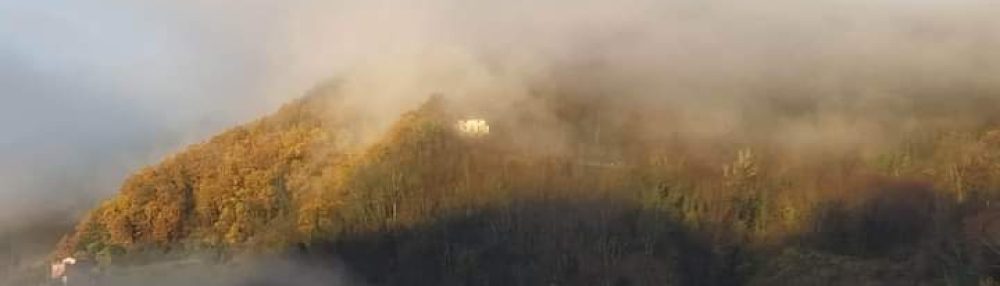
The procession, framed by the expansive views of the Piana di Lucca, slowly approached the church of San Giusto in the Brancoleria valley north of the walled city.
Heading it was a proud little ‘Topolino’ Fiat 500 which first entered into production in 1939. It was followed by a girl bearing the tricolour Italian flag flanked by two ladies elegantly dressed in 1940’s fashion. The combatants then approached. First came the Italians. Could some have been partisan deserters from the fascist puppet government? Then grim Germans marched past waving their own darker hued tricolour with the commander barking ‘links’, ‘links’, ‘links’!
A small detachment of ‘Tommies’ under the protection of a triumphant Union Jack, headed by one ‘bearded like the pard’, followed. Had they perhaps managed to flee from the hay-loft of a local villager’s farmstead, one of those who sheltered allied soldiers in Axis-controlled territory at risk of their own lives?
The Americans then came with their iconic army vehicles: Willy MBs better known as ‘jeeps’ (actually US forces’ slang for new conscripts), those all-purpose first-ever SUVs evocative of military manoeuvres. So well maintained were these die-hard vehicles with their bodywork uncaked from mud, their ammunition chests shining and their machine-gun, placed between the two fronts seats, now retired from the years when they fired in anger. These Jeeps as General George, Chief of Staff of the US Army during the war, declared were America’s greatest contribution to modern warfare. I wonder what histories their engines might have uttered if only they could talk!
The last vehicle was a sandy-coloured German Kubelwagen or ‘bucket-seat car’. Developed from the new people’s car, the Volkswagen, it became the Jeep’s Teutonic equivalent. Originally designed for affordable motoring day-trips by the working-class it had to be re-dedicated for use in those hostilities which nearly destroyed a whole continent.
The procession assembled before the modestly classical façade of San Giusto’s church, originally dating from Romanesque times but now firmly nineteenth century in appearance.


Lucca’s mayor Mario Pardini arrived for the inauguration of the new Museum of Memory, the why and wherefore for the procession. After speeches emphasising the importance of such places for the area’s history he cut the ribbon and the museum was officially opened. Divided into thematic areas it is rich in documentation and original material. One room is named after Ivan J. Houston, veteran of the 92nd Infantry “Buffalo” Division ” who died in 2021. How privileged we were to meet him in 2019!


The Brancoli ‘Museo Della Memoria’ (Memory Museum), the result of a long work of historical research, authentically encapsulates the tragic incidents of the Second World War and the ways it affected the Lucchesia. Occupying the old rectory by the church, it was created by members of the Brancoli Gothic Line Committee. After the ribbon was cut there was the uncovering of a plaque for the conference room and dedicated to historian Piergiorgio Romboli who did so much to keep the memory of the Gothic Line, that supposedly invincible defense line, alive.


It was now lunchtime and we refreshed ourselves with cheese and biroldo panini followed by a delicious spread of cakes. Nearby the platoons were having their own nosh-up in the camps they had set up among the olive groves.


The well-presented museum, so full of exhibits including ammo and uniforms, is not only a place of memory but will clearly also become a major attraction for the Brancoleria and beyond. In this respect it links up with those other museums dedicated to the impact of the Second World War in the Lucchesia including those at Borgo a Mozzano, Stazzema and Molazzana.


It has taken over fifty years for these poignant museums to be created. After 1945 Italians did not wish to be reminded of what they had gone through during five years of war and rarely talked about the horrors and sufferings they had had to endure. There were, however, also episodes of purest heroism and situations where the most positive aspects of humanity came to the fore. There were many who realised that museums to commemorate of this tragic but epic page of Italian history should be founded so that younger and luckier generations should know about what happened then and preserve the remembrance of those events. The pity of war yes, but also the bravery shown by so many should never be overlooked.
I wonder how many years will have to be passed before another European country, now being martyred in the most awful way by a tyrant bear, will be able to set up its own museums of memory. Even more, how many years will have conceded before the human race evolves to the stage when it realises that all war is quite useless and that guns must be transformed for ever into ploughshares for the benefit of all mankind.
When will they learn? Will they ever learn?


Pingback: We Shall Remember Them | From London to La Costa (and Lucca and Beyond) Part Three