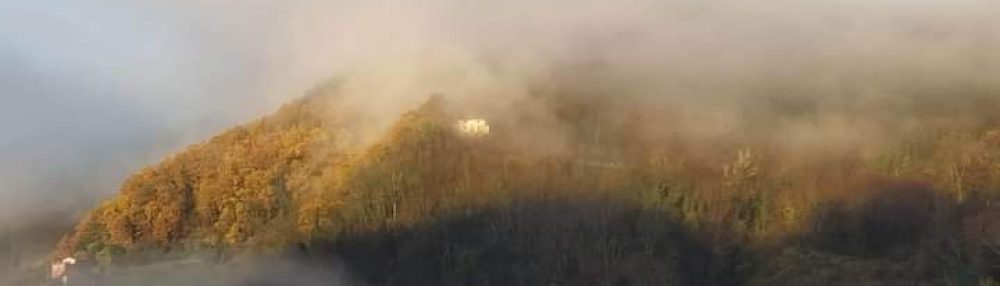
Yesterday was another very pleasant October Sunday afternoon. We motored to Careggine in the heart of the Garfagnana where a castagnata was being held.

Castagnate now happily abound after their absence during the pandemic. They are festivals celebrating the chestnut, the tree that once sustained the majority of the population in these parts. Its fruit is prepared in drying huts known as metati and ground to produce flour to bake not only bread but also cakes (Castanaccio) and pancakes (necci) which today tend to be eaten filled with Ricotta cheese or Nutella. Once regarded as the ‘bread of the poor’ chestnuts have now returned to become high quality foods in a way similar to maize or formenton with its ‘polenta’ which too has changed from being a peasant staple to gracing the most sophisticated haute cuisine tables.
Careggine, which is situated at a height of 2980 feet, is one of the highest communes in our part of the world and its foundation dates back to at least the eighth century. The original castle walls now form part of the houses in the old centre around the Pieve or parish church of Saint Peter.

On the right external wall of the Pieve is a strange, probably prehistoric, stone relief sculpture showing a female and a rather well-endowed male figure. Nobody has come up with its precise meaning. Perhaps you have an idea of what it represents?


Among the stalls at the Castagnata was a very well laid-out display of mushrooms distinguishing clearly between those good to eat and those good to serve upon the plate of one’s worst enemy!


We followed our visit to the castagnata by going on our own mushroom-hunting forest foray in search of the elusive porcini. Although we came across some nice examples of Morelli the much sought after ceps seemed well hidden from our untrained eyes!
Our Sunday ‘scampagnata’ (outing to the country) ended with a lovely guitar concert at Dezza Alta’s pretty church which we’d never visited before. It’s wonderful how even the humblest village can turn up a truly exquisite church. Dezza Alta’s, originally built in Romanesque style but rennaisanceified in the eighteenth century was beautifully maintained and provided a very apt ambience for the sounds of the masterly guitar duo of Atzori and Brunini. This duo has gone from strength to strength and is now internationally known and respected since it first got together ten years ago and has since issued several CD recording the latest of which is described here: .https://www.lagazzettadelserchio.it/borgo-a-m/il-duo-atzori-brunini-presenta-il-suo-ultimo-disco-guitare-en-reverie
This was the concert’s programme:

All the players’ items were arrangement of classic pieces ranged from JS Bach to Granados and returning to the baroque with Handel’s great Chaconne from one of his harpsichord suites. The recital was so beautifully played that one could imagine a whole orchestra of sound in their highly sensitive plucking of the instrument. As if music wasn’t enough for one to feast upon a delicious rinfresco of prosecco and cakes followed as a melting sunset fell upon the village and its pretty fountain and wash-house dedicated to the Virgin Mary.


I remain consistently surprised by comments from city dweller as to how we could possibly survive in a ‘peasant’ environment after leading most of our lives in an urban one. Presumably these people think that we live off cabbages and turnips and are musicked by the mooing of cattle. The ignorance is totally upon their heads. We live in an environment enriched by the wondrous manifestations of nature, by the presence of people who are devoted to their craft whether it be tending vines, sketching the landscape, roasting chestnuts, tuning guitars, curating mountain paths, tending sheep, cooking pizzas or intoning church organs. There is a primal sense of beauty in Italy and since earliest times even the most benighted ‘peasant’ in the remotest village has had beautiful churches, attractively cultivated fields and above all a magnificent natural environment to show them ‘the way’ to Truth.