
Some buildings are more than bricks and mortar. They become part of our personal history. They become places where memories, friendships and cultures meet. For me, one such place was the Italian Hospital in Queen Square, London.
Although the hospital itself has now closed as a working institution, its influence on my life remains very strong. It was one of the places that first gave me a real connection with Italy—not just as a country, but as a living culture of people, traditions, food, friendship and generosity.
Looking back today, I realise that the Italian Hospital represented something quite rare. It was not simply a medical establishment. It was a place where Italian immigrants could find familiarity in a foreign country, where the Italian language could be spoken freely, where people who had left their homeland could rediscover a sense of community, and where British and Italian traditions came together.
The Italian Hospital had a remarkable history. It was founded in 1884 through the vision and generosity of Giovanni Battista Ortelli, an Italian businessman dealing with spectacles and scientific optical equipment and a benefactor in London who recognised the needs of the growing Italian community. Like many immigrants, Italians arriving in Britain often faced difficulties: a new language, unfamiliar customs, financial problems and the loneliness that comes with leaving family and friends behind. The hospital’s opening merited this article in The Graphic

Ortelli understood that medical care was not only about treating illness. People needed to be treated in an environment where they felt understood and respected. His aim was to create a place where Italians living in Britain could receive medical attention while remaining connected to their own language and culture.
From its beginnings, therefore, the Italian Hospital was more than a hospital. It became a home away from home for generations of Italians in London.
The building itself reflected the importance of the institution. Designed in the Victorian period by the architect Charles Henry Worley, it was both practical and elegant, combining the requirements of a modern hospital with a sense of dignity and welcome. It was not simply a functional building; it was a statement of confidence by the Italian community in London and a symbol of their contribution to British society.

Its location in Queen Square was also significant. The area was already associated with medicine, research and healthcare, and the Italian Hospital became part of that important medical tradition while maintaining its own distinctive identity.
My own connection with the hospital came through my mother, Dr Vera Pettitt.
My mother was Italian, originally from Milan. She married an Englishman, Harvey Pettitt, and moved to London. Like many Italians who came to Britain, she looked for ways to maintain her connection with Italy while also helping others who shared that background.
During the 1950s she became involved with the Italian Hospital as a volunteer.
She was never paid for her work. She gave her time because she believed in helping people. In particular, she helped Italians who were experiencing mental health difficulties—people who were sometimes facing not only illness but also the additional problems of living in a foreign country, dealing with language barriers, loneliness and the challenge of adapting to a new life.
Her reward was not financial. It was the satisfaction of knowing that she was part of a community and that she was helping people who might otherwise have felt isolated.
There was, however, another pleasure associated with the hospital: the wonderful Italian meals.
Because the Italian Hospital was not simply somewhere that people visited when they were sick. It was a meeting place. It was a little piece of Italy in the middle of London.
I remember going there to meet my mother. I remember walking through the entrance and seeing the rooms where people gathered. On the left was a room where doctors could meet and discuss their work, and beyond that was the dining room where tables were prepared for meals.
Those meals were an important part of the hospital’s character. Doctors, nurses, visitors and members of the Italian community would sit together, eat Italian food and talk. In a very Italian way, the meal itself became a form of friendship.
Food has always been one of the great links between people. It crosses language, nationality and background. At the Italian Hospital, a shared lunch created a connection between people who might otherwise never have met.
The hospital attracted many young Italian doctors who came to Britain to continue their training and gain professional experience. It became a bridge between Italian medicine and British medicine, allowing young doctors to learn from another healthcare system while remaining connected to their own culture.
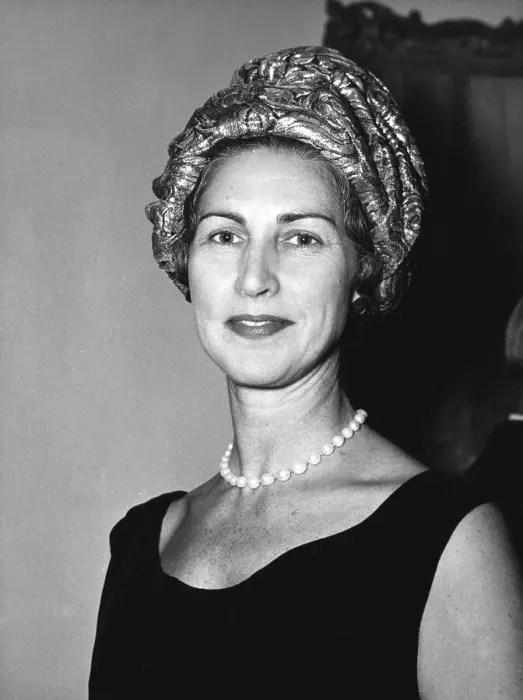
The hospital was also at the centre of a wider social life. One of its most important annual events was the Italian Hospital Dinner and Dance organised by the hospital’s league of friends and held at the Dorchester Hotel in Park Lane. Carla Thorneycroft was a leading figure in the League of Friends which raised money to support the hospital, organising balls, concerts, bazaars, film shows and other fundraising events. She was the Italian-born wife of the British politician and industrialist Peter Thorneycroft and was born Carla Maria Concetta Francesca Malagola Cappi in Paris in 1914, into an Italian aristocratic family, and later became known as Lady Thorneycroft.
I have several memories of these elegant occasions. On one particular evening, I met a very nice young woman from Stanmore. She was a sweet and charming girl, and we enjoyed each other’s company during the evening. Afterwards, I rode all the way to Stanmore from.south London on my little Honda 50 to visit her and her family.
Sadly, there was one problem: she was already engaged to somebody else. So although we had enjoyed meeting each other, nothing further could develop. Nevertheless, it remains one of those pleasant memories that life occasionally gives us and which stay with us for many years.
Another Dinner and Dance, in fact the last one I attended, was after I had married my wife, Sandra. We had the same table, with two Italian doctors sitting on the other side. What surprised me was that they did not exchange a single word with us throughout the evening. I have often wondered whether they were simply reserved people or whether they assumed that we preferred to be left alone. Whatever the reason, it remains one of those small, curious incidents that become part of one’s memories.

That same evening is also memorable because the once-famous Italian lawyer Del Giudice, while coming down the grand staircase with his wife, tripped and fell. Fortunately, he recovered his balance and no serious harm was done, but it caused a moment of excitement among the guests.
The Dinner and Dance played a vital role in supporting the hospital. It helped raise money and brought the community together. Looking back, it is sad that many people did not fully appreciate at the time how important these efforts were in keeping the hospital alive.
The dedication of supporters such as Mr and Mrs Thorneycroft, who worked tirelessly on behalf of the hospital’s fund, deserves to be remembered. Despite their efforts and those of many others, the Italian Hospital eventually closed in 1990.
For those who knew it, this was not simply the closure of a building. It was the end of a unique institution—a place that had cared not only for the health of London’s Italians, but also for their friendships, their traditions and their sense of belonging.
***
If you enjoyed this post, please consider clicking the Like button or leaving a comment. It lets me know that my writing is reaching people.