A little over halfway across the Po Valley, travelling from Modena towards Verona, lies the small town of Mirandola. The name immediately reminded me of two very different things.
The first, of course, is Pico della Mirandola, the great Renaissance philosopher. I had studied him when attending classes at the School of Economic Science in London. Giovanni Pico della Mirandola was an extraordinary figure of the early Renaissance, born in 1463 and dying, astonishingly, at only thirty-one.
Together with other great Renaissance thinkers such as Marsilio Ficino, Pico helped create the intellectual background to Italian humanism. His vision placed enormous importance on mankind’s capacity for reason, intellect and self-development. His famous Oration on the Dignity of Man is perhaps the clearest expression of this remarkable faith in human potential. It is difficult not to be attracted to a man who, in so short a life, could formulate ideas of such breadth and ambition.

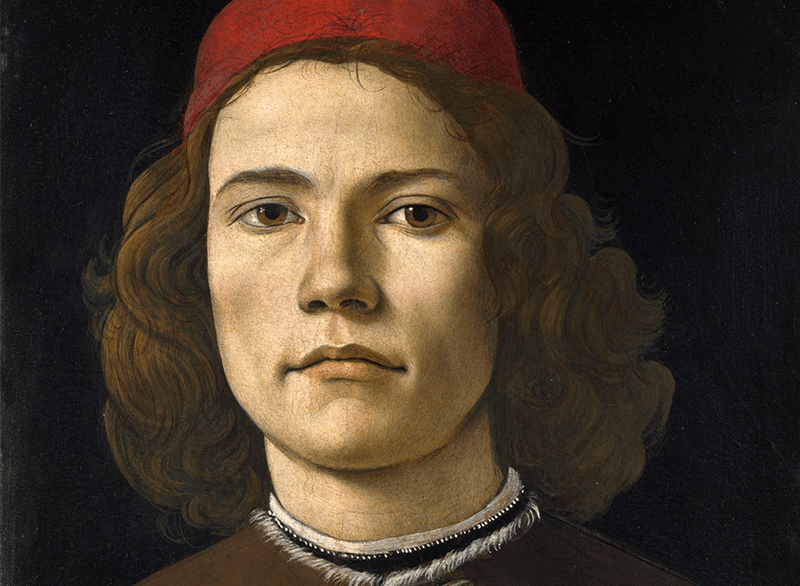

Pico belonged to the powerful Pico family, which ruled Mirandola for centuries and transformed it into a strongly fortified Renaissance town. Its castle and defensive walls made it something of a model of the fortified city. Much of the fortification has disappeared, but the remarkably regular grid of the historic centre remains. Walking through it reminded me of other planned fortified towns such as Palmanova and Sabbioneta.
The second thing that Mirandola brought to mind was much more recent and much more terrible: the earthquake of 2012.
It is easy to imagine that earthquakes belong principally to mountainous regions, but the Po Valley is a great alluvial plain. Beneath those apparently flat and tranquil fields, however, lies a much more complicated geological structure. The 2012 earthquakes were caused by shallow thrust faults associated with the buried northern Apennine structures beneath the Po Basin. The result was a devastating series of earthquakes, particularly in May 2012, which caused enormous damage in Mirandola and surrounding towns such as Finale Emilia.


What struck me, visiting Mirandola now, was how little obvious evidence remained of the disaster. The earthquake had caused terrible destruction, yet the town has been remarkably reconstructed. Here and there one can still see buildings held together by steel reinforcement or awaiting further restoration, but in general the historic centre has regained its character.
The great exception is the Pico Castle itself. This was the heart of the Pico family’s power, the place associated with the rulers of Mirandola and with the extraordinary history of the town. It is still undergoing restoration, and I shall have to return to Mirandola when the work is finally complete.
The cathedral, Santa Maria Maggiore, has also undergone extensive restoration. It was reopened to the public in 2019. Inside, its simplicity is rather moving. At the end of the left aisle is a striking modern Crucifixion fresco by the Italian painter Pietro Annigoni in memory of his father whose family came from this town. Annigoni was the same artist who famously painted Queen Elizabeth II, and his Crucifixion has an almost three-dimensional presence. It is an unexpected and memorablie work in such an old church.


Apart from the cathedral and the castle, there is the pleasant central square and the orderly streets of the old town. We stopped simply for an ice cream. It was a wonderfully restful alternative to stopping at a motorway service station, and it gave us time to look around and absorb the atmosphere of the place.


What stayed with me most was an impression of the extraordinary industriousness and resilience of this part of Emilia-Romagna. After the earthquake, the people of Mirandola set about rebuilding their town, and the results are impressive. There is something particularly satisfying in seeing a community not merely survive a catastrophe but recover its confidence and continue to thrive.
In that sense there is perhaps an unexpected connection between the two Mirandolas that had come into my mind: Pico della Mirandola’s extraordinary faith in the capacity of human beings to use their intelligence and creativity, and the very modern demonstration of that same human capacity in rebuilding the town after disaster.
Mirandola is not, perhaps, a place for which one would make a special journey from the other side of Italy. But travelling between Modena and Verona, it makes an excellent stop — a pleasant town, a fascinating historical connection, and a striking example of how a community can recover from one of the great disasters of modern times even to become one of Italy’s major centres for the bio-chemical industry. The obvious alternative would have been Mantova. But we had already visited Mantova for a friend’s wedding, and that is another matter altogether. Mantova deserves a day, two days, perhaps even three.
Mirandola needs only a few hours.
But those few hours are well spent.
***
If you enjoyed this post, please consider clicking the Like button or leaving a comment. It lets me know that my writing is reaching people.