I don’t know whether Oriana Fallaci ever described herself as a prophet. I doubt she would have. She was a journalist, a writer and, above all, an extraordinarily fearless observer of the world. But looking back now, twenty years after her death, I sometimes think of her as a modern Cassandra.
Cassandra, in ancient Greek mythology, was given the gift of prophecy by Apollo, but cursed so that nobody would believe her. She could see what was coming; she simply couldn’t persuade anyone else to believe it.
There is something of that in Fallaci.
She was an extraordinary journalist who interviewed some of the most important and dangerous people of her time — Henry Kissinger, Ayatollah Khomeini and many others. Her interview with Khomeini became legendary. Forced to wear a chador before the interview, she challenged him about the position of women under Islam. When he dismissed her objections, she took the chador off and walked away.
That was Oriana Fallaci.
She was not somebody who was easily intimidated.

And yet her later writing transformed the way she was regarded. After 9/11, particularly with La rabbia e l’orgoglio (The Rage and the Pride) and La forza della ragione (The Force of Reason), she became an extraordinarily controversial figure. People who had once admired her began calling her racist, anti-Muslim, reactionary and right-wing.
But this was also rather extraordinary when you consider where she had come from. Fallaci had been a fiercely secular, anti-fascist woman of the Left. Her fundamental passion was not for authoritarianism but for freedom — freedom of thought, freedom of speech, the emancipation of women and the whole Western tradition of individual liberty.
She believed that these things were worth defending.
And she became increasingly alarmed that Western Europe was losing the confidence to defend them.
I don’t think we should exaggerate what she said, and I certainly don’t think that every Muslim immigrant represents some kind of organised Islamic invasion. That would be nonsense.
But the demographic and cultural changes taking place across parts of Western Europe are real. You can see them simply by walking through certain towns, neighbourhoods and schools. The composition of populations is changing, and with it come changes in language, culture, religion and social attitudes.
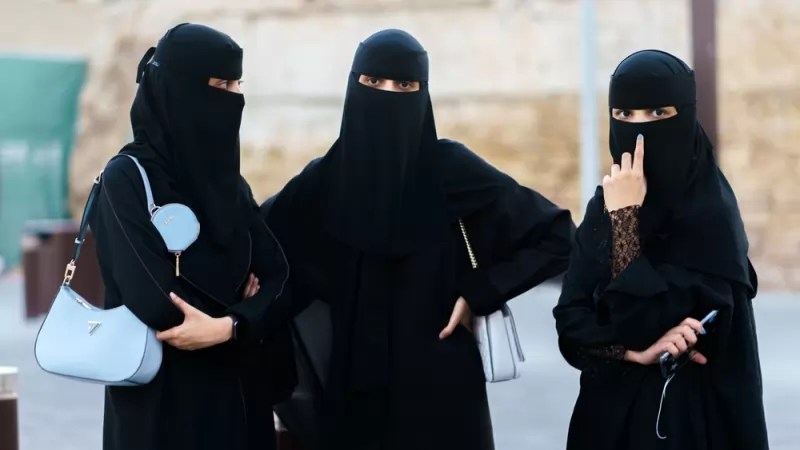
Fallaci saw that coming.
She was not predicting armies landing on European beaches. The old Islamic invasions came with ships, cavalry and armies. The Ottomans reached the gates of Vienna.
The transformation Fallaci was worried about was something much more complicated: demographic, cultural and generational.
And this is where I think her warnings deserve to be reconsidered.
The term “Eurabia”, incidentally, was not coined by Fallaci; it is associated with the writer Bat Ye’or. But Fallaci became one of the most famous voices warning about what she saw as the consequences of European accommodation of Islam and mass immigration.
Her deeper concern, however, was much larger than immigration.
It was about whether the West still believed in itself.
She believed passionately in the civilisation that had produced the Enlightenment, freedom of expression, secular government, equality before the law and the rights of the individual. She believed these achievements had been fought for over centuries and could not simply be taken for granted.
And she feared that a civilisation which becomes ashamed of its own values eventually becomes incapable of defending them.
That, I think, is the part of Fallaci that remains particularly relevant.
Was she right about everything? Of course not. She could be excessive, sweeping and deliberately provocative. But being wrong about some things does not mean that the questions she asked were wrong.
I was reminded of all this when I visited her grave in Florence shortly after her death.
Her grave is in the Cimitero degli Allori, the non-Catholic cemetery on the road towards the Certosa. I went there because I wanted to see where this extraordinary woman had been laid to rest. My wife couldn’t come with me, so I took a photograph of the tomb to show her.
The cemetery keeper had specifically told me not to photograph it.
He somehow discovered that I had done so. I explained that it was only for my wife, and fortunately he let me off. I later discovered that there are rules in Italy concerning the photographing of graves and respect for the privacy of the families, so perhaps he was quite right.

But what I remember most is standing there beside Fallaci’s grave and thinking about her life.
A woman who had spent her career asking powerful people questions they didn’t want to answer.
A woman who had spent her life refusing to be intimidated.
A woman who eventually found herself treated almost as an enemy by many of the people who had once admired her.
And now, twenty years later, I find myself thinking again about Cassandra.
Cassandra’s tragedy was not that nobody heard her.
They heard her perfectly well.
Her tragedy was that nobody wanted to believe her.
Perhaps that is the most interesting thing about Oriana Fallaci.
Perhaps she was our Cassandra.
***
If you enjoyed this post, please consider clicking the Like button or leaving a comment. It lets me know that my writing is reaching people.