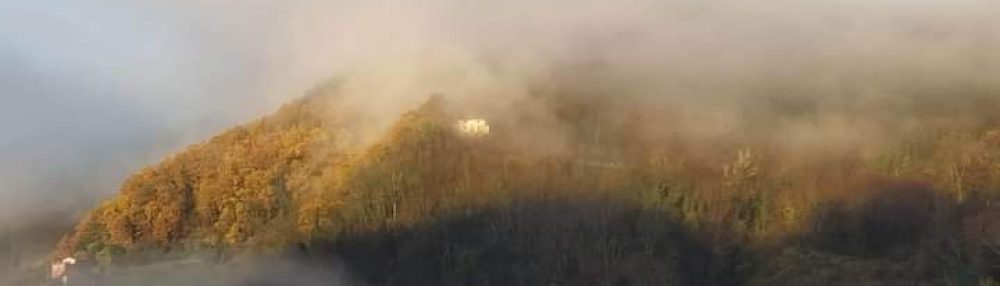
There are newcomers to Bagni di Lucca who arrive, buy a house, settle down and quietly become part of the community. And then there are newcomers who arrive with rather more ambitious plans, restore an important old villa and, to crown it all, give the town a magnificent grand piano. This is the story of two such newcomers, David Scott Gebhart and his husband, Frederick William Rayner.
David and Frederick are Americans who have made their home in Bagni di Lucca, having previously lived in Dallas, Texas. Their arrival in our corner of Tuscany is an interesting story in itself, but it is their involvement with Villa Elena and their generous gift to the town that deserves a little attention.
David is no ordinary newcomer. He spent some forty-four years working in the American home furnishings industry, developing a considerable reputation in the world of interior design and decorative furnishings. His career included department-store buying, international product development and the creation of a successful wholesale business.
In 1996, he joined forces with Frederick Rayner and Lois Del Negro to establish Global Views, a company specialising in furniture, decorative objects and accessories for the home. It grew into a substantial international business, supplying retailers and interior designers. In 2023 the company was sold to Surya, a major American furnishings business.
So, having spent much of his working life surrounded by beautiful objects and design, it is perhaps not surprising that David should eventually find himself attracted to Italy, where the combination of architecture, art, craftsmanship and a rather more leisurely way of life has appealed to so many people before him.
David studied marketing, with a specialisation in fashion, at the University of North Texas. His connection with the university continued long after his student days, and he was recognised for his contribution to the institution, including his support for students through internships and scholarships.
But it is here, in Bagni di Lucca, that the next chapter of the story begins.
Villa Elena
David and Frederick acquired Villa Elena and embarked on an extensive restoration project, which reportedly took about two years. Anyone who has been involved in restoring an old Italian property will appreciate that this is no small undertaking. There are always unexpected complications, craftsmen to organise, materials to find and the occasional surprise lurking behind a wall or beneath a floor.
The villa is an interesting historic building, recorded in the Italian Ministry of Culture’s architectural heritage catalogue. Its architectural character is described as eclectic, and it belongs to that period when substantial private residences were being built in and around Bagni di Lucca.
The restoration brought the property back to life and involved local craftsmen and suppliers. That is particularly welcome in an area where the preservation of older buildings depends so much on people being prepared to invest time, money and considerable patience in them.
Villa Elena is more than simply another attractive Tuscan residence. It is part of the architectural heritage of the valley, and seeing such a property restored and cared for is something that should please anyone who has an affection for Bagni di Lucca.

David and Frederick’s interest in design and furnishings has clearly found a natural home here.
A piano with a family history
However, the most touching part of this story concerns a piano.
David’s grandmother, Lula Ethel Aubry, had a great ambition for her grandson. From the time he was five until he was sixteen, she paid for his piano lessons. She wanted him to become an accomplished pianist and encouraged him throughout those formative years.
In February 1986, she paid a substantial deposit on a grand piano for him in Wichita Falls, Texas. Sadly, she died only three months later.
David continued paying for the instrument himself and kept it for the following forty years. It was not simply a piano that happened to be in his possession. It represented a relationship with his grandmother and a memory of her generosity and encouragement.
The piano eventually travelled with David and Frederick from their home in Dallas to Villa Elena in Bagni di Lucca. It was a Steinway grand, an instrument of considerable quality and, by now, one with a rather remarkable personal history.
The couple eventually decided that rather than keeping it as a possession in their private home, they would give it to the community.
And so Bagni di Lucca became the fortunate recipient of this magnificent instrument.

A gift to the town
The piano has been donated to the Comune di Bagni di Lucca and placed in the historic Casinò Municipale at Ponte a Serraglio.
There is something particularly appropriate about this choice of location. The Casinò is one of the buildings associated with the old resort town, when Bagni di Lucca attracted visitors from Britain and elsewhere in Europe, and when music, entertainment and social occasions formed an important part of local life.
The town’s international reputation was built partly on its visitors, its thermal waters and its social life. Music was naturally part of that world. Even Liszt that magician of the piano played here
A Steinway grand piano in the Casinò seems, therefore, to be a rather fitting addition to the building and to the cultural life of the community. And Puccini would regularly visit the town.
The piano’s story also gives the donation a personal dimension that goes well beyond its considerable monetary value. It is a gift that began with a grandmother’s belief in her grandson and has ended with an opportunity for many other people to enjoy the instrument.
The official inauguration concert is scheduled for Sunday 8 November 2026 at 9.15 in the evening, with free admission. It will be an opportunity for residents and visitors to hear the piano in its new home.
