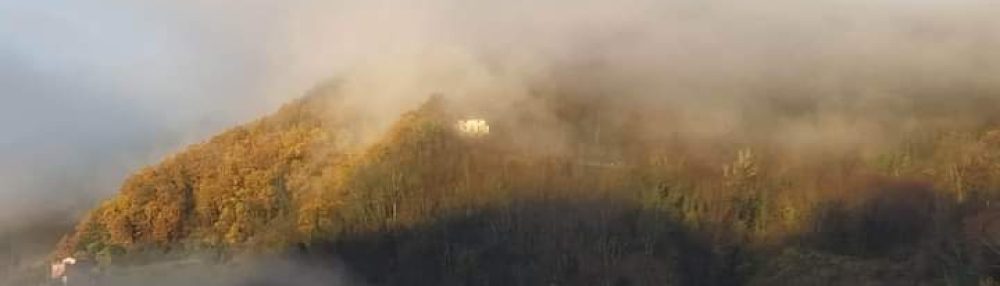
I first visited Turin many years ago and fell in love with a city which, in so many ways, breaks the mould of the traveller’s idea of what an Italian town is supposed to look like. Here are some photos from that distant past that I took on my ‘Brownie’ camera:


There is no tangle of mediaeval streets here, there are no steep hill-top castles and there is no outstanding renaissance church or palace. There are no special flag-twirling festivals or pageants for tourists. Instead, the visitor is presented with a city that is essentially the creation of the age of the enlightenment. The wonderfully restrained eighteenth century houses, the miles of porticoes to protect one not only from the rain but from the often scorching summer sun, the glamour of its fine baroque churches, not run wild like they are in Rome but built according to highly rational principles by such great architects as Guarini and Juvarra (who also designed Lucca’s own town hall in Piazza Napoleone) – and all set in a grid street system ranging in width from narrow streets to tree-lined boulevards wider and finer than even those that grace Paris – are seductive and makes one want to live here.


This is what greeted me on my way from the station to my hotel room (it was actually a flat..).


My flat was situated in an attractive little street (Sant’Agostino) minutes from Turin’s great sights like the Royal Palace, Palazzo Madama (the Lady’s palace) and the cathedral. It dated from the seventeenth century and like the majority of apartments in Turin had a sweet little inner courtyard adorned with greenery.


The food and drink in this city are superlative: Turin is the birthplace of the ubiquitous aperitivo, the inventor of the Gianduiotto chocolate, the maker of some of the best ice-creams in Italy, the home of amaretti and Savoyard biscuits, grissini, those long bread-sticks now even gracing the shelves of UK supermarkets, marrons glacé, and zabaglione. As for main courses who could depart from Turin without tasting its fritto misto alla piedmontese which is an amazing combination of a variety of meats, offal, fruit and sweets cooked in olive oil?

Since making Italy my home I’ve been to Turin three times, all for largely religious reasons. For Turin, besides, being a major centre of enlightened philosophy and political thought, (after all it was from Turin that the idea of a unified Italy first took flight), is also a focus of nineteenth century pietism and especially of ‘social saints.’ These are saints who are famous not just for their miracles but for having a mission of improving the living conditions of people in an age when welfare, hospitals and rehabilitation centres were rarely encountered.
Among these saints the most noted are:
- Saint Giuseppe Benedetto Cottolengo (1786 – 1842) founder of the ‘Piccola casa Della Divina Provvidenza’, for the terminally ill and which, still today relies entirely on voluntary contributions.
- Saint Giovanni Bosco (1815 – 1888) founder of the Salesian order which is dedicated to the education and work-placement of young people.
The ideas of these ‘modern’ saints have spread wide and far. For example, at the college I used to work in London I had a colleague who was particularly involved in voluntary activities with the Salesians.
The concept of a social saint has, of course, continued to this day. Mother of Teresa of Calcutta, who was made a saint, last year, is a prime example of this. These people made others rethink their universe of ideas, were truly charismatic in the positive sense of the word and rightly left their area of the world a better place.
In 2010 we visited Turin to view the ‘Sacra Sindone’ or holy shroud which was unravelled from its chest and placed on view for all faithful (or faithless) to view.

(Worshippers at the Holy Shroud in the cathedral yesterday)
In 2011 we returned to see probably the world’s finest Egyptian museum with its new displays. Since ancient Egypt was centrered on the cult of Isis and Osiris, which several people say has become transmuted into Christianity, that visit could also be said to be religious.
The most recent visit, which was spread over the past couple of days, was definitely for a religious occasion. It was, in fact, the funeral of an acquired cousin, Paolo Osiride Ferrero, the son of the brother of my Italian grandmother. (Note the amalgam of Christian and Egyptian names and the surname Ferrero also given to the manufacturer of some of the most exquisite chocolates in the world. Who hasn’t tasted a Ferrero-Rocher?)
I remember my great uncle (who was a Ferrero sales representative) praising his son to one of his clients: the son’s intelligence, musical qualities, firm Christian convictions, generosity and personality. ‘Why hasn’t Paolo found a wife then?’ asked the client. ‘There is just one snag’, replied the great uncle. ‘He was struck down by polio while still in the cradle and can only move around with callipers and crutches.’ ‘Ah well’, replied the client, ‘that makes all the difference, doesn’t it?’
For Paolo there was no difference. Or if there was it was in the eye of the beholder. Italy at that time had very few provisions for disabled people or, as is better put, people in difficulties. Persons like Paolo were brought up in special institutions, made to feel as if they were somehow separate from others, almost made to feel guilty for their difference. Accessibility or, as the Italians like to phrase, ‘architecture without barriers’, was not even considered in the design of new buildings. Paolo changed all that. He did not merely campaign for greater ease of access for all the inhabitants of Turin, no matter whether they had difficulties in walking, seeing or any other of the impedimenta which we all, of the human race, suffer from in varying degrees. He changed people’s minds about the whole area of human difficulties. As we are all, metaphorically for some, religiously for others, ‘sons of God’, such prejudices as racism, and sexism once used to spread to disability. The key word here is integration and where I worked in the UK I too helped to integrate ‘special needs’ students within the wider social framework of a college of further education.
Although the work is far from being completed in Italy many visitors to this country will have noticed such features as newer trains and buses with platform level opening doors (here, too, I have a friend, John Wagstaff, who has been instrumental in improving disabled access to London’s public transport), special tactile paving for those whose sight is poor or doesn’t even exist, lifts wide enough to take wheel chairs and generally better accessibility to the wonders of Italy (often difficult because so many of its buildings are historic and have particular conservation rules to follow) and many other examples of breaking down architectural barriers. Indeed, one of the things our last mayor, Massimo Betti, did in this area was to provide access for all to Bagni di Lucca’s town hall. (See my post on that at https://longoio2.wordpress.com/2017/03/12/bagni-di-luccas-town-hall-is-now-open-to-all/ )
Apart from being a forthright and tough campaigner for equal rights in accessibility to all Paolo was a gifted musician on the piano and the accordion. He was a fine tenor and part of RAI Turin’s choir for many years and also taught music in the city’s secondary schools. As for his physical disability, that did not stop him from marrying a lovely lady and becoming father and grandfather to a growing family.
As befitted the funeral service in celebration of the life of Paolo, Turin’s cathedral (the only renaissance building in the city, incidentally) was packed with family, friends and representatives from the voluntary organisations, in particular the red-cross service the city mayor and presiding over the ceremony all the archbishop of Turin, Cesare Nosiglia.


A group of musicians playing flute, viola, cello, guitar and keyboard and with a gorgeous soprano provided some melting music, Paolo’s great love:
Rete sette TV station was also there. You can see their feature on the funeral at
https://www.rete7.cloud/lultimo-saluto-a-paolo-osiride-ferrero-in-duomo-a-torino/
Truly Paolo was one of the same league as Turin’s social saints as his brother stated in his farewell speech. It was a very dignified send-off from an energetic campaigner for equal rights and I was glad to have made it there to meet up with relatives I’d either not met for a long time or never met at all. And all this in a most beautiful city with so much to offer in the way of elegance, hospitality and culture.
After the service I took the opportunity to climb to the top of the Duomo’s bell tower completed largely by Juvarra in the 1720’s.
It was truly worth climbing up the two hundred odd rather steep and rather vertigo-inducing steps to enjoy the wonderful views of this magnificent Turin cradled between the snowy alps, the hills of Asti and traversed by that longest of Italian rivers, the Po.


Great photos. You always give a new perspective through your posts
Thanks Ishita.
Grazie!! fantastico.
Vittorio
My pleasure Vittorio.
Francis please send me your e-mail .Thanks.Vittorio