It all started with something quite ordinary: a hospital visit for Sandra’s foot. But once we found ourselves in Castelnuovo di Garfagnana, looking up towards the mountains, we thought: “Why not make a day of it?” Sometimes the unexpected moments become the most memorable ones.


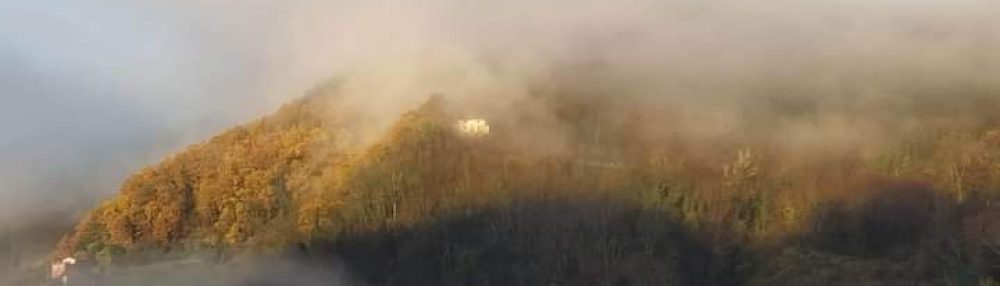
So we took the high road from the Serchio Valley, leaving behind the summer heat of the valley floor and climbing slowly towards the Apennines. The higher we travelled, the cooler the air became, and the landscape changed completely. The chestnut woods, the mountain pastures and the deep green forests had a feeling that was almost Scottish — a reminder that these mountains, with their mist, streams and wild flowers, belong to a world apart from the Tuscany of vineyards and olive groves.


Our first stop was Casone di Profecchia, an old mountain settlement and traditional stopping place for travellers crossing the Apennines. There, surrounded by forests and fresh mountain air, we enjoyed lunch and, naturally, one of the great pleasures of this area: a blueberry (mirtillo) ice cream. The wild blueberries of these mountains are famous, growing in the high pastures and woodland clearings where the clean air and altitude give them their distinctive flavour. They are one of the small treasures of the Garfagnana — a taste of the mountains themselves.


From there we continued upwards to San Pellegrino in Alpe, one of the most extraordinary villages in the Apennines. At around 1,525 metres above sea level, it is among the highest inhabited places in the Tuscan-Emilian Apennines, and even today it feels like a village suspended between earth and sky. The views stretch across mountains that seem endless, and standing there it is easy to understand why people have travelled this difficult route for centuries.


San Pellegrino has always been a place of pilgrimage. Long before modern roads brought visitors by car, pilgrims arrived on foot, following ancient paths that connected Tuscany with Emilia. They came not only to cross the mountains but also to seek spiritual comfort at the sanctuary dedicated to two remarkable figures: Saints Pellegrino and Bianco.
According to tradition, Pellegrino was a prince of Scottish origin who abandoned a life of privilege to become a pilgrim and hermit, travelling through Europe in search of a life devoted to faith. Bianco, his companion, shared this life of prayer and simplicity. Their story became deeply connected with this remote mountain place, where their mortal remains are preserved.
The sanctuary itself contains a beautiful marble shrine created by the great Renaissance sculptor Matteo Civitali, one of Lucca’s most important artists. It is a place where art, history and devotion meet. We left our own prayer requests there and spent a moment reflecting on the meaning of pilgrimage — not only as a physical journey but also as a journey of the mind and spirit.


Of course, not everyone has always shown respect for relics and traditional places of devotion. In England, for example, the Reformation under Henry VIII led to the destruction of many shrines and the rejection of many relics. Yet in Italy, places like San Pellegrino in Alpe have survived, preserving centuries of memory, faith, art and local identity.
During our visit we were also fortunate to meet Marta, a former student of mine, which made the day even more special. After so many years, meeting an old friend in such a beautiful and unexpected place felt like another small gift from the journey. We shared another blueberry ice cream — because in the mountains, one is never enough — and then said goodbye.


Eventually we began our descent back towards the Serchio Valley. The cool mountain air was replaced once again by the warmth of summer, and after returning home a welcome shower completed the day.
What began simply as a hospital appointment became something much richer: a journey through breathtaking scenery, forgotten histories, friendship, art, faith and the timeless beauty of the Tuscan mountains. San Pellegrino in Alpe remains a place where the past is still alive — in its stones, its saints, its forests, its flowers and even in the taste of its famous blueberries.

If you enjoyed this post, please consider clicking the Like button or leaving a comment. It lets me know that my writing is reaching people.