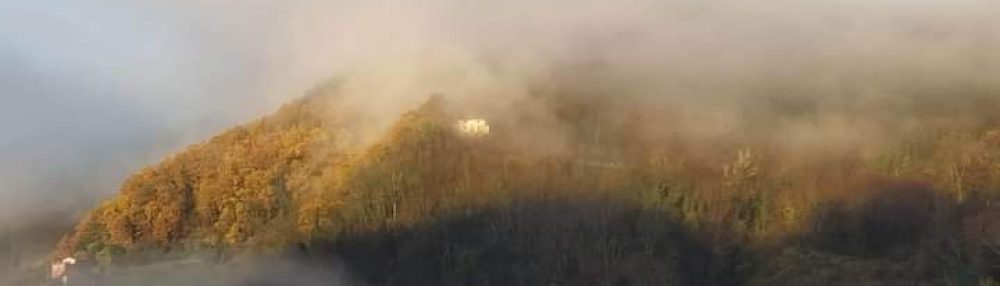
Lesnes Abbey Woods

London’s Green Chain walk connects over three hundred parks and open spaces in the south-eastern part of the metropolis. It extends from Erith in the east to Crystal Palace in the west with branches to Thamesmead, Nunhead, Beckenham and Charlton  and offers a great chance to stroll in surprisingly rural parts of one of the world’s great cities linking up with other paths such as the Capital Ring.

(see also my post in Italian at https://longoio3.com/2019/07/10/londra-selvaggia/)

Originally set up in 1977 to protect open spaces from being built on the Green chain is a walk I know rather well since a branch of it starts near my home in the Royal Borough of Greenwich.

Though never done completely in one go I’ve covered all the route taking different sections at different times. During the recent UK heat wave I decided I’d head for one of its most idyllic stretches. There is a marvellous compendium of woods stretching from Frank’s Park near Erith to Bostall Woods including Oxleas, well-known for its bluebells and Lesnes Abbey with its spectacular wild daffodils.(For pictures of these see my post at https://longoio3.com/2020/04/06/daffodils/)

London’s Coronation church, Westminster Abbey, is known throughout the world. However, in pre-reformation times the city had many other abbeys which are now sadly either in ruins or have completely vanished.

Ruined Lesnes Abbey is on the Green Chain walk and is surrounded by an extensive forest appropriately called Abbey Woods.

20200625_161143

1178 saw the foundation of the Abbey of Saint Mary and Saint Thomas the Martyr in Lesnes by Richard de Luci, chief executioner of England. It was built as a penance for the murder of Thomas Becket, in which he was involved.

beckett

(Murder of St Thomas a Becket)

In 1179, de Luci resigned from his office and retired to the abbey, where he died three months later and was buried in the chapter house.

It is interesting to note that the first part of the pilgrim route known in Italy as the Via Francigena passes from London to Canterbury where pilgrims visited Saint Thomas Becket’s tomb, a journey that gave rise to Chaucer’s wonderful book of tales and Pasolini’s film. Lesnes abbey never became a large community and Cardinal Wolsey closed it down in 1525 by a law for the closure of monasteries with fewer than seven monks. It was one of the first to be suppressed after the dissolution of the monasteries in 1534. The abbey is surrounded by parkland and an ornamental garden known as the monks’ nursery.

pilgrim

(Pilgrim statue carved from a tree trunk in Lesnes Abbey)

I especially like the way the Abbot’s symbol, the shepherd’s crook, is weaved into various elements of the monks’ garden:

Even though Lesnes Abbey is in a state of extreme ruin, its various sections can easily be distinguished.

The church:

church

the principal cloister:

cloister

the chapter house:

chapter

the refectory:

the dormitory and the library in which the Lesnes Missal, now in the Victoria & Albert Museum in London, was located.

missal

Every time I visit Lesnes Abbey I think of those lines from Shakespeare’s seventy third sonnet:

‘Bare ruin’d choirs where late the sweet birds sang’.

However, I’m glad to say that once a year the parishes and clergy of the Roman Catholic deaneries of Bexley and Greenwich organise a procession of the Blessed Sacrament in the Abbey ruins, bringing them to new life. The procession would have been in June this year but has unfortunately had to be cancelled because of the pandemic.

lesnes_abbey_04

I continued my woodland walk passing various interesting features: the chalk pit which once supplied building material but is now securely fenced off because of the danger of its very steep slopes:

The fossil beds where one can spend a happy time uncovering sand sharks’ teeth dating from the cretaceous era:

A large pond, with an unfortunate tree collapsed upon it.

The path is well sign-posted and maintained.

Eventually I emerged from the cool woodland and found myself entering a broad heath and the heat again.

20200625_145938_HDR

Why certain idiots travel miles to find a crammed place on a beach flouting every health and safety measure imposed during this pandemic crisis when near to their home they can find the most beautiful and unpopulated open spaces I shall never know!

PS If you read Italian there’s more on Lesnes Abbey with extra pictures in my post at:

Le Abbazie di Londra e i loro Scandali


London’s Lake District

On Midsummer’s eve I took the Metropolitan line train to Rickmansworth planning to walk to Uxbridge via the canal footpath. However, I grossly misjudged the path’s length: it can take a walking time of over eight hours. Instead, I tasted the delights of the town’s surroundings with its canals, rivers and lakes.

(Rickmansworth Metropolitan line station with its display of former times)

Rickmansworth high street still keeps something of a village atmosphere.

At one end is the town’s attractive flint-knapped parish church.

Its churchyard contains some very old ‘barrel’ tombs such as were described at the start of Dickens’s ‘Great Expectation’ when Pip meets the escaped convict in Cooling marshes.

20200620_113008

Also of interest are the very art-nouveauish sculptures on the town’s war memorial.

Rickmansworth is also encircled by much low-lying water and marshland but unlike Cooling marshes they are rather less menacing.

The town is the administrative seat of Three Rivers district council whose name pays homage to the confluence of the three rivers which meet in the borough. They are the Gade, described by me in my post at https://longoio3.com/2020/06/19/cassiobury-park/, the Chess, which flows down from Chesham and merits further exploration and the Colne whose course I followed in my walk south of the town.

The river Colne arises in Hertfordshire and flows into the Thames at Staines. It has a particularly close relationship with that pioneer work of the Industrial Revolution, the Grand Union Canal, and supplies its water. Indeed, throughout much of my walk I followed the canal to my left and the river to the right.

Much of the canal is bound by long boats which represent homes for many lucky people. The towpath side is often enhanced with colourful gardens by the long boat denizens.

Sharing the canal with them are a motley crew of water birds, in particular Canada geese, swans, coots, ducks and even a few great crested grebes. Of interest is the fact that Charlotte Potter, the brilliant young soprano singer who has enchanted Bagni di Lucca with her summer concerts in the grounds of the Villa Webb, filmed her scene in ‘Endeavour’, ITV’s hit drama on this canal. It was Charlotte’s first TV role and acting debut and she posted on my FB page a photo of where the scene was shot (Stocker lock) with the comment ‘It’s beautiful!’

What stands out in the Colne valley is the necklace of lakes, former gravel pits which have now been filled with water. The pits supplied the Great Wen with much of its building material. For instance, Wembley stadium was built with material from these pits.

I followed a path through three of these lakes and found myself in an enchanted country where water and earth shimmered together in an awe-inspiring landscape. The day was not too hot and the clouds played reflective games with this liquid territory.

20200620_125626_HDR

Although it was the week-end and urban London was only a short step away I hardly met anyone during my four-hour walk and those persons I met were invariably courteous and friendly – absolutely essential when the path is narrow and one has to remember to socially distance oneself.

There are various highlights to look out for on this walk: the magnificent weeping willows:

20200620_125534

the canal locks with a delighful lock-keeper’s cottage beside one:

the very long boardwalk, a triumph of ecological thinking over the marshiest parts of the lake shores:

the largest reed bed in the London area:

20200620_125735_HDR

and, of course the flora and fauna:

It’s incredible how a former industrial excavation area and transportation hub can now have transformed itself into one of the most delightful and extensive parklands in the western part of London. I wish the same could be said of the open-cast coal mining in the UK or the terrible destruction wrought by marble quarrying in the Apuan Alps!

Where Alexandra Began

This week-end, one year after her mother sadly died, my wife and I visited the church where her parents were married seventy three years ago.

We took the tube to Saint John’s Wood. The Grade II listed station preserves its original fabric including the Underground’s last wooden escalator illuminated by one of three surviving art-deco sets of bronze escalator uplights. The ‘way out’ sign is also unique. I’m so glad these features have been kept!

20200627_154338

We walked past Lord’s cricket ground to reach our destination.

Dedicated to Our Lady, the church was one of the first Roman Catholic places of worship to be built following the Catholic Emancipation Act of 1829.

20200627_163737_HDR

The building was funded by two sisters, Louise and Jessie Gallini, from the inheritance left them by their father, Giovanni Gallini. Born in Florence he had come to England as a refugee and had a very successful career as dancing master and impresario in London. (Among his friends were J. C. Bach and Haydn). I felt, since Sandra’s own father was also born in Florence and moved to London for his work, that this was a lovely coincidence.

The church of Our Lady was designed by John Joseph Scoles, a Roman Catholic architect, in what John Betjeman described as ‘Regency’ gothic style.

lady1

(A old print of the Church of Our Lady)

It has a mellow brick exterior and a facade with a rose window:

20200627_161017

an entrance porch flanked by a rose bush:

20200627_162218

and a garden with the statue of the Virgin:

20200627_162123_HDR

My first impression in entering Our Lady’s church (only recently re-opened to worshippers with one-way system and social distancing to be respected during this pandemic) was that of a beautifully airy and luminous early neo-gothic building with a elegantly vaulted nave flanked by aisles of equal height.

20200627_161157

Indeed, Our Lady reminded me of those hall churches in northern Germany with the light coming from the side windows rather than from any clerestory.

The church is filled with several examples of contemporary art. These include fine glass panels representing scenes from Christ’s life:

20200627_161927

The font:

20200627_162009_HDR

and the main altar in the apse.

20200627_161734

However, Our Lady was not always like this. Its original plain appearance became richly embellished in the Victorian era as seen in this photo.

Interior_1936-306x306

The ornamentation was stripped back this century returning the church to its simpler, original atmosphere and enhancing its fine vaulting. Undoubtedly there will be some who will regret this change, especially the removal of the original High Altar and its replacement by something more contemporary. 

20200627_161757

Not having experienced the church as it was at the time of Alexandra’s parents’ wedding I can say little. I do feel, however, that it would have been better to have the East window displayed instead of covering it up.

We met Fr. Kevin Jordan the very personable parish priest and Sandra showed him a copy of her parents’ marriage certificate written in Latin.

20200627_142023

It becomes ever more essential in these rather socially disconnected times to visit those places which have played such an important part in our parents’, indeed, our own lives. They are truly holy places twice over.

Pretty Pinner

Pinner was just a name until the other week when I caught a glimpse of its high street from the H13 bus I was on travelling from Ruislip lido (see my post at https://longoio3.com/2020/06/15/londons-best-beach/). I was amazed at how a Greater London suburb could produce something so much like a rural village scene with its half-timbered buildings and church tower at the top of the hilly street.

20200611_142355_HDR

We returned to Pinner for the mundane but exceedingly necessary task of collecting a toaster from its Argos store nestled within a Sainsbury conveniently close to the station on the Metropolitan line so eloquently hymned by the heritage writer John Betjeman.

Pinner dates back to the tenth century when it was first recorded as a hamlet called Pinnora after the river Pinn which runs through the town and which can be glimpsed in a handerchief of a garden on the main road.

pinn bridge-lg-sep-16

The parish church of St John the Baptist dates back to the fourteenth century and there are domestic dwellings surviving from the sixteenth century.

However, it was with the coming of the Metropolitan railway that Pinner expanded rapidly, especially during the inter-war period when a number of significant art-deco flats and houses were built. Here’s one I spotted, the grade II listed Elm Court with its graceful entrance arch.

elm

Pinner is a traditional home of retired colonels and stockbrokers and it’s clearly an affluent part of London with leafy avenues and large houses but I didn’t find it particularly snooty or pretentious unlike other ‘affluent ‘areas such as Hampstead or Belgravia.

Strangely Pinner has no Waitrose, an iconic sign of gentility if there ever was one, but surprisingly it possesses a very well stocked Lidl discount store at the top of its high street instead.

We came across a fine fish and chip shop and, with one of the largest cods we’ve seen in a long time, headed to the delightful Pinner memorial park nearby.

20200616_122309

Formerly the garden of a large house known as West House, once owned by Horatia, the daughter of Horatio Nelson and Lady Hamilton, the park is small but perfectly formed.

20200616_111318

It has a fine collection of tall pines and other more exotic trees harking back to the park’s history,

a sweet duck pond,

a cafe (now open for take-aways) and a museum dedicated to Pinner’s best known past inhabitant Heath Robinson, the cartoonist who drew those wonderfully devised machines with such complex pulleys and wheels to perform the simplest of tasks like the one for an easier way of conveying green peas to the mouth,

peas

the tabby silencer, which automatically throws water at serenading cats

and the one for testing artificial teeth.

testing-artificial-teeth

Unfortunately the museum, which also hosts contemporary art exhibitions still remained closed at the time of our visit – a good reason to return.

The Memorial garden are so called because they also contain within West House a memorial to all those killed in the two wars.

With its annual street market, one of the few places left in the UK that still holds one, the lowest crime record in all London, its good schools, its Carluccio Italian restaurant, its balanced ethnic mix, its wide variety of individual shops, its high life-expectancy rate and its healthy climate Pinner is clearly an attractive place to investigate.

Next time I think I’ll explore some of the town’s art deco treasures and also take in the expansive Pinner country park…and, of course, have another delicious fish ‘n chips from the five-star rated ‘Ideal Fish Bar’.

20200611_143149


Cassiobury Park

I reached Cassiobury Park via the Metropolitan line’s Watford branch. The station there is rural in character and it’s just a short walk to the park’s entrance.

Like so many open spaces in and around London Cassiobury was linked to a fabulous mansion belonging to the Earls of Essex. Here is a print of the estate in the eighteenth century. It must have been truly magnificent.

Cassiobury_Park_by_Kip_and_Knyff

Unfortunately the house, like many others when the world changed radically after the Great War, proved too expensive to maintain and it was demolished in 1927 with many of its fixtures sold. When one thinks that the house was decorated by the likes of Grindling Gibbons and Antonio Verrio its loss is quite considerable, although large part of it were reconstructed in Bedford, New York USA and many of its treasures are spread in museums throughout the world.

Luckily the park survives and has not been a victim to the area’s endemic house building. Comprising over 190 acres it still preserves the monumental avenue which lead to the vanished mansion.

20200612_115330

There’s a lovely spread of woodland, lawns and waterways: both the river Gade and the Grand Union canal wind their way through the park.

The western part of the park consists of Whippendell wood, a tract of ancient forest consisting mainly of oak, ash, beech and silver birch trees. Here one leaves the civilised part of Cassiobury behind and enters into a wild wood like that described in ‘The Wind in the Willows’.

20200611_131834

The wood gives way westwards to large fields of corn bounded by dense forests.

20200612_134046_HDR

I could have carried walking until goodness knows when but decided to reach urbanity by cutting across a narrow path leading to a delightful hamlet called Little Green.

Here I met a horse who was tossing an empty container up and down – clearly he was getting irritated by the fact that none of his human servants had refilled it with his oats!

20200612_134403

Passing the remains of a little pond

20200612_135129_HDR

I eventually reached a housing estate at the end of which a bus returned me to Watford, this time to its ‘junction’ station and homewards.

London’s Best Beach

One of the advantages of the current lock-down is the time we have to explore our local area. There are sights and beautiful corners we never believed existed until now. Does it really have to take a pandemic to discover them?

I’ve already written posts about discovering parks and open spaces like Fryent (https://longoio3.com/2020/05/06/the-countryside-in-the-city/), Welsh Harp (https://longoio3.com/2019/10/23/i-laghi-di-londra/) and the Duke of Chandos’ estate (https://longoio3.com/2019/07/15/il-duca-piu-ricco-dinghilterra/).

My curiosity was aroused by reports of a lake at Ruislip. Last week I set out to explore its woods and its lido. Though not exactly the Venice lido, Ruislip’s has its own very special charm and is encircled by gorgeous woodland through which a miniature railway wends its sylvan way.

The lido was originally opened as a feeder reservoir for the Grand Union canal in 1811. (See my post on that at https://longoio3.com/2020/06/05/can-do-canal-walk/ ). However, it did not achieve this job satisfactorily and the role was stopped in 1851.

In 1933, during the thirties craze for open-air activities the lake was inaugurated as a lido complete with boating and swimming facilities. It’s truly the nearest London may get to emulating the Costa Del Sol with its sweet sandy beach complete with pirate ship!

The enchanting walk round the lake through the ancient woods has a number of small jetties where one can observe and feed the wetland denizens of the lake.

It also includes a fascinating ‘planets’ trail marking in scale the distances between the planets of our solar system. Thus, there’s a long walk between Neptune and Uranus but towards the end Mars, Earth, Venus and Mercury are just a few feet from each other!

In happier times I hope to return and take a ride on the UK’s longest stretch of one foot gauge miniature railway and perhaps even take a dip in the lake waters. May both facilities reopen soon…together with the cafe and bar.

A Marsvellous Holiday…

We’ve booked our holiday for next year and it’s going to be full of amazing sights.

We enjoyed visiting volcanoes in Italy (Etna and Vesuvius) and Bali (Agung) but the ones that are on our itinerary are going to be even more extraordinary. In fact we’ll see twelve huge volcanoes some of whose names we’ve already memorized: among them Ascraeus, Pavonis and Tharsis Tholus. They are all around 25,000 metres high (that’s over 82,000 feet high or almost three times the height of Mount Everest!)

However, the most extraordinary volcano we’ll see is Olympus Mons, which is to date the highest mountain discovered in our universe at a height of almost 90,000 feet!

Now don’t think we’ll have to do much climbing to reach the top as the slopes of these ‘shield’ volcanoes are very gentle, even more so than Etna so we’ll have special solar-powered vehicles to take us to the summit.

If we are going to reach for the heights then we’re also going for the depths for Mars has some incredible canyons. On our itinerary is the Valles Marineris which is 1850 miles long, a good four times the length of the Grand Canyon which I visited a few years back. Here I am at the bottom of that one.

usa 70011

I promise I’ll post a shot of me at the bottom of this one.

We hope to visit the polar regions and maybe do a spot of toboganing on the extraordinary ice caps there.

There’s also included a bit of history in our journey as we’ll visit the landing places of past visitors. As for nature there will be a trip to rocks that have some primitive molecular life forms on them.

There’s so much more to see, like the ‘ghost dunes’ in the Hellas basin but we’ll be more than content to witness sunrise over Mons Olympus.

Seeing (in real time) the Falcon 9 lift-off last week plunging into darkest space made us particularly excited to look forwards to our holiday.

8

My wife has been a fan of galactic entrepreneur Elon Musk, for quite some time.

I’m equally a fan of Claire Elise Bouchet, alias Grimes, Musk’s new partner and very original musician and artist.

Sadly however, these fantasies regarding our next holiday may mean that the nearest we’ll get to space travel is the non-passenger experience on our Piccadilly line tube train. a couple of days ago…plenty of space there!

20200520_165830

But wait…haven’t I been to Mars before? No, it was Mongolia back in 2008 and a real dead ringer if there ever was one!

Immagine 258

Can-do Canal Walk

Some days ago we explored the stretch of the Grand Union Canal, which passes near us in Brent, leading into central London. We found the towpath very much in use with several cyclists, most of whom were courteous enough to warn us of their approach else one of us might easily have finished in the greenish canal waters!

I wanted to find the spot where the waters of the Brent River feed into the canal but was unable to locate it precisely. I wonder how the canal gets its refill from the river.

Of particular interest is the canal’s bridge over the North Circular Road with its stretch of ‘dual carriageway’. The divider between the two branches has a shield displaying the arms of the vanished county of Middlesex which has been absorbed by Greater London.

I always find it extraordinary when a canal crosses a road.

The North Circular was itself quite busy although not yet reduced to gridlock as it often is under ‘normal’ conditions. Traffic is, nevertheless, increasing with a loosening of lockdown regulations and doubtless the cleaner London air we breathe now may again recede in quality.

20200517_170647_HDR

The canal was clearly less busy than the road but there was time to spot a longboat resembling a Viking ship, this time transporting not horn-helmeted warriors but a Hindu religious group singing to the accompaniment of drums. What a relaxing way to spend an afternoon!

20200517_171435_HDR

It’s a real pity that this otherwise idyllic part of London’s backwaters is often badly littered largely by beer cans and spirit bottles. It seems that it’s difficult for some people to openly consume alcohol in their family homes, let alone take their litter home with them!

20200517_172951_HDR

Volunteers should be encouraged to collect the cans: after all a deal of money can be made out of this material not only for the metal contained in them as suggested by this firm:

https://www.brysonrecycling.org/recycling/cash-for-cans/

but also because some people actually collect them as seen at https://www.ebay.co.uk/b/Collectable-Beer-Cans/3919/bn_78214574

Some beer can labels are rather rare and can sell for over £10 even when empty!

Let’s hope that more beer can collectors will be conscripted.

20200517_172057


They Had Sailed from Erith

Apart from knowing Erith as a stop on the railway line to Dartford I have loved its mention in one of Joseph Conrad’s greatest works ‘Heart of Darkness’ where he writes:

“Nothing is easier … than to evoke the great spirit of the past upon the lower reaches of the Thames. The tidal current runs to and fro in its unceasing service, crowded with memories of men and ships it had borne to the rest of home or to the battles of the sea. It had known and served all the men of whom the nation is proud, from Sir Francis Drake to Sir John Franklin…the great knights-errant of the sea. It had borne all the ships whose names are like jewels flashing in the night of time, from the Golden Hind … to the Erebus. They had sailed from Deptford, from Greenwich, from Erith…they all had gone out on that stream. What greatness had not floated on the ebb of that river into the mystery of an unknown earth! The dreams of men, the seed of commonwealths, the germs of empires”.

Erith railway station is a pleasant nineteenth century Italianate building with characteristic dragon teeth eaves on its platform coverings. A path leads to the riverfront.


The Thames is a river with one of the most varied widths in its course through a capital city. At Teddington little more than a rural stream by the time the Thames has reached Westminster it inspired William Wordsworth to declare:

“Earth has not anything to show more fair:
Dull would he be of soul who could pass by
A sight so touching in its majesty.”

Here is the Thames as it appears taken on my journey home on the South East railway line; the railway passes by Southwark cathedral before entering Cannon Street station.

I was stunned by the view of the Thames at Erith. Already doubled in width since crossing the City of London the iconic river fully displays its estuarial properties here, particularly at high tide. On a fine day with fresh gusts of wind blowing across a true blue sky and sea-birds flying overhead it is truly an exhilarating panorama.

20200522_142553

The riverfront has been considerably enhanced by the gardens through which the Thames river walk passes:

A little wooden pier tempted me to walk down close to the water’s edge. Not too far, however, as it became a little slippery!

I walked into the town passing a row of old cottages hidden behind scaffolding and the Erith Playhouse where many years previously I had attended a performance of Gilbert and Sullivan’s ‘Princess Ida’, one of his lesser known operettas but full of his finest music, where one of my work colleagues was performing as member of the choir of ‘girl graduates’.

Entering the town I passed the Carnegie library. Designed by William Egerton, and funded by the philanthropist Andrew Carnegie it opened in 1906. We knew it for the fine museum it housed but this time I found the distinguished Edwardian building boarded up and fenced off. I was alarmed. Later I was relieved to find out that the library has been moved to a new centre but that fortunately the ‘old’ library has secured National Lottery funding this year to restore the former library building to provide new community facilities.

20200522_141827

Sadly Erith town centre has been a victim of the worst sort of urban modernization of the 1960’s so there aren’t that many old buildings left in its disemboweled heart.

One of the few left, the White Hart pub, has a fine mural by Gary Drostle on its outside flank displaying a characteristic Thames sailing barge.

20200522_144057

The Thames sailing barge is a type of commercial sailing boat once common on the East Coast of Britain. With its shallow draught this type of vessel is well adapted to the Thames Estuary and, although no longer dedicated to commercial purposes, the remaining examples are used for races, regattas and wedding parties.

My walk finished at the C of E Christchurch, a fine late Victorian building by architect JP St Aubyn and dating from 1874. Together with the Carnegie library it is Grade II* listed.

20200522_152935_HDR

The exterior displays a fine broached spire separated from the nave by a short passage and a sculpture of the good shepherd on its doorway:

Unfortunately the interior was locked because of the current health crisis. However, here is a photo of it taken from on-line public sources.

The interior has been well summed upon by that doyen of architectural historians Pevsner who states: “Nave arcade has round piers, with stiff-leaf capitals. Nave has three tier hammer beam roof with curved braces supported on stone corbels. Chancel has five fine lancet windows by Hardman of 1875 depicting scenes from the Gospels, reredos of painted triptych of the Adoration of the Magi in a C15 Italian style by A O Hemming of 1904,

ery

stencilled decoration, triple sedilia and polychrome tiles. Nave has original carved wooden lectern, pews, stone and – granite font, wall tablet on west wall to Thomas Ruck, organist between 1881-1918 with mosaicwork cherubs and eight painted panels depicting scenes from the early history of the Church in England from the martyrdom of St Alban to the martyrdom of St Edmund by Ward and Hughes of 1906-9.”

Erith has the longest pier in London. It was once used for commercial purposes but is now the haunt of anglers:

Something about the town’s history: Erith has a past dating back to Neolithic times and traces of prehistoric settlements have been revealed by the London archaeological service. The Romans were there and the Anglo-Saxons built the original church of Saint John the Baptist which is another important Erithian church which I have to visit someday.

Henry’s famous warship, Henri Grâce à Dieu, was fitted out there in 1515 and is allulled to in the Conrad excerpt I have previously quoted.

Erith remained a small riverside port until the nineteenth century when it expanded with establishment of various industries. One of these was the British Insulated Callender’s Cables and Pirelli, for which my wife worked as interpreter.

There are a number of interesting modern works of art spread out in the town. Most lively is the ‘The De Luci’ ‘dancing fish’ mosaic statue, otherwise known as the ‘Erith Fish’, at the roundabout in the town centre designed and created by artist Gary Drostle in 2006. It was inspired by the former Erith Urban District Council’s coat of arms which featured three intertwined pikes. The pikes were, themselves, adapted from the family arms of Richard de Luci, a supporter of King Stephen, assistant in the murder of Thomas a Becket founder of Lesnes Abbey and owner of Erith during the reigns of King Stephen and King Henry II. (For more on this story read my post at https://longoio3.com/2019/08/09/un-perdono-londinese-per-lassassinio-di-thomas-a-becket/)

20200522_152310

I was pleasantly surprised by Erith. Clearly the day was fine and the place was more than quiet due to the lockdown but it was certainly less grim than I remember it to be. The ghastly brutal town centre of the sixties has been largely replaced by a more acceptable shopping centre, thanks also to the regeneration provided by the Thames Gateway project. Most of all, Erith gorgeously reveals the quasi-sacred Thames in all its glory.


show

Neighbouring towns, villages and places


The Ford on the River Darenth

Dartford, a town eighteen miles to the south east of central London, goes back a long way. Its importance arose because of the intersection of the river Darent with the main Roman road from London to Dover. Originally a market town and with some important industries Dartford has become a largely commuter centre for London. It’s also where the M25, London’s orbital motorway, crosses the Thames.

I visited Dartford last week on a very hot day (for UK standards, temperature was 28C) and wasn’t expecting too much from this town. I was, however, pleasantly surprised, even in these lockdown days. I had known Dartford from the time my wife had been conducting market research there and the only significant thing I can remember is entering a fine pub and buying a book from a charity shop. It was called ‘The Interrupter general’, the diary of an English language teacher in Italy, which inspired me to try work experience in that country– indeed, live more or less permanently there.

I travelled by train and at Dartford station there was this commemorative plaque on platform two. A promising start to my visit to the town, I thought.

20200520_135612_HDR

I soon found myself on an attractive riverside walk (nineteen miles in length and lereal ding to the Sevenoak hills) along the Darent River.

20200520_151508

Here the river is near  its outlet into the Thames and, contained between two cemented walls, is a far cry from the Darent I recollect in its idyllic pastoral setting flowing past the sweet village of Eynsford where there is a real ford I’ve traversed on my Honda Transalp motorbike.

Part of the riverside walk leads under an impressive (for the UK) vine. Unfortunately there was still no sign of any grapes on it:

20200520_140837

The riverside walk carries on to the high street which still retains something of its former glory as a market town and has a couple of half-timbered houses.

At one end of the high street is the parish church, of Holy Trinity, originally a 9th-century Saxon structure with later Norman additions and Victorian restorations all overladen with some excellently flint-knapped walls. Its site near the left bank of the Darent is quite picturesque. I was clearly unable to visit Holy Trinity’s interior so could not see the plaque commemorating Richard Trevithick, the pioneer in steam propulsion who lived and died in Dartford.

The High Street has an impressive mural depicting industries and activities that have formed present day Dartford. Some of the town’s key industries, including brewing, paper-making, flour milling and the manufacture of cement, have unfortunately declined in the twentieth century.

20200520_142514

The purity of the river Darent’s water,  filtered from its source in the chalk hills, has been very important for the paper-making industry. The name Darent  (often found written ‘Darenth’ in older maps) derives from the Celtic phrase ‘stream where oak-trees (dair) grow’. I thought of how a similar quality of the water from the Lima and Serchio rivers in the Bagni di Lucca region has given rise to its own important paper-making industries.

At the other end of the High Street is the Royal Victoria and Bull Hotel, a pub with an impressive galleried interior.  Some years ago this watering-hole served as the temporary headquarters of my wife’s market research company.

20200520_142715_HDR

Unfortunately, as with the church, the ‘Vic and Bull’ remained closed to the public. So both spiritual and secular solace were denied to me on this visit.

We once attended an excruciating production of ‘Jane Eyre’ at Dartford’s Orchard theatre. Hopefully it will be able to offer something superior when it reopens! There’s a ‘Mick Jagger’ cultural centre too. I wonder if the iconic star has since performed here as he did for Lucca’s summer festival in 2017.

I also remember a visit to the Dartford museum and library and seeing a fine exhibition commemorating our prehistoric Neanderthaloid ancestor Swanscombe man (actually it was a woman) whose 400,000 year old skull was uncovered in the nearby chalk pits.

There was also an urban farm we visited at Stone Lodge with a lovely collection of animals and ancient tithe barns. Unhappily this has since closed down.

stone

In the marshes to the north of Dartford were two large hospitals. One of them, the City of London mental hospital, housed the tragic composer and poet Ivor Gurney who was diagnosed as suffering from ‘delusional insanity’. Up to two-thirds of his musical output remains unpublished and unrecorded.

(Ivor Gurney 1890-1937)

In the mid-1970s, the future Princess of Wales did voluntary work at the hospital. The hospital buildings have since either been demolished or converted into luxury flats. Some of the buyers of these have resold as they complained about hearing strange screams and voices within the flats’ walls.

In the village of Gombereto, near Longoio, there is a family who originally lived in Dartford. When I asked the lady of the household why they moved there she replied ‘fancy bringing up kids in Dartford?’ Obviously she knew something about Dartford that I didn’t. However, I did have a very pleasant time in this Kentish town and all those I met were particularly courteous towards me.