Confession of Faith: Part Three. Christianity to the Religions of the East.


Up to 1967, my experience of religion had been almost entirely within the Christian world. I had encountered various forms of Christianity—Roman Catholicism, Protestantism, Nonconformism and even Mormonism—but Christianity, in all its different manifestations, was essentially the religious landscape I knew.
That changed dramatically in 1967, when I took a formative journey to the East with a friend from school. We travelled through a succession of countries with religious traditions very different from those in which I had grown up. For me, this was not simply a journey through different countries; it was my first real journey through different religious worlds.
Our first stop was Turkey. Although I did not become particularly involved in Turkish religious life, I entered my first mosque, Hagia Sophia, which was an extraordinary experience. Originally built as a Christian church under the Emperor Justinian, it was by then a mosque, and it gave me my first real sense of the extraordinary historical layers through which religions can pass.


We continued through Syria, to Lebanon which was still predominantly Christian, although we inevitably encountered mosques and heard the call to prayer.
Then came Iran. Here experience of Islam was rather different. We visited Qom, one of the great religious centres of Shia Islam, and attempted to enter a mosque. We were told to leave, and quite firmly. We were warned that if we stayed we might get into trouble, or even be attacked. It was an uncomfortable introduction to a very different religious atmosphere.


Afghanistan, however, was quite the opposite. The Afghan Muslims we encountered were extraordinarily friendly. We visited the great mosques of Herat, as well as those in Kandahar and Kabul, without difficulty. Indeed, we were sometimes invited into the mosques. The contrast with our experience in Qom was striking and taught me something which became increasingly important to me: religions are not simply abstract systems of belief. They are lived by different peoples in very different ways.
Then we reached India, and for me the journey became something else altogether.
We had entered the heartland of Hinduism. We stayed at the main Birla Temple in Delhi and encountered a religious universe completely different from the Christianity I had known. There were temples, rituals, gods and goddesses in bewildering profusion. We read books about Annie Besant and Theosophy, and discovered ideas such as reincarnation and samsara. All of this was completely new to me, and I loved it.
Someone might say, of course, that these ideas could be encountered in England. Today they certainly can. But this was 1967, and England was still overwhelmingly Christian in its everyday appearance. If you walked down an English high street or through an English suburb, Christianity was the religion you actually encountered. To arrive in India and suddenly find oneself immersed in an entirely different religious civilisation was therefore an extraordinary experience.
We continued to Varanasi, or Banaras, and witnessed scenes that were almost overwhelming in their intensity. We even plunged ourselves into the Ganges, with remarkably little concern for our health. We emerged, as far as we were concerned, fully sanctified and ready for further spiritual exploration.


At Bodh Gaya, where the Buddha is traditionally believed to have attained enlightenment, we encountered something very different again. The atmosphere was peaceful and contemplative. The Deer Park and the Buddhist surroundings offered a contrast to the extraordinary religious spectacle of Varanasi.


Then came Kathmandu, with its magnificent pagoda-style temples and Buddhist monuments, including the great stupa outside the city. The whole experience was exotic beyond anything I had previously imagined. These places seemed untouched by the machinery of modern civilisation—no motorways, bypasses, high-rise buildings or all the other apparatus of the modern world. Everything seemed ancient, mysterious and somehow still alive.


I am sure that if I returned today many of these places would appear much less exotic. Tourism, modernisation and globalisation have transformed much of the world. But in 1967 the experience was overwhelming.
I returned to England immensely enriched by the journey, but I did not return as a convert to anything. That distinction has remained important to me throughout my life. I had participated in religious experiences, but participation did not necessarily mean belief. I had discovered that one could enter into a religion, observe its ceremonies, appreciate its symbolism and even take part in its rituals without necessarily accepting its theology.
In a sense, I had become a participant observer.
I could therefore return to Christianity with a different perspective. I particularly enjoyed Anglican church music, which seemed to me much better performed than Catholic church music. There is something extraordinarily special about the Anglican musical tradition, from Thomas Tallis through to Herbert Howells and beyond. I could experience its spirituality without having to resolve the question of whether I believed its theology.
This attitude continued when I eventually came to live in Italy. When I first arrived, the Catholic influence was still extremely strong, and I sometimes actively participated in Catholic ceremonies and village festas. But once again I was a participant observer rather than a fervent believer. I enjoyed the ceremonies, the saints, the processions and the rituals. I became interested in the similarities between the Italian saints and the gods of the Himalayas—something I have written about elsewhere.
Living in Italy also brought me into contact with religious traditions from much further afield. We encountered Sri Lankan communities at Ponte a Moriano and their Buddhist traditions, as well as Tibetan Buddhism near Pisa. We re-discovered Hinduism too, including the remarkable rituals at Villa Brindavan outside Florence. For a time I even became involved with the Hare Krishna movement. But once again, I was participating rather than converting.
And this, I think, has become the central feature of my religious outlook. I have no desire to belong exclusively to one religious system. I find it much more interesting to appreciate the extraordinary variety of ways in which human beings have tried to understand existence, death, the sacred and the possibility of something beyond ordinary life.
Travel has reinforced this enormously. In Vietnam, for example, we encountered religious traditions unlike anything we had seen elsewhere, including the extraordinary Cao Dai religion and its remarkable temple. In Cambodia we encountered the great ancient temples, while in India we continued to find an almost inexhaustible variety of religious experience.
I think there is something wonderful about this universality of appreciation. Ideally, religions should be tolerant of one another. Each contains its own traditions, mysteries, music, art, rituals, saints, philosophers and ways of understanding the human condition. One does not necessarily have to believe in all of them to appreciate what they represent.
The one religious tradition towards which I have remained particularly wary is Islam. This is partly because of some of my own experiences, especially the rather intimidating experience in Qom, and partly because I find certain aspects of Islamic belief difficult to accept—the absolute monotheism, the emphasis on submission, the exclusivity that can sometimes accompany the conviction that one possesses the one true revelation, and attitudes towards women and religious rules which I find difficult.
At the same time, I would not want to dismiss Islam as a whole. I am very conscious of the great Sufi tradition and of the Muslim saints, philosophers and mystics of earlier centuries. There is an Islamic tradition there which seems to me profoundly different from the rigid and sometimes frightening forms of religion that I have encountered or read about in the modern world.
I have also noticed that, whereas I have often been warmly welcomed into Buddhist and Hindu temples, my experience of Muslim mosques has generally been different. The principal exception was the great mosque near Regent’s Park in London, where I did experience a much more open welcome.
But perhaps this is precisely why my religious journey has been so interesting. I began life surrounded by Christianity and gradually discovered that the religious world was vastly larger than I had imagined. I travelled from churches to mosques, from mosques to Hindu temples, from Hindu temples to Buddhist stupas, and eventually back again to the churches, music and rituals with which I had begun.
I never really became a believer in any one of them.
Instead, I became interested in religion itself—the extraordinary human capacity to create sacred worlds, to ritualise existence, to search for meaning and to imagine what lies beyond the limits of ordinary life.
And perhaps, after all these years, that is my religious position: not belief, but participation; not conversion, but exploration; not choosing one religion over another, but enjoying the extraordinary diversity of human attempts to understand the mystery of existence.

***

If you enjoyed this post, please consider clicking the Like button or leaving a comment. It lets me know that my writing is reaching people.

Mirandola: Pico, Earthquake and Renewal


A little over halfway across the Po Valley, travelling from Modena towards Verona, lies the small town of Mirandola. The name immediately reminded me of two very different things.
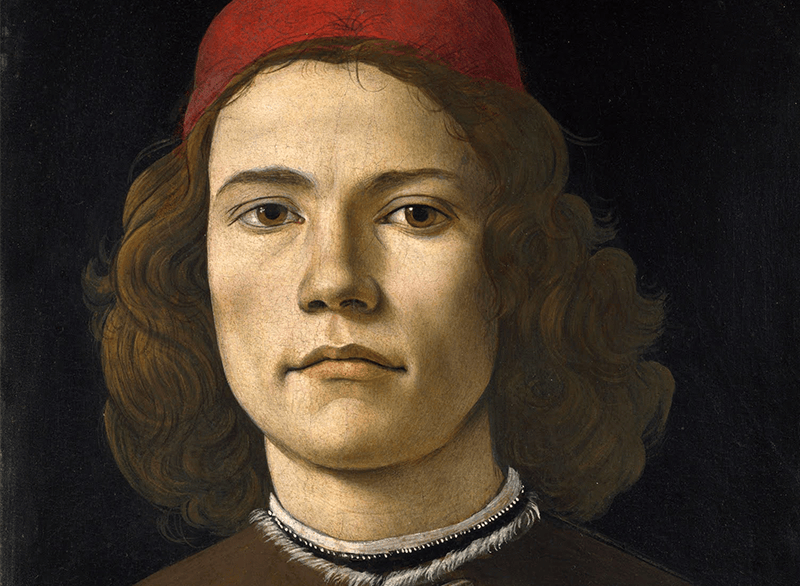
The first, of course, is Pico della Mirandola, the great Renaissance philosopher. I had studied him when attending classes at the School of Economic Science in London. Giovanni Pico della Mirandola was an extraordinary figure of the early Renaissance, born in 1463 and dying, astonishingly, at only thirty-one.
Together with other great Renaissance thinkers such as Marsilio Ficino, Pico helped create the intellectual background to Italian humanism. His vision placed enormous importance on mankind’s capacity for reason, intellect and self-development. His famous Oration on the Dignity of Man is perhaps the clearest expression of this remarkable faith in human potential. It is difficult not to be attracted to a man who, in so short a life, could formulate ideas of such breadth and ambition.


Pico belonged to the powerful Pico family, which ruled Mirandola for centuries and transformed it into a strongly fortified Renaissance town. Its castle and defensive walls made it something of a model of the fortified city. Much of the fortification has disappeared, but the remarkably regular grid of the historic centre remains. Walking through it reminded me of other planned fortified towns such as Palmanova and Sabbioneta.
The second thing that Mirandola brought to mind was much more recent and much more terrible: the earthquake of 2012.
It is easy to imagine that earthquakes belong principally to mountainous regions, but the Po Valley is a great alluvial plain. Beneath those apparently flat and tranquil fields, however, lies a much more complicated geological structure. The 2012 earthquakes were caused by shallow thrust faults associated with the buried northern Apennine structures beneath the Po Basin. The result was a devastating series of earthquakes, particularly in May 2012, which caused enormous damage in Mirandola and surrounding towns such as Finale Emilia.


What struck me, visiting Mirandola now, was how little obvious evidence remained of the disaster. The earthquake had caused terrible destruction, yet the town has been remarkably reconstructed. Here and there one can still see buildings held together by steel reinforcement or awaiting further restoration, but in general the historic centre has regained its character.
The great exception is the Pico Castle itself. This was the heart of the Pico family’s power, the place associated with the rulers of Mirandola and with the extraordinary history of the town. It is still undergoing restoration, and I shall have to return to Mirandola when the work is finally complete.
The cathedral, Santa Maria Maggiore, has also undergone extensive restoration. It was reopened to the public in 2019. Inside, its simplicity is rather moving. At the end of the left aisle is a striking modern Crucifixion fresco by the Italian painter Pietro Annigoni in memory of his father whose family came from this town. Annigoni was the same artist who famously painted Queen Elizabeth II, and his Crucifixion has an almost three-dimensional presence. It is an unexpected and memorablie work in such an old church.


Apart from the cathedral and the castle, there is the pleasant central square and the orderly streets of the old town. We stopped simply for an ice cream. It was a wonderfully restful alternative to stopping at a motorway service station, and it gave us time to look around and absorb the atmosphere of the place.


What stayed with me most was an impression of the extraordinary industriousness and resilience of this part of Emilia-Romagna. After the earthquake, the people of Mirandola set about rebuilding their town, and the results are impressive. There is something particularly satisfying in seeing a community not merely survive a catastrophe but recover its confidence and continue to thrive.
In that sense there is perhaps an unexpected connection between the two Mirandolas that had come into my mind: Pico della Mirandola’s extraordinary faith in the capacity of human beings to use their intelligence and creativity, and the very modern demonstration of that same human capacity in rebuilding the town after disaster.
Mirandola is not, perhaps, a place for which one would make a special journey from the other side of Italy. But travelling between Modena and Verona, it makes an excellent stop — a pleasant town, a fascinating historical connection, and a striking example of how a community can recover from one of the great disasters of modern times even to become one of Italy’s major centres for the bio-chemical industry. The obvious alternative would have been Mantova. But we had already visited Mantova for a friend’s wedding, and that is another matter altogether. Mantova deserves a day, two days, perhaps even three.
Mirandola needs only a few hours.
But those few hours are well spent.

***

If you enjoyed this post, please consider clicking the Like button or leaving a comment. It lets me know that my writing is reaching people.


Confession of Faith. Part Two: Travel and the Search for God

My discovery of other religions coincided with another great discovery of adolescence: girls, attraction, love and sexuality

Perhaps it was inevitable that these two journeys should happen together. I was not only questioning the religion into which I had been born; I was also leaving childhood behind and entering another world entirely.

There was a girl called Rita.

It is interesting that she had the same name as my grandmother, the deeply religious woman who had first introduced me to Catholicism in Italy, a woman who had converted her husband from an atheist anarchist to a mrmber of the Franciscan Third Order. Yet this Rita was not especially religious. She was simply a beautiful person, a beautiful presence in my life.

She lived in a house on Dulwich Common, and I became completely infatuated with her. Because she was Catholic, I even asked to go to church with her. I found myself returning to the Roman Catholic Church in East Dulwich, not because of theology, not because of obligation, but because Rita was there.

At that age, affection and spirituality became mixed together. The teenage parties of those days were innocent by modern standards. We were thrilled simply to hold hands, or to sit together, or perhaps to receive a kiss. These small moments seemed enormous. They carried all the excitement and mystery of growing up.

At one of these parties, with Rita sitting on my lap and holding hands with me, I began talking about philosophy and religion. I had been reading Plato, particularly The Symposium, and I started explaining my ideas about Christianity and Plato — the idea that perhaps Christian ideas had connections with ancient philosophy, with different aspects of humanity seeking unity.

Looking back, I must have been a rather unusual teenager, discussing Plato and theology while trying to impress a girl I adored.

Unfortunately, Rita’s parents heard about these conversations, and they clearly became concerned. When her birthday party came around, everybody was invited except me.

But I could not accept this. I thought: after everything, after the friendship we had, after the affection I felt, I had to go.

So I went to the house in Dulwich Common.

The door opened, and her parents told me to go away. They did not want me there.

But then something extraordinary happened. My friends who were already inside came to my defence.

“No, no,” they said. “We want Francis here. Let him come in.”

Eventually, Rita’s mother relented. Perhaps she realised that she had misunderstood me. I was allowed into the party.

That moment was incredibly important for me. At a very vulnerable time in my life, when I was moving from childhood into adolescence and searching for who I was, I received acceptance from my friends. I discovered that I had value. I discovered confidence.

It was not only about a party. It was about belonging.

Around the same period, another important event happened involving my stamp collecting.

Stamp collecting had always fascinated me. But my enthusiasm led me into trouble. After my earlier experiences with shoplifting, I found myself in a much more serious situation. This time it involved stamps — ordinary Commonwealth stamps from places like the Gold Coast, Sierra Leone and India — but it was still stealing.

Eventually I was discovered.

I was not arrested, but I was taken back to the shop and faced the possibility of serious consequences. I had to return what I had taken and face the humiliation of what I had done.

In a strange way, this experience became another turning point. I was confronted with the consequences of my actions and was given another chance.

Then my search for religion took another unexpected direction.

Through my stamp collecting, I discovered the Church of Jesus Christ of Latter-day Saints.

Near to the stamp dealer there was a magnificent new building in Exhibition Road. It was built in white marble, a beautiful neoclassical structure full of light and grandeur. I was attracted by the building itself and entered out of curiosity.

Inside, I met two young American missionaries.

They greeted me with warmth and friendliness. Their American accents, their enthusiasm and their openness completely fascinated me. They welcomed me, they listened to me, and they talked with me about God, faith and the meaning of life.

For the first time, I felt that I was not simply being told what to believe. I felt I was being invited to discover something for myself.

They spoke about their faith, about Joseph Smith, about the Book of Mormon and about Moroni, the angel connected with their beliefs. It was a world completely different from the Catholic world I had known.

I was fascinated.

I went home and told my parents that I had discovered this wonderful religion.

My mother was horrified.

The following day she said: “Francis, you are coming with us to Our Lady of the Friars Church in Peckham”.

It was another beautiful church, a magnificent neo-Gothic building beyond the old Surrey Canal, which has now disappeared. But for me, the purpose of the visit was not simply to attend Mass.

I was told I had to confess to the priest what I had done.

I felt as though I had committed some terrible crime. But the crime was not stealing, not this time. The crime was theological. I felt I was being accused of betraying my Catholic heritage, of exploring other beliefs, of going towards what was regarded as heresy.

I confessed everything.

But afterwards, something changed inside me.

I thought: enough.

I had searched. I had explored. I had tried to find my own way. But every religious journey seemed to end with guilt, arguments and conflict.

My parents wanted me to go to church, but they themselves did not regularly go. They expected me to carry out a duty on their behalf.

So I stopped.

And that is largely how it has remained throughout my life. I have attended churches for weddings, funerals and important occasions. I have always respected these places.

But my faith developed in another direction.

I came to believe that religion must be respected because, at its best, it represents humanity’s search for something beyond ourselves. Churches, temples and religious buildings are not simply places of doctrine; they are places of beauty, memory and spiritual feeling.

Cardinal Newman wrote about the relationship between beauty and faith, and I understand that idea deeply.

When I enter a beautiful religious building, I feel drawn towards it. I feel something like a plant turning towards the sun.

The greatest art, I believe, is spiritually inspired.

Bach was spiritually inspired. Handel was spiritually inspired. Mozart was spiritually inspired. Through their music, something reaches beyond ordinary human experience.

This, for me, is where spirituality lives.

Not in arguments about rituals, not in disputes about theology, not in questions of who possesses the truth.

It lives in the feeling of wonder.

It lives in beauty.

It lives in the extraordinary human desire to reach beyond ourselves and feel that we belong to something greater.


If you enjoyed this post, please consider clicking the Like button or leaving a comment. It lets me know that my writing is reaching people.

Dear Archie


Sadly, it is now well over a month since our beloved tomcat, Archie, went missing.
We still cannot believe how he could possibly have disappeared during those three hours when we were away. It was July, and we had gone to dinner with some friends. When we came back, Archie wasn’t there. We didn’t see him that evening, but we didn’t immediately worry. We simply thought, Well, he’ll turn up in the morning for breakfast.
But the following day Sandra suddenly said, “Gosh, where’s Archie?”
And he wasn’t there.
He wasn’t there at lunchtime. He wasn’t there in the evening. And then, as the hours passed, we began to realise that he really had gone.
We searched everywhere for him. We put up notices. We telephoned people. We asked around. We did everything we could think of.
But Archie had disappeared.


There is something particularly painful about losing a cat when you don’t know what has happened to him. When a beloved animal dies in your arms, however heartbreaking that may be, there is at least a kind of closure. You know what has happened. You can say goodbye.
But when an animal simply disappears, there is no goodbye. There is only the terrible uncertainty: Where is he? What happened to him? Is he still somewhere out there?
And in some ways, that is even harder.
Archie was a rescue cat. He had originally been found and taken in by our friend Anna Valencia, the writer of The Chestnut House. Eventually, because they already had a dog and other cats, Anna had to find him another home. And so Archie came into our lives.


It is rather wonderful to think that this little cat was also responsible, indirectly, for the beginning of a friendship.
Our friendship with Anna eventually led to my translation into Italian of her book and we have remained in touch ever since. We look forward to her next book, and it is always a great pleasure to see Anna and her family — particularly her children, who have grown from two little girls into two less little girls and a small boy, who by now probably isn’t so small anymore.
So Archie gave us more than his companionship. In his own small way, he helped create relationships and experiences that have remained with us.
He came into our lives in 2019; in Fornoli’s Bar Serra to be exact, and went with me then living in Longoio in a cat carrier securely tied on the back.of my scooter.


Just think about that year.
It was before COVID. Before the terrible war in Ukraine had started. Before so many of the things that have changed our world. It was also the year that Sandra’s mother died, and the year before my heart operation.
And, sadly, during the first months of Archie’s life with us, I wasn’t always there. I was in hospital, Florence’s Careggi.
Sandra told me that Archie was really affected by my absence. Perhaps that isn’t surprising, because I remember so clearly the moment when I first picked him up at the Fornoli bar. I
From that moment onwards, he became part of our lives.
And what a life he shared with us.
He accompanied us on our walks. He was there when we moved from the old house to our new house. He was part of our walks up to the little chapel in the snow. He was simply there — one of those small presences that gradually become so woven into everyday life that you hardly notice how important they have become.
And that is why I cannot accept the idea that someone could say, “It’s only a cat.”
No.
It isn’t “only a cat”.
It is what you invest in a relationship that matters.
If you invest nothing in another person, another animal, or another living being, then perhaps their disappearance means very little. But if you give them your affection, your time, your attention and your love, they become part of you.
The cats have shared our lives.
They have been there through good times and bad times, through changes, through illness, through moves, through ordinary days and extraordinary ones. They become part of the fabric of a home and, ultimately, part of the fabric of our lives.
And Archie was part of ours.
Perhaps that is why his disappearance hurts so much.
We don’t know where he is. We don’t know what happened. We don’t know whether we will ever see him again.
And there is nothing we can do except hope.
But perhaps there is also another way of looking at it.
As Shakespeare reminds us, we all have our time upon the stage. We enter, we play our part, and eventually we leave.
Archie had his time upon our stage.
And what a pleasure it was to have him there.
So, dear Archie, wherever you are, thank you.
Thank you for the pleasure you gave us.
Thank you for accompanying us on our walks.
Thank you for being there in our old house and then in our new one.
Thank you for the memories, for the companionship, and for becoming part of our family.
Thank you, too, for the friendships that came into our lives because of you.
We miss you terribly.
You may have disappeared from our sight, dear Archie, but you have certainly not disappeared from our lives.
You will be missed.
Ever missed.
And you will remain, always, in our hearts.
Dear Archie, thank you.

***


If you enjoyed this post, please consider clicking the Like button or leaving a comment. It lets me know that my writing is reaching people.


Confession of Faith: Part One. Doubt and the Search for God —

There have been many confessions by famous people about their relationship with God: Saint Augustine, Dante, Cardinal Manning and countless others who have tried to explain their journey between belief and doubt. But before asking how one relates to God, perhaps there is a more fundamental question: is there a God to relate to at all?

This is a question I have often asked myself…ever since I was baptised as a Roman Catholic in Saint Saviour’s church Lewisham.

Do I relate to God? Do I feel that there is a God? Do I recognise some presence beyond myself? The answer is that, in my own way, I do. I feel there is an enormous, powerful force, an incredible cosmic force, responsible for everything we see, everything we experience, everything we do, everything we love and everything we believe. It is something that extends beyond human understanding, something so vast that the human brain cannot truly comprehend it. Perhaps that is why we give it a name: God.

I remember my religious instruction lessons at Dulwich College. The teacher once said something which has stayed with me throughout my life:

“Before man was, God is.”

In those few words was contained the idea that God is not something created by humanity, but something that has always existed, beyond time itself.

Yet my relationship with God has always been separate from my relationship with human organisations that claim to represent Him. My experience of religion has been a long journey of uncertainty, misunderstanding, joy, discovery and, at times, complete despair.

It began when I was a very small child at Royston House School. I was about four years old when my mother told me not to attend the religious instruction classes. The reason was simple: we were not part of that faith. I remember thinking how strange this was. I was just another child. I was one of those children. Why should I not go into the classroom with the others? Why was I different?

At that age, I could not understand theology or religious divisions. All I understood was that there was something I was excluded from.

In 1955 my parents were moving house from Lewisham to Forest Hill and staying with my dad’s parents in Sydenham since the new-build house was not yet completed -Taylor Brothers the builders were delaying things. My parents decided that the best solution was to send one of their sons away (I had one brother) while everything was sorted out.

That son was me.

I was sent to Italy in 1956, when I was not yet eight years old, to stay with my grandparents

It was a decisive moment in my life, because my grandmother was a deeply religious woman. She came from a very devout family in Turin, and her own brother, Don Vittorio, had become a priest, as was once quite common for younger sons who dedicated themselves to serving God and the community.

My grandmother introduced me to Catholicism.

Every week she would take me by the hand and walk with me to the Salesian College of San Giovanni Bosco, where I attended catechism lessons. There was a wonderful nun, Suor Giuseppina, who taught me. I learned the lessons, memorised the facts, and eventually passed the examinations for my First Communion and Confirmation which was taken at the college’s church SanAgostino.

At that age, religion was something I accepted. Like any school subject, I learned what I was taught. But unlike a school subject, it also became connected with family, beauty and belonging.

I still remember my Confirmation photograph: a small, rather timid boy wearing long trousers for the first time, with the band on my arm. I remember the celebration afterwards, the presents, the little wind-up toy car with the little dog that popped out of its window and made barking noises. These things may seem small, but they were part of a world of ceremony and happiness.

I went with my grandmother to the church of San Camillo, a beautiful Art Nouveau church. The atmosphere was powerful and attractive. I believed in God, in Jesus Christ, in sin, in confession, in being one of God’s children. At that time, it was not something I questioned.

When I returned to England, however, things changed.

At Dulwich College, through my London County Council scholarship, I entered a very different world. It was a boys’ school, with its own traditions and its own approach to religion. Sometimes I avoided the morning assemblies, but on occasions I secretly went because I wanted to understand what they were about. I discovered the beauty of the hymns. I discovered that there was something moving in singing together about God, Christ and faith.

But religion was no longer something lived naturally in my family. I went to St William of York Church in Forest Hill, but usually alone. My parents would tell me to go, and I would cycle there with my brother almost as if I were carrying out a duty. It was something one did, like visiting a relative.

Then I met Peter Vaccari.

Peter was another boy from St William of York. His background was different from mine. His father was from Battipaglia and his mother from Austria. He lived in an old house on top of a hill, a house that was unfashionable at the time because everybody wanted modern new-built homes. Yet it was a wonderful house, full of character. He had a fantastic train set, and it was a place where imagination lived.

Peter became my friend.

But Peter also introduced me to another side of adolescence. We were approaching puberty, that difficult and confusing period when boys begin to discover independence and challenge boundaries. Peter had a rebellious streak, and his mother used to complain that he was giving her grey hairs.

Through Peter, I entered a world I had not known before. There was shoplifting — what we called “acquiring.” We took things from shops because, in those days, security was nothing like today. We took Slim Jim ties, Airfix kits and other things that attracted us. I remember hiding some of these things in the boiler house because I knew I could not explain to my parents where they had come from.

Later there was the stamp collection, which caused even more trouble. I was never prosecuted, but my mother became deeply worried about the influence Peter was having on me.

Yet Peter also opened doors to a wider world. We went to the cinema, and I discovered wonderful films, including Elmer Gantry, a masterpiece. We went to the youth club, where I discovered girls.

Until then, I had lived mostly in a world of boys. Dulwich College was a boys’ school, and boys’ schools develop their own culture. Suddenly, at the youth club, girls entered my life. Peter advised me not to wear short trousers anymore because girls liked boys in long trousers.

It was the era of Elvis Presley, of G.I. Blues, of popular music arriving through 45 rpm records. I was moving from childhood into adolescence. The world was becoming much larger.

And then I began questioning religion.

I thought: why am I going to church? My parents were not taking me. They were not sharing this experience with me. Why should I continue?

So I stopped going.

But my belief in God did not disappear.

What I began to reject was not God, but the form in which God was being presented to me. Catholic worship in those days was very different. The Mass was in Latin. There was a great deal of kneeling and very little participation from the congregation. The priest seemed distant, sometimes even frightening.

I remember one priest, a Lithuanian priest, who preached a long sermon about how shameful it was that our altar was not made of marble and gold but was only painted wood. Instead of bringing me closer to God, these things pushed me away.

I began to think: surely God is bigger than this. Surely the mystery of the universe cannot depend on Latin words, ceremonies and human authority.

So I began exploring.

I looked at other Christian traditions. I went secretly to a Baptist chapel in Peckham, which sadly no longer exists. There I found something different: a more personal faith, a direct relationship between the individual and God.

I remember a Baptist minister preaching about the extraordinary faith of people in Burma who, out of devotion, used their own hair to make ropes to ring the bells of their churches. Whether the story was literally true or not, the message was powerful: faith was something living, something belonging to the heart.

I attended the Sunday school there, secretly believing that I was rebelling against my parents. Yet in reality I was searching for something deeper.

The classes were conducted by a team of enticing girls in their beautiful billowing skirts, the fashion of the time. They represented another part of growing up: the discovery of attraction, beauty and human relationships.

Throughout all this, I continued to believe in God.

I even wrote down my own theological reflections and confessions. I sincerely believed that God was the creator and the central point of the whole universe.

But I could not accept a religion simply because it had been handed down to me. I wanted a faith that I could choose, understand and make my own.

My journey was not a journey away from God.

It was a journey towards understanding what God meant to me.

***


If you enjoyed this post, please consider clicking the Like button or leaving a comment. It lets me know that my writing is reaching people.

Not So Horrid After All?


I first discovered the Orrido di Botri in the most ordinary way imaginable.
I was sitting in a café at the entrance to Bagni di Lucca when I noticed a poster advertising this extraordinary-looking canyon. The photograph was dramatic, dark and mysterious. I looked at it and thought: I want to go there.
Eventually, I did.
And only then did I realise that no photograph could really prepare you for the experience.
The Orrido di Botri is one of the most remarkable natural features of our area: a deep limestone gorge carved out over thousands of years by the waters of the Rio Pelago. Its towering walls rise above the stream, and as you walk further into the gorge, everything becomes narrower, darker and more enclosed.
I remember the extraordinary sensation of feeling embraced by the mountain.
It was an odd sort of embrace—comforting and frightening at the same time. The walls seemed to close around me. At some points the canyon became so narrow that I felt I could almost touch both sides.
The outside world disappeared.
There were no roads, no houses, no ordinary sounds of civilisation. Just rock above me, water beneath me and this immense mountain enclosure.
And then there was the darkness.
Compared with the brilliant Tuscan sunshine outside, the interior of the gorge seemed almost subterranean.
Perhaps that is why the name is so appropriate.
In Italian, orrido means something horrid, frightening or terrifying.
This isn’t simply a pretty Tuscan valley. It is wild, mysterious and, at times, genuinely intimidating.


There is also the enduring tradition that the Orrido inspired Dante’s vision of the entrance to Hell. I can certainly understand the legend.
Dante’s Inferno is full of darkness, narrow passages, terrifying landscapes and the feeling of being trapped somewhere beyond the ordinary world.
The Orrido certainly has that atmosphere.
Yet for many years, remarkably, it seemed to receive far less attention than it deserved.
People quite rightly wax lyrical about the Plateau Fiorito, the Lima Valley and the other beautiful landscapes around Bagni di Lucca. Shelley himself celebrated the surrounding landscape in Epipsychidion.
But the Orrido?
It seemed almost forgotten.
Thankfully, that is changing.
The Orrido is increasingly recognised as one of the great natural treasures of the area. But increased interest also brings responsibility. This is not a place for careless tourism. Visitors have to register, wear protective helmets because of the danger of falling stones, and take great care negotiating the wet and slippery rocks along the stream.
It needs to be visited.
But it also needs to be understood and protected.
And that is where culture can play an important part.
A guide can explain the geology, the wildlife and the history.

But an artist or poet can perhaps communicate something else entirely:
what the Orrido feels like.
That was the idea behind the wonderful event we attended this Sunday.


At the heart of the initiative is Mariavittoria Castrucci, one of the Orrido’s guardians and passionate advocates. With her background in trekking and walking—and as a marathon champion—she knows the landscape intimately. But what is particularly impressive is her determination to make people appreciate the Orrido at a deeper level and to encourage responsible tourism.
Her message was simple: we need people not merely to visit the Orrido, but to care about it.
And so, following months of planning involving members of our local poetry groups—Mara, Maria, Rossana, Alexandra and others—we gathered together to celebrate the Orrido through poetry and art.
The poets brought their poems and haiku.

And there were artists too. I decided to have a go. I managed to scratch something out that I had never attempted before—and, rather surprisingly, enjoyed myself.
The Orrido was making artists of us all!

Roberto, Rossana, Mara, Maria, Sandra, Alessandra and others each contributed their own poeticsl evocation of the gorge.
And what was fascinating was how stylistically different yet paradoxically in such a similar way we asaw the same place.
For all of us it was the darkness, the limpid freezing waters, the towering rocks.and above all the mystery and the extraordinary sensation of standing inside a mountain.
A geologist can tell you how the canyon was formed. A guide can tell you how to walk through it safely. But a poem can tell you what it feels like to be there.
And this, I think, is how the Orrido can become more than simply another tourist attraction.
It can become part of the cultural life of Bagni di Lucca.
Indeed, the poems and artistic contributions from this project are to be brought together in a little book, which will be published next year. Its purpose is not simply to advertise the Orrido, but to explore its cultural dimension and encourage people to appreciate this extraordinary place on a deeper level.
We shall certainly be telling you more about the book when it appears..
We sat together, talked, laughed, listened to the poems and admired the artistic efforts. We concluded, quite properly, with a glass of Prosecco.
A late-summer afternoon, mountains, poetry, painting, friendship, good food and Prosecco—all beside one of the most extraordinary natural wonders of our own backyard.


I came away convinced that the Orrido di Botri is entering a new chapter.
For too long it was the overlooked treasure of the area.
Now it is being rediscovered.
But I hope we don’t simply bring more people to it.
I hope we bring more understanding.
Because the Orrido doesn’t merely show you a landscape.
It does something to you.
It makes you feel small.
It makes you feel slightly afraid.
It makes you feel wonderfully alive.
And, if you’re lucky, it makes you feel that the mountain itself has reached out and embraced you.


My thanks to everyone who helped make this memorable day possible, and especially to the remarkable Mariavittoria Castrucci—a brilliant organiser, a passionate guardian of the Orrido and a real beacon of what can be achieved when nature and culture are brought together.

***

If you enjoyed this post, please consider clicking the Like button or leaving a comment. It lets me know that my writing is reaching people.


The Granchio Does It and Wins the Trivial Pursuits Night!

Well, what a brilliant evening!
Last night the Teatro Accademico in Bagni di Lucca was packed for the great Trivial Pursuit battle between the four contee— Granchio, Alce, Trota and Vipera — and I had the enormous pleasure of being there not just as a spectator, but as a member of the Granchio team.
And, even better, we won!

It certainly wasn’t obvious that we were going to win at the beginning. After the first round, there were no fewer than three teams sitting on seven points out of ten.
So there was a tie-break to decide who would go forward.
Fortunately, we managed to beat our opponents and secured our place in the finals. And then came our confrontation with the Alce — the Deer.

There were plenty of awkward questions and they were certainly not of the “What is the capital of France?” variety. They had been devised by Patrizio Andreuccetti, the Mayor of Borgo a Mozzano, who had also set the questions last year.
But our team was magnificent.
We worked together brilliantly under the captaincy of Luigi ‘Louis’ Rondina.
And then, finally, it was over.
WE HAD WON!
The Granchio had come first!
There was a great cheer from the team, and I have to say I was absolutely thrilled.

What made the evening particularly enjoyable was that it wasn’t simply a quiz. It really was a show.
The Teatro Accademico was packed, the presentation was excellent, the background music helped create a real atmosphere, and the audience was thoroughly involved with cheering, tension and laughter.
Congratulations to Louis and to all my fellow Granchi. We made a great team, and we certainly deserved our victory.
And congratulations, too, to Priscilla Valentino, who has helped create and develop the Bagni di Lucca Games. It is turning into a wonderful addition to the town’s calendar.

There are still several more competitions to come so do check your Games calendar.

FORZA GRANCHIO!
Long may the Bagni di Lucca Games reign!

***

If you enjoyed this post, please consider clicking the Like button or leaving a comment. It lets me know that my writing is reaching people.


IL GRANCHIO CE L’HA FATTA! UNA SERATA DI TRIVIAL DA RICORDARE

Che serata fantastica!

Ieri sera il Teatro Accademico di Bagni di Lucca era gremito per la grande sfida di Trivial tra i quattro contee Granchio, Alce, Trota e Vipera. Ho avuto l’immenso piacere di essere presente non solo come spettatore, ma come membro della squadra Granchio.

E, cosa ancora migliore, abbiamo vinto!
All’inizio non era affatto scontato che avremmo vinto. Dopo il primo round, ben tre squadre si trovavano a quota sette punti su dieci.

Quindi si è reso necessario uno spareggio per decidere chi sarebbe passato al turno successivo.
Fortunatamente, siamo riusciti a battere i nostri avversari e ad assicurarci un posto in finale. E poi è arrivato il nostro scontro con gli Alce, i Cervi.
Non sono mancate le domande imbarazzanti, e di certo non erano del tipo “Qual è la capitale della Francia?”. Le domande erano state ideate da Patrizio Andreuccetti, il sindaco di Borgo a Mozzano, che le aveva formulate anche l’anno scorso.

Ma la nostra squadra è stata magnifica.
Abbiamo lavorato insieme in modo brillante sotto la guida del capitano Luigi ‘Louis’ Rondina.

E poi, finalmente, è finita.
AVEVAMO VINTO!
I Granchi erano arrivati ​​primi!
C’è stato un grande applauso da parte della squadra e devo dire che ero assolutamente entusiasta.

Ciò che ha reso la serata particolarmente piacevole è stato il fatto che non si trattava di un semplice quiz. Era un vero e proprio spettacolo.
Il Teatro Accademico era gremito, la presentazione è stata eccellente, la musica di sottofondo ha contribuito a creare una vera atmosfera e il pubblico è stato completamente coinvolto con applausi, tensione e risate.

Congratulazioni a Louis e a tutti i miei compagni Granchi. Abbiamo formato una grande squadra e ci siamo certamente meritati la vittoria.
E congratulazioni anche a Priscilla Valentino, che ha contribuito a creare e sviluppare i Bagni di Lucca Games. Sta diventando una splendida aggiunta al calendario cittadino.

Ci sono ancora molte altre competizioni in programma, quindi controllate il calendario dei Games.

FORZA GRANCHIO!
Lunga vita ai Bagni di Lucca Games.

Are We Watching History Repeat Itself?

Every day social media is filled with images and stories of women living under strict religious rule. Covered from head to toe, denied the freedom to study, to travel alone, to choose their own lives, to enter a public park or even to speak above a whisper. For many in the West, these images are shocking. They appear to represent everything that generations of women struggled to escape.

In Italy, women only gained the vote in 1946 and could only obtain a divorce and remarry in 1970. The freedoms enjoyed today were not handed down as gifts; they were won through decades of political and social change. Yet many people now wonder whether hard-won liberties can ever be taken for granted.

What strikes me is not simply the present, but the past.
Western civilisation has experienced something remarkably similar before.
When Christianity emerged from being a persecuted sect to becoming the official religion of the Roman Empire, it transformed a civilisation whose values had been shaped by Greek philosophy and Roman law. The classical world was far from perfect—it tolerated slavery, political violence and vast inequalities—but it also celebrated intellectual inquiry, public debate, literature, theatre and, in many respects, a far more relaxed approach to private life than would later prevail.

Then came a new certainty: there was one God, one truth, one moral law. Behaviour that had once been considered a matter of personal choice became a matter of sin. Religious authority increasingly reached into every aspect of life.
Nothing illustrates this more dramatically than the murder of the philosopher Hypatia in Alexandria in AD 415. One of the greatest intellectuals of her age she was brutally killed by a Christian mob inflamed by religious fanaticism. Whether her death was driven by politics, religion or both, it remains a warning of what can happen when absolute certainty silences reason.

Today, many critics of Islam point to the oppression of women under the most rigid interpretations of Islamic law. Yet the deeper lesson is not about Islam alone. The impulse to regulate private life in the name of divine authority has appeared, at different times, within all three great monotheistic religions—Judaism, Christianity and Islam. Their histories are rich, diverse and often inspiring, but they also contain episodes in which religious certainty curtailed freedom and dissent.

Margaret Atwood captured this danger brilliantly in The Handmaid’s Tale. Her dystopia is terrifying precisely because it does not invent a new form of oppression. It borrows from patterns that have appeared throughout history whenever ideology or religion claims the right to control every aspect of human life.

None of this is an argument against faith. Millions draw compassion, hope and purpose from their religion. But history should make us wary whenever any belief system—religious or secular—demands unquestioning obedience, dictates how women should live, or insists that morality can only be enforced through law.
Freedom is far easier to lose than to regain.

The debate about women’s rights today is not simply about one religion or one part of the world. It is about a recurring pattern in history. Civilisations often move between periods of openness and periods of control. Progress is not inevitable. Rights are not permanent. They survive only so long as people are prepared to defend them.

History may not repeat itself in exactly the same way. But it has an unsettling habit of returning in familiar forms.

That, perhaps, is the real lesson we should be discussing.

***


If you enjoyed this post, please consider clicking the Like button or leaving a comment. It lets me know that my writing is reaching people.


Stiamo forse assistendo al ripetersi della storia?

Ogni giorno i social media sono pieni di immagini e storie di donne che vivono sotto un rigido regime religioso. Coperte dalla testa ai piedi, private della libertà di studiare, di viaggiare da sole, di scegliere la propria vita o persino di entrare in un parco pubblico. Per molti in Occidente, queste immagini sono scioccanti. Sembrano rappresentare tutto ciò da cui generazioni di donne hanno lottato per sfuggire.

In Italia, le donne hanno ottenuto il diritto di voto solo nel 1946 e il divorzio e il nuovo matrimonio solo nel 1970. Le libertà di cui godiamo oggi non ci sono state concesse in dono; sono state conquistate attraverso decenni di cambiamenti politici e sociali. Eppure, molti ora si chiedono se le libertà conquistate a caro prezzo possano mai essere date per scontate.

Ciò che mi colpisce non è solo il presente, ma il passato.
La civiltà occidentale ha già vissuto qualcosa di straordinariamente simile.
Quando il Cristianesimo, da setta perseguitata, divenne la religione ufficiale dell’Impero Romano, trasformò una civiltà i cui valori erano stati plasmati dalla filosofia greca e dal diritto romano. Il mondo classico era tutt’altro che perfetto: tollerava la schiavitù, la violenza politica e profonde disuguaglianze, ma celebrava anche la ricerca intellettuale, il dibattito pubblico, la letteratura, il teatro e, per molti aspetti, un approccio alla vita privata molto più rilassato di quello che si sarebbe poi affermato.

Poi arrivò una nuova certezza: esisteva un solo Dio, un’unica verità, un’unica legge morale. I comportamenti che un tempo erano considerati una questione di libera scelta divennero una questione di peccato. L’autorità religiosa si estese sempre più a ogni aspetto della vita.
Nulla illustra questo concetto in modo più drammatico dell’assassinio della filosofa Ipazia ad Alessandria nel 415 d.C. Una delle più grandi intellettuali della sua epoca, fu brutalmente uccisa da una folla cristiana aizzata dal fanatismo religioso. Che la sua morte sia stata motivata dalla politica, dalla religione o da entrambe, rimane un monito su ciò che può accadere quando la certezza assoluta mette a tacere la ragione.

Oggi, molti critici dell’Islam sottolineano l’oppressione delle donne sotto le interpretazioni più rigide della legge islamica. Eppure, la lezione più profonda non riguarda solo l’Islam. L’impulso a regolamentare la vita privata in nome dell’autorità divina si è manifestato, in momenti diversi, in tutte e tre le grandi religioni monoteiste: ebraismo, cristianesimo e islam. Le loro storie sono ricche, varie e spesso fonte di ispirazione, ma contengono anche episodi in cui la certezza religiosa ha limitato la libertà e il dissenso.

Margaret Atwood ha colto brillantemente questo pericolo ne “Il racconto dell’ancella”. La sua distopia è terrificante proprio perché non inventa una nuova forma di oppressione. Prende spunto da modelli che si sono ripresentati nel corso della storia ogni volta che un’ideologia o una religione ha rivendicato il diritto di controllare ogni aspetto della vita umana.

Nulla di tutto ciò è un argomento contro la fede. Milioni di persone traggono compassione, speranza e un senso alla propria vita dalla religione. Ma la storia dovrebbe renderci cauti ogni volta che un sistema di credenze – religioso o laico – esige obbedienza incondizionata, detta come le donne dovrebbero vivere o insiste sul fatto che la moralità possa essere imposta solo attraverso la legge.
La libertà è molto più facile da perdere che da riconquistare.

Il dibattito odierno sui diritti delle donne non riguarda semplicemente una religione o una parte del mondo. Riguarda uno schema ricorrente nella storia. Le civiltà spesso oscillano tra periodi di apertura e periodi di controllo. Il progresso non è inevitabile. I diritti non sono permanenti. Sopravvivono solo finché le persone sono disposte a difenderli.

La storia potrebbe non ripetersi esattamente nello stesso modo. Ma ha la preoccupante abitudine di ripresentarsi in forme familiari.

Questa, forse, è la vera lezione di cui dovremmo discutere.

800 Years After His Death: What St. Francis Means to Me


This year marks 800 years since the death of St. Francis of Assisi, a man who remains at the same time familiar and elusive. Eight centuries have passed, and yet he continues to speak across generations, inspiring artists, poets, musicians, environmentalists, and anyone searching for a different way of living.


When I think of St. Francis, I think first of Giotto’s fresco in the Basilica of Santa Croce in Florence, where Francis is portrayed surrounded by his brothers as he says farewell to the world. It is a deeply human image: not a distant saint, but a man who was profoundly loved at the end of his journey.


I also think of the Scrovegni Chapel in Padua, where his presence still feels extraordinarily close. Francis was not only a religious figure; he became, in a sense, one of the first great influencers in history. Dante dedicated an entire canto of the Divine Comedy to him, countless artists have tried to represent him, and even Zeffirelli brought his story to the screen in Brother Sun, Sister Moon — a beautiful film, but still unable to fully capture his mystery.
Because this is the point: Francis escapes every definition.
Some people, jokingly, have described me as “undefinable” in the same way. I like the comparison, although it does not go very far. Francis transformed the world; I am simply an imperfect human being, a sinner trying to make sense of life.
As part of the anniversary celebrations, a local conference included Professor Fabrizio Nicoli speaking about the Franciscan Rule in a detailed and technical way. Bruno Micheletti then gave an excellent presentation about the Franciscan influence throughout the Valle del Serchio, showing how Francis’s ideas spread through local Franciscans far beyond Assisi, reaching villages and communities throughout Italy and even the Arab world. After all, St. Francis met the Sultan of Egypt and tried, in his own way, to overcome religious barriers. It was, I believe, a lecture worthy of publication.


There was also an unusual but interesting contribution from Dr Betti, brother of our pharmacist, who offered a Jungian interpretation of St. Francis. Some of the ideas may have pushed the interpretation a little too far, but I appreciated the attempt to look at Francis from another perspective. Great figures are never exhausted by a single point of view.


Yet the central question remains: how could a man embrace poverty in such a radical way? How could he renounce comfort, material possessions, and even concern for his own physical well-being?
The story of “perfect joy” offers a key. Francis describes joy not as success or comfort, but as the moment when one is cold, hungry, rejected, and exhausted — and yet remains inwardly at peace. At first this seems like a paradox. Why should suffering be joy?
Perhaps because it is the moment when everything superficial falls away. When there is nothing left to defend and nothing left to prove, another kind of freedom emerges. Perfect joy, for Francis, is the discovery that even when stripped of everything, one continues simply to be.
Francis has accompanied me since my youth, when I first read the Little Flowers of St. Francis. Those stories seemed almost like fairy tales, yet they carried a deeper truth: the story of a man who saw beauty everywhere.
Then there is the Canticle of the Creatures, one of the earliest works of Italian poetry, remarkable for its simplicity and its breadth. A medieval friar praising the sun, the moon, the earth, water, and fire seems almost modern in his ecological sensitivity, yet at the same time completely timeless.
Here in the Valle del Lima, his presence still feels close, especially in the frescoes of the nearby monastery of San Francesco, which have been intelligently interpreted by Christopher Stace, an English scholar living in the neighbouring valley. He has also studied and translated Bartolomeo of Pisa’s Conformity of the Life of St. Francis to the Life of Christ, which draws striking parallels between Francis and Jesus.
Of course, there is only one Christ and only one Francis. They cannot be merged together. But Francis’s desire to imitate Christ is what gives strength to his life.
There are aspects of him that I still struggle to understand: his radical self-denial, his extreme poverty, and his apparent neglect of the needs of the body. I also question his relationship with St. Clare. Spiritual love and human affection do not have to be in contradiction; even the Song of Songs celebrates their unity.
Yet other aspects speak to me deeply.
I admire his courage in rejecting the wealth and expectations of his family. He rejected the logic of money and prestige. A refusal of that kind is rare and profoundly courageous.
Above all, I am moved by his love for nature and animals. The story of the Wolf of Gubbio — whether taken literally or symbolically — reveals a vision in which even fear can be transformed through compassion.
Perhaps this is his greatest lesson: that what we fear can sometimes be healed, and that even we ourselves can be tamed.
Francis was also a poet, a musician, a troubadour, and a man of joy. He was not defined only by renunciation. His vision of simplicity and freedom appears surprisingly modern, almost “hippy” in spirit, as has emerged in recent reflections.
The conference took place in the church of Pieve di Controni, one of the most beautiful churches in the Valle del Lima. It is a Romanesque masterpiece, often overlooked, a place whose bell tower I have climbed, where I have sung, and from where I have looked out over the valley. Places like this remind us how deeply history and spirituality are intertwined with the landscape.
And then there is something more personal.
My name is Francis.
I have often reflected on this. My mother chose well. As the years pass, I feel increasingly close to the saint whose name I carry.
One day, like him, I too will have to leave this world. I do not know when, but I hope to do so with the same peace that he found. I hope I will have no great regrets, and that I will feel that my life had meaning, that it mattered, and that perhaps I left the world a little better than I found it.
I do not want to spoil this world, nor what comes afterwards.
So, after 800 years, St. Francis continues to speak — not because he was perfect, but because he was always searching. He struggled, he doubted, he loved, and he transformed.
And I am grateful that my mother gave me his name.
Francis.

Postscript. On September 4 and 5 there will be a conference on saint Francis. This is the programme.


THE DEATH OF SAINT FRANCIS (Giotto)


He waits for Sister Death: they kiss his feet,
his hands, his arms; they cling and will not leave
the poor one. Yet he lies in winding sheet,
a truth their grieving hearts cannot believe.
The upraised palms and eyes still plead and grieve,
yet his gaze passes beyond his failing beat;
he does not meet their glance, nor can receive
the mystery of Her cold, eternal heat.
But yet the brothers shall resign and meet
the final things that sorrow’s threads shall weave;
and he shall sit beside his Lord and eat,
as swifts and swallows in the summer leave.
The morning hymn begins: “Let us now praise
the bright, ecstatic wonder of His ways.”

***


If you enjoyed this post, please consider clicking the Like button or leaving a comment. It lets me know that my writing is reaching people.

Two Women, One Villa— a Love Affair That Has Lasted for Two Centuries

“Two women, two centuries, one villa.”
That was the intriguing title behind the second of three Napoleonic events being held at the Complesso di San Micheletto in Lucca, the old convent complex which has become such an important venue for exhibitions and conferences.


But who were these two women? And what exactly was the palace—or, more accurately, the villa—which connected them?
The first was Elisa Bonaparte Baciocchi, Napoleon’s sister and the woman who became Princess of Lucca and Piombino.

The second was Mimì Pecci-Blunt, the wealthy and glamorous twentieth-century woman who, more than a century later, bought the same villa and made it the centre of an extraordinary international cultural world.


The villa, of course, is the Villa Reale at Marlia, in the foothills of the Pizzorne, those beautiful hills north of Lucca which form the beginning of the climb towards the Apennines.


And the more I listened to the story of these two women, the more fascinating the parallels between them became.
The person who actually brought this story to life for us was Simonetta Giurlani Pardini, who delivered the conference and whose research lies at the heart of the exhibition. She has been carrying out research in the Grönberg Archive at Villa Reale di Marlia, work which has produced remarkable discoveries and which is still continuing. The archive itself, with its boxes of documents, letters, photographs and personal material, seems to contain layer after layer of history waiting to be rediscovered.


Two strong women
First of all, both Elisa and Mimì were remarkably strong women.
Elisa was ambitious, intelligent and politically formidable. Napoleon himself is said to have described her as “my first minister”, which tells us something about the esteem in which he held her—and also about her ability.
She married Felice Baciocchi, who became Prince of Lucca and Piombino. But there seems little doubt about who was the dominant personality in that marriage. Elisa was the political force. One cannot help thinking that Felice may not always have been quite so felice.
When Elisa came to Lucca, she found a Renaissance estate which she was determined to transform. Two existing houses were joined together and turned into a magnificent residence in the fashionable neoclassical style of the period.
But this was no modest country house.
The new villa was filled with symbols of power and grandeur: Napoleonic eagles, imperial crowns and all the visual language associated with the extraordinary dynasty which, for a brief period, dominated much of Europe.
Elisa was not simply building a house. She was making a statement.
She also transformed the gardens. The old Renaissance idea of strict formality and control gave way, at least in part, to a more naturalistic landscape, influenced by the English garden. The result was something new and spectacular: a place where architecture, landscape and political ambition all came together.
This was to become the Villa Reale—the Royal Villa—which we can still visit today.
And Elisa did something else. She created a salon.
Important musicians, artists and visitors came to her court. Among those associated with her was Niccolò Paganini, whose relationship with Elisa has always been surrounded by gossip and speculation, including rumours of a love affair.
Whether or not all the stories are true, the important point is that Elisa made her villa a centre of cultural as well as political life.
More than a century later, another extraordinary woman would do much the same thing.


Enter Mimì
Mimì Pecci-Blunt came to the Villa Reale in the twentieth century and fell completely in love with it.
Like Elisa, she saw something in the villa that was more than simply a beautiful building. It was a place with a history, a personality and an almost theatrical potential.
She was fascinated by the idea that this had once been the summer residence of Elisa Bonaparte Baciocchi. But she did not merely preserve the villa as a monument to the past. She reinvented it for her own age.
Mimì transformed Villa Reale into an international centre of intellectual and artistic life.
Once again, there was a salon.
But this time the atmosphere belonged to the twentieth century. The guests and visitors included some of the most remarkable names of the modern artistic world: Igor Stravinsky, Sergei Diaghilev, Salvador Dalí, Pablo Picasso, Jean Cocteau and Alberto Moravia, among others.
There were artists, musicians, writers, aristocrats and members of royalty. Even Princess Margaret was among those connected with the extraordinary social life of the villa.


Mimì had recreated something that Elisa would immediately have understood.
A great house can be much more than a place in which to live. It can become a stage.
And the people who come onto that stage can make history.


Cultural flirtation
Perhaps this is what fascinated me most about the whole story.
These women were not necessarily the artists or composers themselves. Their importance lay partly in the fact that they created the environment in which creativity could flourish.
They brought remarkable people together.
They provided a setting in which musicians could perform, artists could meet, writers could talk, intellectuals could argue, friendships could be formed and perhaps a few romances could begin as well.
There is almost a kind of cultural flirtation about it.
That is the phrase which came to me while listening to the conference.
These women flirted culturally with the most imaginative and creative people of their time. They surrounded themselves with talent, encouraged it, enjoyed it and, in doing so, became part of the cultural history of their age.
And Mimì was by no means alone.
The late nineteenth and early twentieth centuries saw the emergence of a remarkable number of women who created cultural worlds around themselves. One thinks immediately of Alma Mahler, of Vita Sackville-West, and of the women associated with the Bloomsbury world.
It was as though, after centuries in which women had often been expected to remain discreetly in the background—or metaphorically behind the curtains—they increasingly came into the open and created spaces of their own.
The drawing room, the salon, the country house and the villa became places of cultural power.
And this power could be considerable.
These women were not simply hostesses pouring tea for famous men or playing croquet on the lawns. They were choosing whom to invite, creating networks, encouraging artistic friendships and providing places where important ideas could circulate.
In their own way, they were curators of human creativity.


A third love affair
But the story does not end with Elisa and Mimì.
In fact, there is a third act.
When Mimì died in 1971, the Villa Reale began a long and gradual decline. It remained in the hands of her heirs, but by the early years of the twenty-first century it was desperately in need of care, restoration and investment.
And then, as if history had decided to repeat itself, along came another couple who fell in love with the place.
Jean and Maria Grünberg saw what Elisa had seen and what Mimì had seen before them.
They saw beyond the decay.
They saw the potential.
And, perhaps most importantly, they understood that the villa could not survive simply as a private possession. Restoration on this scale required enormous resources, and those resources had somehow to be found.
So they embarked upon a remarkable programme of restoration and transformation.
The Villa Reale and its gardens were opened more fully to the public. Tourism became an important part of the future of the estate. And, rather than simply creating a museum, the new owners developed a programme of cultural events: conferences, concerts, guided tours, costume occasions, dances, fireworks and other activities.
In this sense, they have done something rather similar to what has happened to many of the great stately homes of England.
A historic house survives not by remaining frozen in time but by finding a new role.
Villa Reale has become a living cultural destination.
The archives come alive
One of the most fascinating things about the current work surrounding the Villa Reale is the exploration of its archives.
Simonetta Giurlani Pardini’s research, carried out as part of the work of the association Napoleone ed Elisa: da Parigi alla Toscana, has helped bring to light an extraordinary collection of material connected particularly with Mimì Pecci-Blunt and the world which she created. The exhibition itself was curated by Roberta Martinelli, with research and texts by Simonetta Giurlani Pardini and an exhibition design by Lucia Maffei.
There are letters, photographs and documents still waiting to be explored.
And among the discoveries have been remarkable letters written by Elisa herself, opening new possibilities for understanding both her life and Napoleonic Lucca.
Before entering the conference room, we passed through the exhibition itself, and I found it quite astonishing.
There, in photographs and documents, was a whole lost world of twentieth-century cultural life.
You could almost imagine the conversations taking place.
Stravinsky discussing music.
Cocteau talking brilliantly about almost anything.
Artists, writers and aristocrats arriving for the weekend.
And Mimì at the centre of it all, not simply watching but orchestrating the whole performance.


And a word for Anna Benedetto


I must also say something about Anna Benedetto, because she too deserves a place in this story.
For me, there is a very personal connection.
Anna was one of my first students of English when I came to Lucca almost twenty years ago.
It is therefore particularly pleasing to see the energy, resilience and flair which she has brought to the organisation and communication of these remarkable Napoleonic events. Anna has also been involved with Lucca Comics & Games and a variety of other major cultural initiatives, and she has a particular talent for communicating complicated and fascinating subjects to the public and making people feel that they are part of an event rather than simply spectators.
She is also part of the association behind these Napoleonic initiatives and has been involved in the communication surrounding the exhibition and the wider programme.
There is something particularly impressive about people who combine scholarship and historical research with the ability to communicate.
Research is one thing.
Finding the stories is another.
But persuading people to come and listen, to visit an exhibition, to become interested in a subject they may previously have known nothing about—that is another skill altogether.
And Anna has that skill.


One villa, three transformations
The more I thought about it, the more I realised that the history of Villa Reale can almost be seen as a sequence of transformations.
First, Elisa Bonaparte Baciocchi transformed the physical villa. She took an existing estate and turned it into a neoclassical expression of imperial power and royal magnificence.
Then Mimì Pecci-Blunt transformed its social and cultural life. She made it an international salon and filled it with some of the most interesting people of the twentieth century.
Finally, the Grünbergs transformed its future. They rescued the villa from decline and found a way of making it survive in the modern world.
Three different ages.
Three different visions.
But one recurring theme.
People falling in love with the same place.
Perhaps that is the real secret of Villa Reale.
It has survived because, again and again, somebody has fallen in love with it.
Elisa transformed it.
Mimì reinvented it.
The Grünbergs rescued it.
And each generation has left something of itself behind.
That, perhaps, is what makes a historic building truly alive. Not simply its architecture, however beautiful. Not simply its gardens, however magnificent. But the succession of people who have loved it enough to imagine something new for it.
Villa Reale is therefore not just a monument to the past.
It is a story of ambition, beauty, power, glamour and imagination.
And above all, it is a story of women—and later a couple—who looked at the same extraordinary place and thought:
This could become something wonderful.
Perhaps that is why I found the conference so absorbing.
These events are not simply lectures about history and dead people. They reveal something much more interesting: the way history continues through the people who inherit, reinterpret and fall in love with what has been left behind.
And sometimes, it seems, all it takes to save a palace is another love affair.

***

If you enjoyed this post, please consider clicking the Like button or leaving a comment. It lets me know that my writing is reaching people.