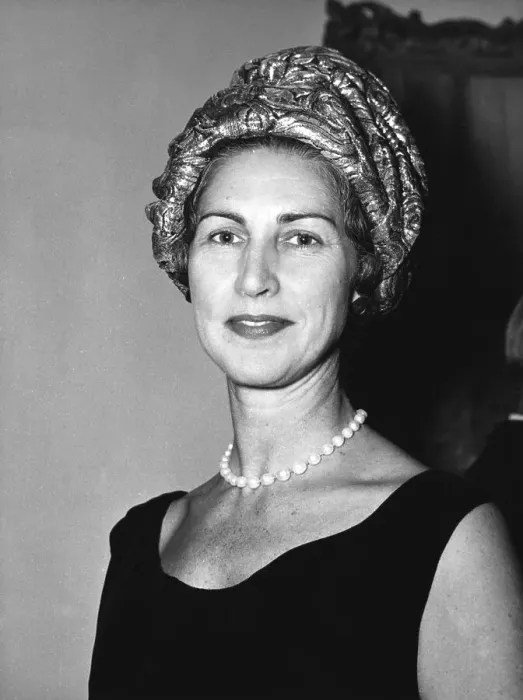
Among the many Italian doctors who passed through the hospital, one who remains particularly memorable to me was Gino Chiesa.
He was not only a talented young doctor but also a man of wide cultural interests, with a genuine appreciation of architecture, history, music and English life. He embodied the spirit of the Italian Hospital by building bridges between Italy and Britain rather than seeing them as opposites. Proud of his own country, he was equally fascinated by Britain’s traditions and history. He introduced me to Pergolesi’s works and enjoyed quoting a phrase describing English Gothic cathedrals as ‘comfortably spread out’, distinguishing them from the French strict stratospheric ones.
Later, during visits to Italy, Gino introduced me to Turin and its surroundings. Through him we experienced not only the beauty of the region but also the warmth of Italian family life. Sharing meals with his family reinforced something I would come to value deeply: the generosity and hospitality that have always characterised my relationship with Italy.


Another unforgettable figure was Dr Elio (Federico Domenico) Montuschi.

Originally from Bologna, he combined intelligence, warmth and great personal charm. Professionally, he became a respected physician and cardiologist in Britain, making important contributions to cardiovascular medicine, particularly in hypertension and vascular disease. His research reflected the highest standards of his profession.
Yet it is the man rather than the doctor whom I remember most vividly. He combined professional authority with genuine humanity and enjoyed conversation, friendship and good food as much as medicine itself. I remember particularly a concert I attended with him and my mum: it featured the great Chilean pianist Claudio Arrau playing the two Brahms concerti.
Like many Bolognese, he held strong political convictions and engaged enthusiastically with wider social issues. To me he represented the richness of Italian life: deeply attached to his origins while fully engaged with the modern world.
He regularly visited our home, where he clearly appreciated the Anglo-Italian atmosphere and hospitality. Those gatherings reminded me that culture is often preserved in ordinary moments—a shared meal, a conversation or a cherished memory can keep alive a homeland even when one lives far from it.
Dr Montuschi also represented another important role of the Italian Hospital. It was not simply a place for treating patients but also for supporting young Italian doctors who came to Britain to train, exchange ideas and build lasting friendships.
Looking back, I realise how remarkable the Italian Hospital really was. It brought together elderly immigrants, young doctors, volunteers such as my mother and members of London’s Italian community. It recognised that healing involves more than medicine; people also need language, familiarity, kindness and human contact.
For my mother it strengthened her lifelong connection with Italy while allowing her to help others. For patients it offered understanding. For young doctors it provided a bridge between two medical traditions. For people like Gino Chiesa and Dr Montuschi it allowed professional life and cultural identity to flourish together.
For me it was one of the first places where Italy ceased to be simply a country on a map. It became a world of friendships, conversations and lasting memories.
The closure of the Italian Hospital was therefore far more than the loss of a medical institution. London lost a unique part of its social history—a place where generations of Italians had found care, companionship and a sense of home.
Buildings may disappear, but the memories they create endure. For me, the Italian Hospital in Queen Square will always remain a little piece of Italy in London.
×××
If you enjoyed this post, please consider clicking the Like button or leaving a comment. It lets me know that my writing is reaching people.