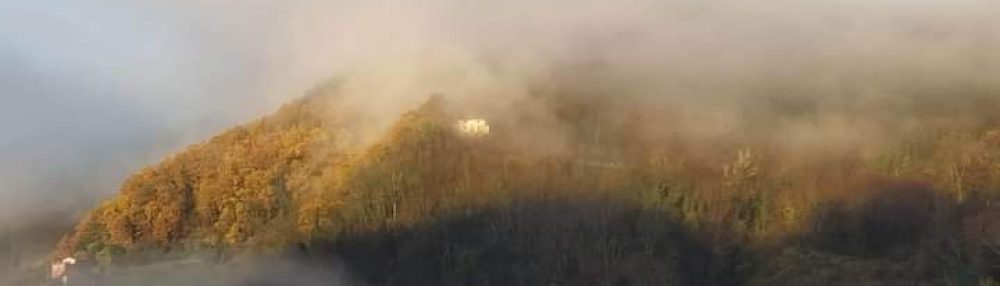
Antella: a Picturesque town in the Florentine Hinterland

The little town of Antella has already cropped up in some of my posts. In particular, its fabulous chapel, almost entirely frescoed by Spinello Aretino, is mentioned at https://longoio.wordpress.com/2013/11/09/do-you-know-granacci-or-larciani/

Antella is also the last resting place of Claire Clairmont, who needs no introduction to Shelley lovers. For more information on this essential nuisance in the poet’s life do read my post at https://longoio2.wordpress.com/2016/02/29/claire-claremont-the-epilogue/

A few days ago we stopped in Antella’s main square for an ice-cream.

dscn3237_1168282699.jpg

It was a welcomed stop during an afternoon visiting the delightful countryside surrounding Florence festooned with matured vines, glittering with silvery olive groves and cooled by mysterious pine forests.

It’s a real pity that visitors to the cradle of the renaissance fail to visit the beautiful landscape surrounding the city except, at the most, to reach Fiesole, over-crowded during the season and with by no means the best views over the City of the Lily.

Antella’s main square epitomizes all that’s most liveable about Italy. Just a few miles away from the tourist-crowded streets of Firenze, Antella is another world. In the square different generations mix, play, relax and rarely collide. Old boys play briscola by the local bar. Women meet up for the local gossip. Children play hide-and-seek using the the massive parish church doors, opened out for the evening prayers, as a useful place of concealment.

In the centre stands the statue of a worthy from the town. (Italy’s first prime minister, in fact.)

dscn3241_1444065415.jpg

The church itself contains a mixture of exquisite pre-renaissance pictures, skeletons of unremembered saints, massive oak beams spanning walls that have endured centuries of wars, floods and earthquakes.

A majestic crucifix of ancient date overlooks the nave.

dscn3231_1-1803415817.jpg

Beyond the apse an even older chapel opens out with a handful of the devout reciting the joyous mysteries of the Rosary.

dscn3230_1867074635.jpg

What I love in particular is the absence of the social divides that plague the provincial English town at this hour. In that ever more fractured land of Brexitania children separate themselves from parents at an ever-earlier age; the old are moved out-of-sight into geriatric institutions or, if lucky and still in their own homes, suffer loneliness and the fear of being mugged if they step outside after 8 pm.

Meanwhile, the young ready themselves to get hyped up for a night of artificial highs of binge drinking and vomiting on pavements while police sirens uselessly try to wake them up, and hospitals become arenas for the victims of fighting and knife attacks. 

However, in places like Antella, such ghastly thoughts and memories of a country, soon to be torn apart from the mainstream of Europe by a ‘will of the people’ fed by lies, ignorance and small-mindedness, seem, thankfully, far away.

dscn3240_1-1980928555.jpg


Florence’s Secret Grotto Treasure

Since ancient times caves and grottoes have been associated with spirits and divinities. For example, the Cumaean Sybil, who could foretell the future, had her own cave which was rediscovered as recently as 1932.

The advent of Christianity did not destroy this supernatural association for the apparition of the Madonna of Lourdes took place in a cave; and in Roman Catholic shrines throughout the world her statue is embraced by a grotto or artificial cave.

In the Italian sixteenth century artificial grottoes became increasingly important elements of garden design. In Florence there are two well-known examples by Buontalenti in the Boboli gardens and the fashion spread to such villas as those at Pratolino and Castello. I have written a post about a charming grotto called the spring of Fata Morgana in the hills to the south of Florence. You can read about it at https://longoio.wordpress.com/2013/04/20/the-enchantress-well/

The grottoes are usually decorated with shells, curiously shaped stones, semi-precious gems, mosaics and imitation stalagtites. They contain a source of water which plays into pools and basins, the traditional haunt of naiads and nymphs (hence the word ‘nymphaeum’ to describe such features).

In the hot italian summer the grotto provided a welcome source of coolness and was even used for bathing but the fashion also spread to colder countries including Russia, France and England.

Alexander Pope was particularly enamoured of the grotto he created for his riverside villa at Twickenham and wrote ‘my grotto is finished with shells interspersed with pieces of looking glass: a thousand pointed rays glitter and are reflected over the place.’

It was an exciting discovery when I located perhaps one of the most beautiful grottoes in Italy in an unassuming Florence suburb. Originally a feature in a much larger park, now reduced by new buildings, the grotta del Bandino achieved its present form in the mid-eighteenth century and was designed and decorated by Giuseppe Menabuoi, famous for his engravings, Giuseppe Giovanozzi, sculptor, and Gaspero Pulcinelli, who arranged its shell features.

Built with materials including pottery, glass, shells and rocks the grotta is approached through the original gateway of the Bandino villa, half of which is now used as a public library. I was quite stunned with my entrance into this fantastique and equally grotesque artificial cave. Three arches framed an interior encrusted with shells and weird figures. Before me extended a basin, once filled with water, and an ocular window bathed the grotto with a warm autumnal light. Above me the ceiling was painted with several birds flying above a bosky landscape.

My guide told me he was equally stunned when he first entered this faery-like place and fell in love with the grotto. Indeed, he has helped to organise chamber music concerts there and commented on its perfect acoustics.

It is fortunate that the grotta del Bandino has been preserved amid the encroaching Florentine suburbs and been restored to its original glory at the turn of this millennium, transforming its former ‘grotty’ state into a worthy haunt of sylphs, naiads and fine music making.

Florence’s Mecca

Florence has a wealth of antique and second-hand shops and markets. Luckily, one doesn’t have to be loaded with money to buy some very nice things. There are also what in Italy are called ‘compravendita’ shops i.e. shops where one can buy and also bring articles to sell (the shop takes a commission, of course, and the selling price lowers depending on the amount of time it’s been for sale). This kind of shop is also known as ‘contovendita’ which in English translates as ‘account sales’

On a recent visit to Florence I discovered this compravendita-contovendita shop near Piazza Ravenna which is three bridges upstream the Arno from the Ponte vecchio:

It’s truly an Aladdin’s cave, hence, perhaps the name…

The shop also has a web site giving listings of items for sale at

http://www.lameccacontovendita.it/articoli/

If you don’t know how to get to Piazza Ravenna by bus then, depending where you are in Florence, these are the buses that will get you there:

https://moovitapp.com/index/it/mezzi_pubblici-Piazza_Ravenna-Firenze-street_4293287-2022

Happy hunting!


An Invitation from Franco Zeffirelli

Of all Florence’s contemporary sons Franco Zeffirelli is the one who approaches closest to the polymath artistic genius of Leonardo da Vinci. No surprise, since one of Franco’s ancestors was the painter of ‘La Gioconda’, better known outside Italy as ‘Mona Lisa’.

zeffirelli-2-2-2-2-829715068.jpg

Where to start with Franco’s achievements? In operatic scenography (Callas in ‘Tosca’)? In theatrical productions (‘Taming of the Shrew’ with Elizabeth Taylor and Richard Burton)? In films (‘Tea with Mussolini’ with Judi Dench)?
I have my favourites (‘Jesus of Nazareth’, whose film sets we stumbled upon during our Tunisian honeymoon forty years ago), ‘Filumena Marturano’, a West End production with Joan Plowright, Larry Olivier’s widow, and the rehearsals of which we witnessed personally at the Italian Institute with the master himself, my father-in-law’s (the institute’s Secretary-general from its inception) good friend, and, particularly, ‘Romeo and Juliet’, which had me transfixed as a teenager.

I admit Franco is a marmite genius: loved and loathed in equal measure. Certainly, I could not begin to unravel with him my disputes about his political affiliations. But one thing is certain and that is Franco’s great love for the city of his birth and his affection for the United Kingdom, a fact recognised by honours from both countries including a KBE from Her Maj.

Franco is, above all, a generous genius, with whom we have enjoyed personal memories, especially my wife, Alexandra, and someone who is one of the most refulgent artistic visionaries of our age.

This generosity and vision is set in stone in Franco’s foundation.

dscn0512_186704808.jpg
This opened last year in one of Florence’s rare baroque buildings, the San Firenze monastery. Started in the seventeenth century as an oratory for the order of Saint Philip Neri and completed by 1775 by, among others, Zanobi del Rosso, this elegantly symmetrical building was half church and half high court until 2012 when the ghastly new tribunals were built at Novoli, spoiling the view of Florence from San Miniato sul Monte.

The church is still used for its original religious purpose but the oratory has been turned from tribunal into a magnificently resonant concert and venue hall.

dscn0515_3-290417657.jpg

The convent itself is devoted to the Franco Zeffirelli foundation which contains the master’s archives, a lovely caffe, and presents exhibitions to engender creative productivity in the city of the Lily.

We were invited yesterday to attend a concert in the ex-oratory and tribunal of San Firenze to celebrate Franco’s contribution to that wonderful musical festival, il maggio fiorentino, which is entering its 81st year. I met Pippo, Franco’s adopted son, and, despite the large number flocking to this very special event, we were able to be accommodated together with the widow of Franco’s friend, my 96 year old mother-in-law….

This was the programme.

dscn0551_1-430649527.jpg
The ‘giardino della bizzarria’ was, as its title implied, a somewhat bizarre piece. Beginning with an often cacophonic polyphonic section the work resolved itself, after huge cluster piano chords, into a gloriously diatonic celebratory finale.

The Puccini excerpts, pointing to Franco’s intense relationship with opera, were arranged for and sung by a children’s choir with exquisite aplomb. The voices were beautifully trained and the pieces selected and arranged with absolute adroitness. The most successful items were ‘Butterfly’s’ humming chorus and that infectious Chinese song, ‘Moh li hua’, used in ‘Turandot’. We were then treated to the whole of the second act of ‘La Boheme’ where the singer (Maria Rita Combattelli) of Musetta’s waltz song was close to being sensational – a great taster for the maggio season.


It was a lovely gesture by Franco Zeffirelli, one of Italy’s undisputed living legends, to offer this delightful concert to his city and to donate his archive to the land which nurtured him. Grazie mille, caro Franco!


In Florence’s Iris Garden

Since the 12th century the symbol of Florence has been a red lily.

Actually it is not a lily at all but an iris: the florentina (blue veined white) and germanica (dark purple) in particular.

Walk through the countryside in Tuscany between April and May and you’ll see these beautiful flowers grow wild.

Florentines call this type of iris ‘giaggiolo’ and we have been lucky enough this May to have walked through the iris garden which is on the left-hand side of the city’s piazzale Michelangelo.

The garden was founded in 1954 by keen women horticulturalists and every year there’s a competition for new hybrid varieties.

Let these photos taken just after a heavy rainfall show the infinite variety (over 1500!) of Florence’s proud symbol.


Apart from the iris garden there’s a rose garden on the right side of the piazzale where delightful varieties begin to bloom starting this May.


But try to see the iris garden before 20th May when it closes. It’s open daily from 10 to 19.00 at weekends and from 10 to 13.00 and 15.00 to 19.00 from Monday to Friday and it’s free, though donations are welcome, and there is an entrance stall selling iris derived products including deliciously scented soap.

The view from the piazzale itself is magnificently complementary to the garden of Florence’s much loved giaggiolo iris.dscn0451219384782.jpg


L’ultimo Re Inglese

Nel alto medievo inglese esistevano sessanta monasteri a Londra. La loro dissoluzione nel cinquecento dal re Enrico VIII coinvolse una distruzione che mi fa venire in mente le bellissime moschee che non si potranno più visitare in Siria.

Le ragioni per la distruzione non furono le furie della guerra però. I monasteri di Londra (e i dugento nell’intera isola) o sono interamente scomparsi, diventate cave per i lord per costruire i loro palazzi, o sono rimaste rovine – descritte in un sonetto di Shakespeare come ‘spogli archi in rovina dove, ameni, cantarano gli uccelli (cioè i monaci con i loro canti gregoriani).’

Altri monasteri, invece, hanno avuto la fortuna di essere trasformati interamente o in parte in cattedrali, come Westminster e Southwark, oppure in chiese parrocchiali.

Altri, in fine, sono stati rifondati o ricostruiti dopo l’emancipazione religiosa ridata ai cattolici nell’Ottocento, come Ealing Abbey, Feltham Abbey and St Dominic’s Priory.

Degli antichi monasteri londinesi ancora rimasti in piedi quello che mi attira di più è Waltham Abbey.

Oggi rimane solo un terzo di uno degli edifici religiosi più grandi del medioevo perché furono i parrocchiani a dire al re che i monaci li avevano dato il permesso di usare una parte della navata per la loro chiesa parrocchiale.

L’architettura è il romanico normanno pieno d’una forza massiccia che fa impressione.

Qui si sente proprio una terribilita’ che ha più di mille anni e che risale ad un epoca alquanto paurosa. Basta guardare i pilastri con i loro profondi galloni scavati con l’ascia di battaglia.

Infatti è qui che venne sepolto l’ultimo vero re inglese Aroldo, ucciso con una freccia all’occhio nella battaglia di Hastings nel 1066. Ecco la sua tomba sempre sparsa con qualche fiore dagli anglo-sassoni consapevoli che oggi la monarchia ‘inglese’ non è composta che di sangue francese, olandese, tedesco, e, quest’anno, anche di quello americano.

Tra le maraviglie di Waltham Abbey si trovano belle tombe dipinte (ma i figli rappresentati saranno anche loro morti in gioventù?)

Thomas Tallis, il padre della musica ecclesiastica inglese, fu qui organista:


In più è rimasto uno dei tre superstiti dipinti medioevali dell’ultimo giudizio, chiamati ‘doom paintings’. Paradiso e inferno è un tema che, come si sa, trova la sua apoteosi dell’affresco sistino di Michelangelo.


L’abbazia è coperta da un soffitto astrologico dove ogni simbolo ha il suo significato religioso.

Il mio segno di Leone, per esempio, rappresenta la creazione del sole e della vita terrestre. In più, la coltivazione del grano, il taglio del quale significa la morte in attesa della rinascita e la raccolta del buon seme per fare il pane che rappresenta il corpo di Cristo.

I due pesci, segno di mia moglie, invece, rappresentano la nascita di Cristo (icthys) e la sua doppia natura, uomo e Dio. È la via e la vita, la conclusione del viaggio dell’uomo a Dio. Alla fine dello zodiaco e dell’anno comincia uno nuovo. Un seme novello viene piantato pronto per la futura raccolta.


Rammentiamo anche che esistono tali soffitti astrologichi nella cattedrale di Peterborough per poi non dimenticare il magnifico pavimento astrologico di San Miniato al Monte a Firenze.

Waltham Abbey si trova in un grazioso centro che sembra la quintessenza di un borgo inglese con le sue vecchie case a gratticcio e diviso in due parti dal Meridiano.

Nel centro abbiamo fatto un pranzo in una locanda che vende il tipico piatto inglese di eel, pie, mash and liquor; cioè anguille, purè, pasticcio di carne (manzo e montone), e salsa fatta di prezzemolo. Il dessert era una torta di ciliegia nascosta sotto custard, una tipica crema pasticcera inglese. Non sono goloso di anguille; però vi posso dire che questo posto mi ha trasportato indietro ai tempi dickensiani e la tipica cucina vittoriana inglese quando mangiare bene non voleva dire trovare un ristorante italiano! Infatti vengono qui a mangiare David Beckham e la sua famiglia ricercando i gusti della sua infanzia.


Abbiamo ripreso la metropolitana a Loughton che ha una slanciata stazione del 1940 col suo grande arco, ripieno di vetro dell’architetto John Murray Easton, e le sue stupende tettoie di piattaforma a forma di ala di gabbiano.


Come la grandiosa abbazia di Waltham, l’architettura moderna può solo considerarsi buona e degna di esistere se colpisce l’occhio con la sua linea ed il coraggio di un linguaggio perfettamente adatto all’uso del edificio.


Tra prati verdi

riposa l’ultimo re

di sangue inglese.

Florence: from the Cycling Museum to the Sixteenth Century

Yesterday we spent a day under gloriously blue Florentine skies.

Our day took in the following sights. First there was the cycle museum a little outside the city boundaries and worth taking in if such events as the tour de France or the giro d’Italia (which passed through Bagni di Lucca only a few years ago) excite you.

There was a great collection of bicycles and trophies with an especial emphasis on the local lad Gino Bartali who together with Fausto Coppi, his rival and friend, represents the golden age of cycling at a time when Italy needed all the encouragement it could get to overcome post-war depression.

10102017 043

(The house where the great Gino Bartali was born in Ponte a Ema)

Although friends, Gino and Fausto were very different in character: Gino was pious and dedicated his wins to saint Teresa. Fausto was a womanizer and represented a newer, less patriarchal Italy. Both sporting heroes come together in that iconic photograph which shows Bartali handing his water bottle to Coppi (or is it the other way round?).

Gino was also a resistance fighter and saved many Jewish people by hiding secret documents in the frame of his cycle while crossing Nazi-held lines on the pretence that he was just practising his sport. Bartali was awarded this certificate by Israel as one of the just:

10102017 028

The cycle museum is one of the city’s two major sports museums. The other is the football museum which I’ve already described in a previous post and is near the pioneering Fiorentina football stadium designed in the thirties.

Florence, the cradle of the renaissance, could also be described as the cradle of both cycling and football. Indeed, each year there’s a re-enactment of historic football in ancient costume played out in piazza Santa Croce. Needless to say, the rules are a little different and I don’t think umpires today would have a sufficient number of red cards on them to hand out in such a game!

Florence expresses its art in such other departments as ceramics – the main ceramic centre is at nearby Montelupo – and our visit happily coincided with an international ceramics fair held in the city’s most perfect square, piazza dell’Annunziata.

10102017 053

The variety displayed here from gres to raku was amazing!

I also spotted the original Gioconda (Mona Lisa) in one of the streets. It looked so much better than that copy Paris’ Louvre has!

10102017 071

Our visit took in the bustling central market which is an original late nineteenth century cast iron structure combining the then latest technology with renaissance elegance. On the ground floor are stalls selling not just exquisite food from all regions of Italy but also from other parts of the world. For example, we came across Peruvian beans and, naturally, a wide selection of suchi. The upper floor, recently refurbished, has some great eating places with hardly an empty seat. We opted for some highly characteristic street food of the city, a lampredotto sandwich with typical green sauce.

10102017 048

It was truly delicious even if I tell that the contents come from the lining of a bovine’s third stomach.

Eventually, our meanderings through the still crowded streets of central Florence took us to the palazzo Strozzi where an exhibition on the art of the sixteenth century in Florence – il cinquecento a Firenze – enticed us to admire the counter reformation mannerist world of such less well known artists as Pontormo, Vasari, Zucchi, Rosso Fiorentino, Alessandro Allori and Giambologna (who wasn’t from Bologna but from Boulogne).

The exhibition is the third exploring post-quattrocento pre-baroque Florence. The others were the Bronzino one of 2010 and the Pontormo one of 2014 which I described in a previous post.

The exhibition was divided into ‘divine’ and ‘lascivious’ subjects with a fair number of portraits and sculptures thrown in. For me the best thing were the seventeen paintings specially restored for the exhibition and previously rather dimly visible in several of Florence’s churches. It was a delight to see these paintings as close to their original co!ours as possible.

images-8

If nothing else this well documented exhibition, which will last until 21 January next year, helps take the major focus on Florentine art from the era of Botticelli and Ghirlandaio to the more turbulent world of the period after the council of Trent which redefined Roman Catholic ideology in the wake of the reformation.

If you’re not into vast religious paintings you will still admire the sensuous mythological scenes and enjoy the rich clothes many of those portrayed wear. Finally, you may realise that there wasn’t just one Lorenzo who was magnificent among the Medici. Francis I was, similarly, a great patron of the arts in a later century.

cartolina modello_snapshot_2017-10-07_18-46-50-223

Be there if you can

Earlier this month I organized a March against Brexit in Bagni di Lucca. It was well advertised both locally and in Facebook. The protest consisted of a gathering in the square in front of the forestieri in Bagni villa and a stroll down to bar Italia.

Those who turned up to make their views known about the most ridiculous political decision a British government has taken since Ethelred the Unready’s foreign policy (don’t worry if you can’t remember what it was just, as people today forget what the poll tax was all about) were a mere handful and they were all concerned British residents of Lucca who’d come specially for the occasion. There was no one present from Bagni di Lucca at all (apart from me)!

In the end the rally turned out to be more of a meeting between aquaintances and the proposed march was called off in favour of shopping in the local market.

I clearly overestimated the political know-how of the worthy band of British immigrants and visitors of our comune and their reliance on fake news (and fake foreign secretaries too).

Just on the matter of holidaymakers to Bagni di Lucca, figures already show that the numbers are encouragingly up on those from last year but that the increase is largely from non-brits. It’s the Dutch, the Germans, the Scandinavians and the French who are now the majority of European visitors to our area. People from the uk are down nearly 30%. What’s more alarming is the fact that uk citizens with holiday homes here have not been able to afford to come to stay in them.

These are facts not just drawn by a straw poll but by figures drawn from local statistics. Bagni di Lucca is littered with empty houses bought by hopeful inhabitants of the British isles who now have an albatross tied round their necks.

It’s the increasing downfall spiralling of the uk pound against the euro (parity between the two currencies is expected by Christmas) that is the main reason for these phenomena. Banks do not like uncertainty and the continuing floundering of an inept band of amateurs and buffoons at the palace of Westminster is not helping.

Regrettably, I will not be able to join the sensible people who will give the forthcoming guest of the old Dominican convent of Santa Maria di Novella in Florence the reception she may truly merit today.

On the other hand, the long tradition of cultural and economic interchange between London and Florence may make the beleaguered head of a minority government, increasingly threatened by rising inflation, decrease in the value of the pound, souring community relationships, higher food prices, anxiety among all those non-UK workers who have kept the orchards of Britain still producing, the hospitals still managing to heal and the caterers still able to present edible food, could make her government see some light at the end of a tunnel which now seems much longer than the one underneath the channel.

Hope is an ever stronger anchor….


Fishing in Florence

Tomorrow, ‘fish Friday’, as the UK ‘s supermarkets proudly proclaim, there will be another kind of fishing taking place in Florence. Indeed, there will be another instance in the space of less than a week when protestant meets Catholic.

I have recently described the wondrous appearance of perhaps the finest of Anglican choirs at the throne of Saint Peter’s Rome. A less miraculous apparition will take place this Friday in the glorious half gothic, half Alberti renaissance church of Santa Maria Novella, whose apse frescoes, among others by Giotto, greets the traveller when stepping out of the aptly named SMN station of Florence.

This apparition will, in fact, be that of the British prime minister who will, undoubtedly be misspelt ‘Teresa’ in the Italian press. She will be part of a triumvirate including Hammond, the painting of the martyrdom of whose original namesake is among the rich art treasures enshrined in this noblest of Dominican monasteries.

Now will the spirits of the fresco in the church’s chapter house of the ‘Domenici cani’, the ‘dogs of the Dominicans’ tear to pieces the present incarnation of Santa Teresa, whose intensely erotic statue by Bernini I saw earlier this week in Rome, or will she weave them into a political extasy by her pronouncements?

Fishing for the souls of a European state which, among so many other things kicked off the renaissance and modern banking (perhaps the two depended on each other?) will be difficult, especially as Florence is still owed sums of money, now running into billions of Euros with accrued compound interest, which it foolishly lent the British state during the fifteenth century.

Reading the headline of the now converted ‘Evening Standard’ (not to Catholicism I hasten to add but to a more pro-European stance) I read ‘Brexit Britain in the slow lane’.

My general feel on this whole farce, which is even more ridiculous and time and money wasting than the Forest Hill atmospheric railway of the nineteenth century, is that the only people (at least in London) who still believe in Brexshit are those who are intellectually challenged, illiterate or just plain daft.

Whatever happens in the wonderful ambience of Santa Maria Novella is anybody’s guess. I, as a hopeless idealist, still believe in a  miracle. Either a fresco will be commissioned on the subject of the conversion of Theresa (this time spelled correctly) or more groats or ‘fiorini’ (florins, as named after the city of the Lily) will be added to the huge debt Britain owes Europe and especially Italy, whose economic growth now is leaving the inhabitants of islands, first civilized by another triumvirate, this time from the capitoline hill, well on the way to economic misery and, maybe, even mayhem…