There are unexpected connections between places that appear, at first sight, to have little in common. One such connection links the green suburbs of South London with the historic Tuscan spa town of Bagni di Lucca, where I have lived for many years.
The link was discovered not through grand historical events, but through water, gardens and the shared idea that a beautiful landscape can provide an escape from the pressures of everyday life.
During London’s Open House weekend, I spent a memorable afternoon exploring Carshalton, a historic village-like corner of South London whose springs, ponds and elegant eighteenth-century landscape revealed a surprising resemblance to my adopted home in Tuscany.
Among the treasures of the Carshalton estate are the water tower and the remarkable eighteenth-century “bagnio”, or plunge bath, created by John Fellowes, a wealthy merchant who made and later lost a fortune during the South Sea Bubble of 1720. The estate also contains an orangery, a Gothic-style hermitage, a picturesque bridge, a village pond and charming cottages.


(Plunge baths of Carshalton and Bagni di Lucca compared).
The bagnio immediately brought memories of Bagni di Lucca. The Italian town’s fame has always been based on its thermal waters, which attracted visitors from across Europe, including many British travellers during the eighteenth and nineteenth centuries. Carshalton’s springs, however, provide a very different bathing experience: the water is naturally supplied but considerably colder than the warm thermal waters of Tuscany.
One wonders how eighteenth-century visitors, perhaps returning from their Grand Tours of Italy, regarded this more modest English version of a bathing retreat. Did they appreciate the refreshing waters of Carshalton after experiencing the famous spas of Europe? Or did they simply come for the social pleasures that such estates offered — conversation, cards, music and good company?
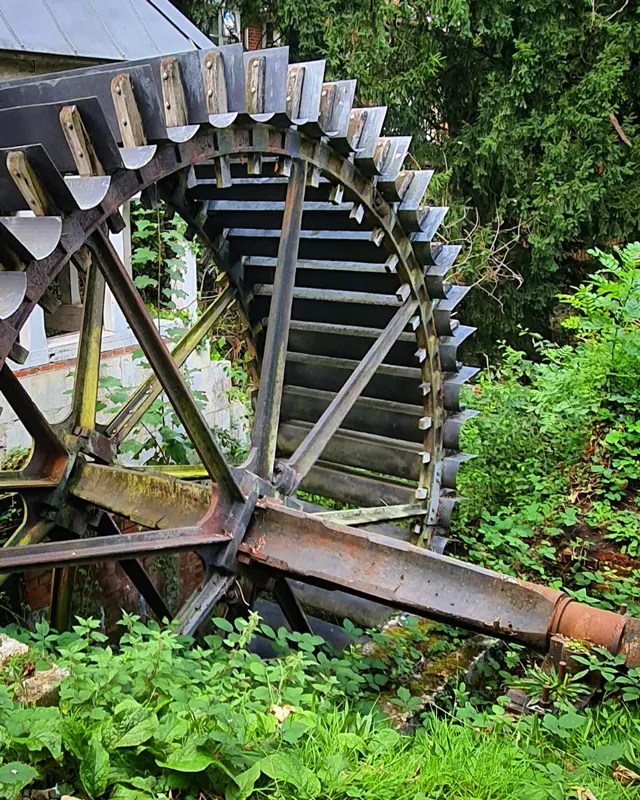
One of the most fascinating details of the Carshalton bagnio is the old water wheel which once supplied the bath. It is a reminder that behind the elegance of these pleasure gardens there was a practical engineering system designed to make leisure possible.
The surrounding landscape was carefully created for enjoyment. The lake was based on an earlier formal canal designed by the landscape architect Charles Bridgeman, while the Gothic hermitage reflected the eighteenth-century taste for picturesque “ruins” and romantic garden features. Whether or not a hermit ever lived there is uncertain, but the building later took on a different character when it became associated with the Catholic schools occupying the estate.
The bridge, too, is a charming illusion — a “sham bridge” which functions as a dam rather than a crossing over flowing water. Yet its purpose is not practicality but beauty, adding to the atmosphere of the place.

The survival of these features owes much to the dedication of local volunteers who have helped preserve Carshalton’s unique heritage. Today the water tower and its rooms continue to provide a setting for events and even period film productions, allowing new generations to experience a small corner of eighteenth-century leisure.
Carshalton and Bagni di Lucca are separated by hundreds of miles, different landscapes and very different histories. One is a South London village shaped by springs and gardens; the other is a Tuscan spa town surrounded by mountains and thermal waters. Yet both express the same idea: that water, nature and beauty can transform a place into somewhere special.
Perhaps that is why, while walking beside the ponds of Carshalton, I felt a surprising familiarity. For a moment, South London seemed to contain a small echo of Tuscany — a little “Bagni” of its own.


(Entrance to Carshalton Baths and Bagni di Lucca Bernabo bath).
***
If you enjoyed this post, please consider clicking the Like button or leaving a comment. It lets me know that my writing is reaching people.