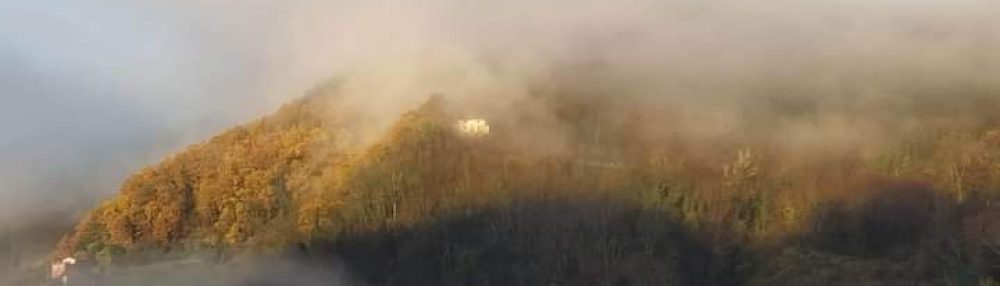
Antella: a Picturesque town in the Florentine Hinterland

The little town of Antella has already cropped up in some of my posts. In particular, its fabulous chapel, almost entirely frescoed by Spinello Aretino, is mentioned at https://longoio.wordpress.com/2013/11/09/do-you-know-granacci-or-larciani/

Antella is also the last resting place of Claire Clairmont, who needs no introduction to Shelley lovers. For more information on this essential nuisance in the poet’s life do read my post at https://longoio2.wordpress.com/2016/02/29/claire-claremont-the-epilogue/

A few days ago we stopped in Antella’s main square for an ice-cream.

dscn3237_1168282699.jpg

It was a welcomed stop during an afternoon visiting the delightful countryside surrounding Florence festooned with matured vines, glittering with silvery olive groves and cooled by mysterious pine forests.

It’s a real pity that visitors to the cradle of the renaissance fail to visit the beautiful landscape surrounding the city except, at the most, to reach Fiesole, over-crowded during the season and with by no means the best views over the City of the Lily.

Antella’s main square epitomizes all that’s most liveable about Italy. Just a few miles away from the tourist-crowded streets of Firenze, Antella is another world. In the square different generations mix, play, relax and rarely collide. Old boys play briscola by the local bar. Women meet up for the local gossip. Children play hide-and-seek using the the massive parish church doors, opened out for the evening prayers, as a useful place of concealment.

In the centre stands the statue of a worthy from the town. (Italy’s first prime minister, in fact.)

dscn3241_1444065415.jpg

The church itself contains a mixture of exquisite pre-renaissance pictures, skeletons of unremembered saints, massive oak beams spanning walls that have endured centuries of wars, floods and earthquakes.

A majestic crucifix of ancient date overlooks the nave.

dscn3231_1-1803415817.jpg

Beyond the apse an even older chapel opens out with a handful of the devout reciting the joyous mysteries of the Rosary.

dscn3230_1867074635.jpg

What I love in particular is the absence of the social divides that plague the provincial English town at this hour. In that ever more fractured land of Brexitania children separate themselves from parents at an ever-earlier age; the old are moved out-of-sight into geriatric institutions or, if lucky and still in their own homes, suffer loneliness and the fear of being mugged if they step outside after 8 pm.

Meanwhile, the young ready themselves to get hyped up for a night of artificial highs of binge drinking and vomiting on pavements while police sirens uselessly try to wake them up, and hospitals become arenas for the victims of fighting and knife attacks. 

However, in places like Antella, such ghastly thoughts and memories of a country, soon to be torn apart from the mainstream of Europe by a ‘will of the people’ fed by lies, ignorance and small-mindedness, seem, thankfully, far away.

dscn3240_1-1980928555.jpg


Looking for the Tuscan House of your Dreams?

Recently we visited a friend’s particularly beautiful property situated by the Apennines between Barga and Coreglia Antelminelli. It has a plot size of 80,000 square metres, five bedrooms with five bathrooms, 100 square metres of parking space and heating which ranges from wood, photovoltaic, solar and GPL

This property is in effect, three houses for the price of one. It’s in immaculate condition and it’s for sale at an asking price which wouldn’t even buy you an undistinguished semi-detached in not a very good condition in an ordinary London borough in zone 4.

It has been a hard decision for the owner to arrive at, especially since so much love and work has been expended on ‘Grifoglia’ – the name of the house suggesting ‘quadrifoglio’, or four leafed clover, which traditionally brings luck and also has an Irish connection.

The property is fully described at

http://www.italianpropertygallery.com/property/casa-grifoglia/

And one can also read trip-advisor notices about staying at Grifoglia at

https://www.tripadvisor.it/ShowUserReviews-g654703-d296303-r47626030-Grifoglia-Barga_Province_of_Lucca_Tuscany.html

There’s a nice video of Grifoglia at

https://www.youtube.com/watch?v=nBSMPDvS09g

And, of course, a facebook page at

https://www.facebook.com/grifoglia/

Do also look at the blogspot at

http://grifoglia.blogspot.com/

During our visit we were able to collect some magnificently sized quinces useful for making jelly. (Quince in Italian is ‘mela cotogna’ and the tree bearing the fruit is called ‘cotogno’.)

The house, which comes with a swimming pool, would be most suitable for agriturismo or farmhouse holidays and would be particularly attractive for those persons with a strong ecological leaning.

Mentioning quinces here is our favourite recipe for making quince crumble cake:

Ingredients

For the quince puree

  • 1kg quinces, cored and roughly chopped
  • 175g caster sugar
  • zest and juice ½ lemon
  • 1 tsp ground cinnamon
  • 2 tbsp cornflour

For the pastry

  • 140g butter, diced
  • 200g plain flour
  • 50g ground almonds
  • 75g caster sugar
  • zest 1 lemon
  • 1 egg, plus 1 egg yolk

For the crumble topping

  • 100g plain flour
  • 75g rolled oats
  • 75g caster sugar
  • 140g butter, diced

Method

  1. To make the quince purée, put the quinces into a large pan with 350 ml water. Cover with a lid and simmer for 1 hr or until the quinces change colour and are pulpy. Remove from the heat and allow to cool slightly, then whizz with a stick blender until smooth. Pass the quince purée through a sieve into a clean pan and stir in the sugar, lemon zest and juice, and cinnamon. Cook the purée until it is reduced by one-third, then mix the cornflour with a little water and stir into the purée until it’s thick. Remove from the heat and allow to cool.
  2. Heat oven to 160C/140C fan/gas 3. To make the pastry, rub the butter into the flour and almonds. Add the sugar and zest, then the egg and the egg yolk. Bring everything together, wrap in cling film and chill for 15 mins.
  3. Roll out the pastry on a lightly floured surface to line a 22cm tart tin. Place in the tin, trim the edges of the pastry if required, and chill for 15 mins. Line the pastry with baking parchment and baking beans, then bake blind for 20 mins. Remove the beans and paper, then cook for a further 15 mins until the base is biscuity. Remove from the oven and allow to cool slightly.
  4. Increase oven to 180C/160C fan/gas 4. Meanwhile, to make the crumble topping, mix the flour, oats and sugar with a pinch of salt, then rub in the butter until you have an uneven crumbly mix.
  5. To assemble the tart, pour the quince purée into the tart shell so it comes just below the top, sprinkle over the crumble topping and cook for 25-30 mins or until the crumble is golden and the quince is bubbling around the edges. Serve warm with cream or custard if you like.

As soon as it’s out of the oven we’ll post our photo of the result here. Meanwhile, here are some pictures we took of this astoundingly charming Grifoglia:


Florence’s Secret Grotto Treasure

Since ancient times caves and grottoes have been associated with spirits and divinities. For example, the Cumaean Sybil, who could foretell the future, had her own cave which was rediscovered as recently as 1932.

The advent of Christianity did not destroy this supernatural association for the apparition of the Madonna of Lourdes took place in a cave; and in Roman Catholic shrines throughout the world her statue is embraced by a grotto or artificial cave.

In the Italian sixteenth century artificial grottoes became increasingly important elements of garden design. In Florence there are two well-known examples by Buontalenti in the Boboli gardens and the fashion spread to such villas as those at Pratolino and Castello. I have written a post about a charming grotto called the spring of Fata Morgana in the hills to the south of Florence. You can read about it at https://longoio.wordpress.com/2013/04/20/the-enchantress-well/

The grottoes are usually decorated with shells, curiously shaped stones, semi-precious gems, mosaics and imitation stalagtites. They contain a source of water which plays into pools and basins, the traditional haunt of naiads and nymphs (hence the word ‘nymphaeum’ to describe such features).

In the hot italian summer the grotto provided a welcome source of coolness and was even used for bathing but the fashion also spread to colder countries including Russia, France and England.

Alexander Pope was particularly enamoured of the grotto he created for his riverside villa at Twickenham and wrote ‘my grotto is finished with shells interspersed with pieces of looking glass: a thousand pointed rays glitter and are reflected over the place.’

It was an exciting discovery when I located perhaps one of the most beautiful grottoes in Italy in an unassuming Florence suburb. Originally a feature in a much larger park, now reduced by new buildings, the grotta del Bandino achieved its present form in the mid-eighteenth century and was designed and decorated by Giuseppe Menabuoi, famous for his engravings, Giuseppe Giovanozzi, sculptor, and Gaspero Pulcinelli, who arranged its shell features.

Built with materials including pottery, glass, shells and rocks the grotta is approached through the original gateway of the Bandino villa, half of which is now used as a public library. I was quite stunned with my entrance into this fantastique and equally grotesque artificial cave. Three arches framed an interior encrusted with shells and weird figures. Before me extended a basin, once filled with water, and an ocular window bathed the grotto with a warm autumnal light. Above me the ceiling was painted with several birds flying above a bosky landscape.

My guide told me he was equally stunned when he first entered this faery-like place and fell in love with the grotto. Indeed, he has helped to organise chamber music concerts there and commented on its perfect acoustics.

It is fortunate that the grotta del Bandino has been preserved amid the encroaching Florentine suburbs and been restored to its original glory at the turn of this millennium, transforming its former ‘grotty’ state into a worthy haunt of sylphs, naiads and fine music making.

Cerreto’s ‘Place of the Heart’

The nearest Italian equivalent of the United Kingdom’s National Trust is F. A. I., which stands for ‘Fondo Ambiente Italiano’ (Foundation for the Italian Environment). Founded in 1975 and, like the National Trust, looking after and campaigning for the conservation of beautiful buildings and landscapes, FAI has a web site at https://www.fondoambiente.it/.

(See also my post about FAI at https://longoio2.wordpress.com/2016/03/19/its-fai-week-end-again/ )

Every year a ‘luogo del cuore’ campaign is launched in which people vote for a building or place worthy of protection from the ravages of time. I remember when that exquisite baroque jewel of a church, Santa Caterina, was restored and re-opened to the public in 2014 after years of neglect. (To see what wonder could have been lost for ever see my post and pictures of her at https://longoio2.wordpress.com/2014/07/09/luccas-baroque-flower-blossoms-anew/)

Friend Rita Gualtieri has been campaigning hard to save Bagni di Lucca’s magnificent Villa Ada in the old part of the town on the hill. As Rita writes “Fino al 30 novembre 2018 si può ancora votare. . Ma al 30 settembre il FAI “I Luoghi del Cuore” farà il primo vero resoconto fra i voti via internet e le firme sul cartaceo. . Vogliamo darci da fare questa settimana ed arrivare almeno a 500 su Facebook e Google . .. Adesso siamo a 370 voti. Forza ..” (“Until November 30, 2018 one can still vote. . But on 30 September the FAI “I Luoghi del cuore” will issue the voting results. . We want to get at least 500 on Facebook and Google. .. Now we are at 370 votes. Come on..”)

37020799_6103371410302_5603514681424609280_n.png

(The Villa Ada at Bagni di Lucca)

Originally a late Renaissance structure owned by the De Nobili Lucchese family, the Villa Ada was completely renovated in the nineteenth century, by Sir MacBean British consul at Livorno, when the two tall hexagonal towers were built giving the villa its present characteristic appearance. The building is surrounded by a large English-style  park, enriched by artificial limestone caves, wrought iron railings in the shape of intertwined branches, and other elements of garden furniture typical of the period. A path, starting from the terrace near the villa, leads to a pergola and continues towards an artificial cave. The villa, purchased in 1975 by the Municipality of Bagni di Lucca, was used as a spa treatment establishment. To date, however, the villa is abandoned, with obvious structural problems due to poor maintenance.

See also the page at https://www.fondoambiente.it/luoghi/villa-ada-villa-fiori?ldc

It’s quite unacceptable that Bagni di Lucca can’t muster up at least 500 votes (needed for a building or place to qualify for consideration) with its population of 6,000 plus. Even if you are not a resident of BDL you can still vote. Do it now!

My own ‘place of the heart’ would be the Pieve di San Giovanni Battista, Cerreto’s former parish church. One wonders at first why the old church was built so far from Cerreto which lines the hill above Borgo a Mozzano. The fact is, however, that originally Cerreto occupied this site and only moved to its present position in late mediaeval times.

Built by order of that great Lady, the Countess Matilde di Canossa, in the eleventh century, San Giovanni Battista has a dazzling apse and some geometrically intricate stone walls.

The campanile is joined to the church by a picturesque arch.

Unfortunately, San Giovanni Battista is also at risk, as seen in my photos taken a few days ago. Some of the rifts in the stonework are quite frightening.

We never had the chance to visit the interior but evidently the church still has its hexagonal font. San Giovanni Battista di Cerreto antica has truly a place in my heart!

Bridging a much-needed gap

In Italy bridges have assumed a tragic import since the collapse of part of Genoa’s Morandi Bridge in which over forty persons lost their lives. Italy, however, is the genesis of modern bridge building. The country abounds with some of the most ancient structures in the world. Roman bridges still stand after two thousand years and our mountains have timeless ancient packhorse bridges.

As for technological innovation I’ve already mentioned the amazing suspension bridge near Mammiano in my recent post at https://longoio3.com/2018/09/12/suspense-in-val-di-lima/ . An older suspension bridge is the stupendously elegant Ponte delle Catene bridging the Lima and two comuni, Bagni di Lucca at Fornoli and Borgo a Mozzano at Chiffenti.

Designed by Lorenzo Nottolini and inspired by his journey to England where he studied the structure of London’s Hammersmith Bridge (by William Tierney Clark, reconstructed by Joseph Bazalgette)

600px-Hammersmith_Bridge_1,_London,_UK_-_April_2012

and Bristol’s Clifton suspension bridge (Isambard Kingdom Brunel)

330px-Clifton.bridge.arp.750pix

the Ponte delle Catene was built in the 1840’s. Each side of the bridge is prefaced by imposing Roman-like triumphal arches and also has a terrace which serves as a centre for social gatherings.

On Saturday 15th of September two important events took place at this bridge.

First was the inauguration of a defibrillator on the Chiffenti side of the bridge. (It’s now becoming  increasingly difficult to perish of a cardiac arrest in our area. You may remember my post on the defibrillator inaugurated at San Cassiano thanks to the efforts of Paul Anthony Davies at https://longoio2.wordpress.com/2016/10/16/living-more-safely-at-san-cassiano/)

Second was the inauguration of explanatory signage describing the history and importance of the bridge. These are located on each side of the bridge: at Chiffenti:

And at Fornoli:

After the inauguration and the speeches of the mayors and all those concerned with the two new features of the bridge there was the customary spread.

It was a beautiful day weather-wise, for Nottolini’s masterpiece and for our health welfare. Well done all those concerned. Where there’s a will there certainly is a way and one across a bridge that will stand for at least another few hundred years!


Suspense in Val di Lima…

Recently I was asked by friends for suitable places and activities for their three year old grandchild’s forthcoming visit.

Of course, the big event in our area for children of all ages is the ‘paese dei balocchi’, running on the week-end from 22 to 23 of this month, in which Bagni di Lucca gets transformed into a giant toytown for children of all ages, with treasure hunts, the fairy’s parlour, face painting, street bands and theatre, the invisible man and so forth.

il-paese-22-settembre981510449.jpg
Unfortunately, the little one was unable to attend Toyland, and so I settled on the standard list of Collodi’s Pinocchio Park, Pistoia zoo, the playground at Villa and, generally, just enjoying the special natural ambience of our area.

One place was mentioned and the other day I checked out the suitability of taking a three year old across one of the world’s longest pedestrian suspension bridges. (The longest, incidentally, is the 494 metre Charles Kuonen bridge opened in Switzerland in 2017).

The ‘ponte sospeso delle ferriere’ (suspension bridge of the iron foundries) is a pedestrian walkway that connects the two sides of the Lima torrent between Mammiano Basso and Popiglio in the municipality of San Marcello Piteglio.

It rests on four steel cables and measures 227 metres in length, 36 meters maximum height above the river bed and and is 80 cm wide. In 1990 it was included in the Guinness Book of Records as “the longest pedestrian suspension bridge in the world”. That is, until the Swiss got in on the act…

dscn2448_11889746503.jpg

Inaugurated in June 1923, the bridge was built following the design of ​​Vincenzo Douglas Scotti, Count of San Giorgio della Scala, and director of the Mammiano Basso steel mill. It allowed worker from Popiglio, on the other side of the Lima valley, to get the factories without having to walk a further five miles to reach the workplace.

Count Vincenzo Douglas Scotti (of Scottish ancestry) commissioned Filiberto Ducceschi, who was responsible for the construction of the cables, while the masonry and support work were entrusted to Cesare Vannucci.

Work began in 1920 with the help of some thirty workers, who anchored the cables. At this point it was possible to create a pedestrian walkway, consisting of planks and metal nets hinged to the supporting structure, which connected the two opposite banks of the Lima river without any intermediate support.

dscn2451_1-128071945.jpg

However, after the mills closed down the bridge took on a new function as a thrilling tourist attraction. It has undergone important maintenance and consolidation over the years, the latest being in 2004, which have made the bridge more stable and resistant through the complete replacement of cables, side bolts, walkways and protections, with stronger and lighter material.

Spectacular LED Bridge lighting was inaugurated in 2014.

My approach to the bridge was enhanced by an elegantly laid garden path:


The bridge did sway a bit but I think this was due more to a group of excited young children than any climatological condition!

As for the bridge’s suitability for three year olds: no problem. The youngest traverser of the bridge we met was just two and a half years old!


Picture Post

Kevan Halson is a well-known and highly regarded fine arts photographer who resides in the purlieus of Bagni di Lucca. He first came to my attention with a ‘dilapidations’ project some years back. This is where Kevan concentrated on decay and decrepitude in buildings and their fitments. A kind of memento mori, the exhibition aroused great interest and demonstrated just how good Kevan is is in his field – the use of silver nitrate paper technique so little used today, for example, was quite virtuosistic.

Kevan’s current project involves photographing migrants to our area and who have resided here for several years.

The term ‘migrant’ covers all people from other countries who have gravitated to Bagni di Lucca and made it their principal home. Their reasons could be several: improved quality of life, work, life-style change, love affair….

Personally, I came here for a life-style change and have never regretted it. I also abhor people who call themselves ‘ex-pats’. Whether one comes here from the Old Kent Road or from the deserts of Sudan one still remains a migrant.

Kevan has set up a studio in what used to be Ponte a Serraglio’s parish hall, theatre and cinema.

dscn2435_1-1177393806.jpg

It is a beautiful neo-classical building with an airy interior including a columned gallery.

I remember this hall last being used for the Ponte a Serraglio arts festival, an event which ran from 2013 to 2015 and has now achieved quasi-mythical status.

I shall always remember the amazing concert, which included the didgeridoo and gongs, given here with the participation of Pistoia’s Tronci foundation.

I became a subject in Kevan’s illuminating project a couple of days ago. I’d never been a photographic subject before and Kevan made me feel fully at ease while he shot away in a scenario filled with lighting effects, mirrors, reflectors and such-like.

At the same time, the photographer’s assistant asked me some simple questions, putting together a basic biography of myself and the reasons why I had decided to come and live at BDL.
The project ‘I am not from here’ is on-going and well-worth participation. Some of Kevan’s stunning photographs may already be viewed on Facebook.
Do get in touch with Kevan at http://www.kevanhalson.net
Or just meet up with him at the Old cinema at Ponte a Serraglio. There can be no-one described as un-photogenic in our part of the world!

I Liberi Pensatori di Londra

Parecchie piazze a Londra hanno al loro centro un giardino privato aperto solo alle case che lo circondano. Belgrave square è una di queste piazze. Altre piazze hanno il loro giardino ora aperto al pubblico. Red Lion Square nel distretto di Holborn è una di queste.
Fu pianificata da Nicholas Barbon, un speculatore e economista, nel 1684 e presto divenne un luogo di moda.

dscn2201_12078071434.jpg
Nell’era vittoriana subì una decadenza che durò fino al ventesimo secolo. Fu qui nel ‘wages ispectorate’ che ebbi uno dei miei primi impieghi a Londra. Il reparto stabilì le minime paghe accettabili per quei lavori che non erano rappresentati dai sindacati; per esempio, i parrucchieri, i camerieri e le sarte. Se uno credeva di essere sottopagato ci poteva telefonare e si mandava un ispettore per verificare e rivedere lo stipendio.

Ora non esiste più questo utile reparto. Ci sarebbe invece una minima paga stabilita dal governo per tutti (che in troppi casi viene poco rispettata) e i sindacati hanno perso molto della forza che avevano anche trent’anni fa.

Infatti, il mercato del lavoro sta diventando sempre più ‘selvaggio’ che mai e le disparità tra i ricchi e i poveri si sono allargati in maniera allarmante negli ultimi anni.

Mi ricordo di Red Lion Square nei suoi anni di degrado quando era alloggio per i senza tetto e gli alcolici e drogati.

In una recente visita ho incontrato, invece, una piazzetta messa per bene con un cafè bar e panchine dove gli impiegati attorno possono passare la loro ora di pranzo e le mamme portare i loro bambini.


Anche se, purtroppo, poche delle case originali sono ancora in piedi e se, perfino, il mio ufficio è stato rimpiazzato, Red Lion Square (chiamata dopo un vecchio pub del ‘Leone rosso’) serba delle memorie importanti per tutti quelli che credono nella libertà di pensiero e combattono le tendenze neo-fasciste che, purtroppo, rimangono sempre nella nostra era.

Per esempio, in mezzo al giardino c’è la statua di Fenner Brockway (1888-1988), grande pacifista, capo del partito laburista indipendente, vegetariano, giornalista, militante per l’indipendenza dell’India, capo della lega contro l’imperialismo, contro il traffico delle armi, scrittore di romanzi utopici, amico di George Orwell e partigiano con lui nella guerra civile spagnola, anti-razzista, anti armi nucleari, presidente per la pace in Vietnam, riformatore del sistema d’incarcerazione e membro della società umanista ed etica di South Place, che ha la sede nella Conway Hall sulla medesima piazza.

A pensare che avere delle idee come Brockway, già ancora poco facile oggi, doveva essere una sfida molto più difficile nella prima metà del secolo scorso. Infatti, Brockway fu imprigionato e tenuto in isolamento per la sua opposizione alla Grande Guerra.

Un altro grande, commemorato nella piazza del Leone Rosso, è il filosofo (fondatore della filosofia analitica), storico, premio Nobel per la letteratura, attivista politico e matematico, Bertrand Russell (1872-1970), amico di Lord Brockway e con idee molto simili per le quali, anche lui, fu imprigionato. Disse anche, notoriamente, ‘non morirei mai per quello che credo perché forse potrei essere sbagliato.’

bust_of_bertrand_russell-red_l-469508102.jpg

Russell fu anche grande ammiratore del poeta che ha vissuto a Bagni di Lucca, Percy Bysshe Shelley, il quale sapeva a memoria. Incontrò perfino Lenin (che lo deluse).

Due altri grandi associati con questa piazza, trascurata da troppi turisti, sono il poeta e artista di origine Italiana, Dante Gabriel Rossetti e William Morris che fondò la sua ditta di ‘arts and crafts’ in questa casa.

dscn2199_11354013312.jpg

Più recentemente, fu in questa piazza che, nel 1974,  morì un giovane studente, Kevin Gately, alle mani delle forze dell’ordine durante una protesta contro il National Front, un partito di estrema destra.

A questo punto chiederete che cos’è il South Place (Conway Hall) Ethical Society. E’ la più antica società di liberi pensatori nel mondo, (penso anche a quella di Montefegatesi), fondata nel 1888 da William Johnson Fox che cominciò come predicatore religioso e finì come umanista.

L’oggetto della società è quella di sviluppare lo studio, la ricerca e l’istruzione nei concetti etici ed umanisti.

L’edificio art deco contiene la biblioteca etica più grande del mondo.


Ha una bella sala col motto ‘sia vero a te stesso’.

dscn2203-1047916414.jpg

In questa sala, di ottime acustiche, ogni domenica c’è una serie di concerti di musica da camera che risale al 1887.

dscn2202511721728.jpg

Insomma, Red Lion Square, cosi’ poco distinta in aspetto, contiene molte importanti memorie, non solo personali, ma anche di persone e di idee che hanno tanto lottato per farne del nostro pianeta un mondo migliore.

Chissà se mai lo diventerà?

I Giardini Lungo il Tamigi

I giardini del lungofiume, che si trovano sulla sponda nord del Tamigi nel centro di Londra, offrono un oasi di pace per gli impiegati che lavorano attorno.

Ci sono attività e concerti durante l’estate.

dscn1421_1-190291637.jpgIl ‘Thames embankment gardens’ furono aperti nel 1870 nello spazio creato dalla costruzione di un muro che non solo poteva proteggere la città dalle inondazioni ma poteva dare spazio ad una nuova fogna e sconfiggere le epidemie di colera che si manifestavano nella città. L’architetto e l’ingegnere di quest’opera fu Joseph Bazalgette.
Si può vedere dove era la sponda originale del fiume in questo portone, detto il York Water Gate, che dava sbocco per l’atterraggio delle chiatte al Palazzo del Duca di Buckingham, George Villiers.


I giardini sono molto ben curati con una bella varietà di fiori e piante.


Sono anche un veritabile salotto per i grandi ed i buoni.

Ecco la statua al grande poeta scozzese Bobbie Burns.


Qui si trova il monumento dedicato a quelli che hanno combattuto nel medio Oriente durante la prima guerra. Pensai subito a Lawrence of Arabia.


Tra le statue c’è una, dello scultore gallese Sir William Goscombe (1903), che ricorda il grande compositore Sir Arthur Sullivan, famoso per le sue operette, tra le quali il ‘Mikado’, che dette ispirazione a Giacomo Puccini per la sua ‘Madama Butterfly’.

Lo sguardo di Sullivan si dirige verso il Savoy Theatre dove ebbe i suoi grandi successi.

Quale uomo non serba segretamente nel cuore il desiderio di essere compianto da una muse così bella?


Per me questa donna rimane tra le più attraenti e sensuali di tutte – eccetto, si capisce, mia moglie!


Lo sguardo retto,

mentre ai suoi piedi

piange una dea.

Il Ponte delle Donne a Londra

Waterloo bridge rimane per me il più bel ponte di Londra. Da prescindere le sue elegantissime linee, progettate dal grande architetto Sir Giles Gilbert Scott, e le sue splendide viste di Londra, dette le più stupende di tutte, è conosciuta come il ‘ladies bridge’, il ‘ponte delle donne’, siccome la mano d’opera nella sua costruzione venne in gran parte dalla fatica delledonne.

Perché? Il ponte fu iniziato proprio all’inizio della seconda guerra mondiale, gli uomini furono chiamati alle armi e toccava alle donne di finire il ponte che fu inaugurato nel 1942.

Basta dire che il ponte di Waterloo, costruito nella sua maggiore parte da donne, rimane sempre in condizioni eccellenti dopo più di settant’anni ed è una delle glorie della favolosa metropoli di Londra.

Il ponte ha anche ispirato un canzone fra le più belle di tutti i tempi: ‘Waterloo Sunset’, dei Kinks.

Dirty old river, must you keep rolling
Flowing into the night
People so busy, makes me feel dizzy
Taxi light shines so bright
But I don’t need no friends
As long as I gaze on Waterloo sunset
I am in paradiseEvery day I look at the world from my window
But chilly, chilly is the evening time
Waterloo sunset’s fineTerry meets Julie, Waterloo Station
Every Friday night
But I am so lazy, don’t want to wander
I stay at home at night
But I don’t feel afraid
As long as I gaze on Waterloo sunset
I am in paradise

Every day I look at the world from my window
But chilly, chilly is the evening time
Waterloo sunset’s fine

Millions of people swarming like flies ’round Waterloo underground
But Terry and Julie cross over the river
Where they feel safe and sound
And they don’t need no friends
As long as they gaze on Waterloo sunset
They are in paradise

Waterloo sunset’s fine