The Saffron Flower

The road from Bagni di Lucca known as the Brennero and proceeding south towards Lucca has been closed in the stretch between Chifenti and Borgo a Mozzano for some months now because of a landslide. Work is proceeding to repair this important route but it’s doubtful whether it will reopen before the end of April. The current way to Lucca is via the bridge at Calavorno which has been banned to hgvs (otherwise it would have been near to collapse!) These have now to detour even further north up the Serchio valley via the bridge at Pian di Coreglia.

I avoid both bridges and stick to my favourite route which takes me though the mountain village of Corsagna. I love this road with its expansive views over the surrounding snow-covered appenines.

Heading towards Bagni di Lucca from Corsagna yesterday I came across this delightful patch of crocuses near an old paper mill.

These flowers, harbingers of Spring, go back a long way. They are mentioned in the Bible’s Song of Songs and in ancient Greece they were scattered in wedding beds. In ancient Rome it was customary to decorate the tombs with this flower as a wish for a peaceful afterlife.

There are various legends surrounding the crocus. In one of these Croco was a young man in love with the shepherdess Smilliace who was transformed into a crocus by Venus. In another legend the crocus flower sprouted when Paris gave his judgment on the most beautiful of the goddesses.

The crocus is famous for producing the world’s most expensive spice, saffron. It must be an incredibly labour intensive work to produce just an ounce of the spice. A couple from a village near us, Guzzano, set out to grow crocuses for saffron but someone the project never materialized.

A warning. Don’t eat a freshly picked crocus since it is very poisonous! There are so many beautiful flowers and plants in nature that, like enticing dryads, bring one closer to that easeful end which all must face one day. In the meanwhile let us enjoy these wonderful spectacles the Earth presents to us…

Saint Valentine Locked Down in the Snow

Clearly it’s going to be a difficult time for Saint Valentine’s day lovers this year. What a decision to pick February 14th as the day to implement orange zone lockdown measures in Tuscany! Obviously we shall have to celebrate in the privacy of our own homes but at least we’ll be comforted by the umpteenth new Italian government and by the wonderful winter wonderland surrounding us this weekend…

These are Orange zone regulations in operation from 14 February 2021 until further notice.

Travel.

You can travel within your own municipality between 5 am and 10 pm in compliance with the  restrictions introduced for travel to other private homes. In this case, visits to friends or relatives are allowed once a day to another private house in the same municipality between 5 am and 10 pm for a maximum of two people, in addition to those already living in the destination home. One or two persons can bring with them children under 14 (or other children under 14 under their care) and disabled or non self-sufficient people living with them.

Travel to other municipalities are allowed only for work or health needs (e.g. medical appointments.)

Return to one’s home is always allowed. The curfew also remains in force: from 10 pm to 5 am only travel for work or health reasons is allowed. If you are allowed to return to a second home you will have to prove that you have reason to reside in that house. 

Those who live in a municipality with less than five thousand inhabitants are allowed to move between 5 am and 10 pm within 30 km from the border of their municipality (therefore  into another region or province), also for visits to friends or relatives as described, without, however, travelling to provincial capitals.

Bars and restaurants.

One  is not allowed to consume food and drinks in restaurants and other catering establishments (including bars, pastry shops, ice cream parlours, etc.) and in their neighbourhood

From 5 am to 10 pm sale of take-away food and drinks is allowed as follows: from 5 am to 6 pm without restrictions; from 6 pm to 10 pm it is forbidden for bars without a kitchen or retail outlet to sell beverages. Home delivery is allowed without time limits, in compliance with the regulations on packaging and product delivery. Consumption of food and drinks inside hotels and other accommodation is only allowed for customers staying there.

Shops and supermarkets.

There are no restrictions on the types of saleable goods. On public holidays and the day before public holidays, retail establishments inside shopping centres and markets are closed, except for pharmacies, health centres, food outlets, tobacconists and newsagents.

Retail activities can be carried out on condition that compliance with anti-contagion regulations is ensured, such as social distancing of at least one metre, not staying inside the premises for more than the time necessary for the purchase of goods, etc.

Museums and events.

Opening of museums, institutes and cultural places to the public is suspended, with the exception of libraries and archives upon appointment, subject to compliance with pandemic emergency measures.

One can use open spaces for film and audio-visual shooting. Live shows with the public are suspended.

Religious functions with a congregation can be carried out, as long as they comply with the protocols signed by the Government with the respective religious organizations.

Sport.

Outdoor and individual sports are allowed. For free sporting activities you must remain in your municipality.

You are allowed to go to public and private sports centres and clubs in your municipality or, in the absence of such structures, in neighbouring municipalities, to carry out basic outdoor sports activities in compliance with the rules of social distancing and without any gatherings. The use of internal changing rooms is prohibited.

Gyms, swimming pools, wellness centres and spas are closed, except for  rehabilitation or therapeutic services and the training of professional and non-professional athletes participating in national competitions and events.

Contact sports are prohibited. All competitions, competitions and activities related to amateur contact sports are prohibited. 


The Bread of Life

I stepped into the kitchen of my friend’s London Thames riverside flat and noticed an odd machine in its corner – something that the Italians call ‘elettrodomestico’ – i.e. an electrically powered household appliance. I asked my friend what it was used for. ‘Why’, she said in surprise. ‘It’s my bread-maker, of course.’ Until that moment I’d never suspected that such machines existed. It was not long, however, that I purchased my own bread-maker and I have never looked back. There is nothing like setting the machine in the evening with the appropriate ingredients and waking up in the morning to the smell of fresh bread: one’s very own bakery in fact.

In Italy, of course, one might say that the local bread is so good that one doesn’t need a bread-maker. As a child brought up in that city I thought how appetizing were those crusty Milanese ‘michette’. This bread roll is the symbol of Milan like the ‘baguette’ is that of Paris. It’s so soft and perfect especially when stuffed with a few slices of salami or, best of all, Nutella.  Getting up early and walking down a street in Milan one is seduced by the smell of freshly baked ‘michette’.

Meanwhile in the UK we had the ‘Wonderloaf’ about which my grandad would quip: ‘It’s called  “Wonderloaf” because it’s a wonder anybody buys it!’ Certainly the sliced, mushy, weak- crusted loaf was, in my opinion, only good for making toast and I hankered after that deliciously crunchy Italian bread. Now ironically the ‘wonderloaf’ type of bread has become quite popular in Italy where it is called ‘pane in cassetta’ which translates as ‘bread in a box’. It’s also known as ‘pancarré’ from the French for square bread.

(PS You can view an original ‘Wonderloaf’ TV advert here: https://youtu.be/yq5zgpsot7I)

When I first tasted Tuscan bread it seemed to compare a little poorly with the Milanese ‘michetta’. However, that’s because the Florentines (and the Lucchesi) often use no salt in their baking. The end product is, indeed, called ‘pane sciocco’ which translates as ‘stupid bread’. Salt used to be expensive in mediaeval times and some parsimonious lucchesi still think it is. Of course, it remains delicious and the focaccie, crostini and bruschette here are to die for.

What is the difference between a ‘panificio’ and a ‘panetteria’? In the UK the same word ‘bakery’ is used for both terms.  But the ‘panificio’ is that part of the business where bread is made. The ‘panetteria’ on the other hand, is the shop where bread and other baked goods are sold.

Longoio has its own ‘panificio’ run by Michela and Celine. Like all panifici they work at night so that the oven-fresh bread is ready for the morning deliveries to the ‘panetterie’. I have sometime stopped there on my way back from teaching English language evening classes and, especially in the often freezing winter, it’s truly a welcome stop to warm oneself in front of the wood-burning oven.

Needless to say the Longoio bread is fabulous – a true crusty farmhouse loaf either baked with white or wholemeal flour and sold in various outlets in Bagni di Lucca. For instance, one can find it at the ‘bottega Del Pane’ which is managed by Silvana opposite the bar Roma.

Penny Market, our local discount at Borgo a Mozzano, has been baking its own bread in-store for some time although obviously the dough is brought in ‘oven-ready’ from outside. More interesting for me, however, is the arrival at ‘Penny’ of three varieties of flour mix which are ready for baking one’s own ‘pane’ in a bread-making machine.

The three varieties are:

Sunflower bread flour.

Multi-cereal bread flour:

Ciabatta bread flour:

I was surprised to find that the ciabatta, which is one of my favourite Italian bread varieties, first introduced into the UK in 1985 by Marks and Sparks and also available in such supermarkets as Waitrose, is a very recent arrival on the bread scene.  ‘Ciabatta’ is Italian for ‘slipper’ and the bread’s flattish shape is supposed to remind one of a pair of bedroom foot-ware. This bread is characterised by the large holes in its soft part (a process known as alveolation – you can see this in the picture on the label of the flour above) and by its brown crunchy crust.  The ciabatta was developed in Adria in the Veneto province of Rovigo by master bakers Arnaldo Cavallari and Francesco Favaron and in 1982, Cavallari registered it as a commercial brand with the name of “Ciabatta Italia”.

I have now tried all three varieties of ‘penny’ flour and can say that the results are quite mouth-wateringly good. In each case the method to be used is quite simple:

Empty first 300 ml of water and then 500 gms of flour into the bread-maker’s container.

I like to add a teaspoonful of olive oil and a little yeast, either in dried or wet form  Strictly speaking the yeast is not needed but for me it gives an extra bounce to the loaf.

Sometimes I add some type 00 flour to give more body to the bread:

I always use the standard programme for making bread. Nothing fancy. I tend to go for the machine’s soft crust setting but medium or hard crust will work with all the flours. It all depends how you like your bread’s outside. Incidentally the Italian for crust is ‘crosta’ and the white (or brown) soft bit of the bread is called ‘mollica’.

Other flour varieties can also be purchased at Fornoli’s Coop and Bagni di Lucca’s Conad. For instance there’s ‘farina integrale’ (wholemeal flour) and also a dark flour variety which is very nice. However, I still have to find flour to make ‘pane segale’ (rye bread) and there’s nothing to beat home-made Irish soda bread as prepared by a visitor from the Emerald Isle who I hope to see again later this year.

I haven’t mentioned the classic potato bread of the upper Garfagnana which lasts for ages after it comes out of the oven or the classic ‘cecina’, a chick-pea flatbread. It’ll just have to wait for another time.

(Today’s fresh bread: multicereale!)

Divide and Rule?

On this murky morning in the Val di Lima, after much of our very heavy snowfalls have melted away, one thing is clear: we shall be spared another four years of one of the most divisive political leaders the world has seen for some time. The USA has a long history of what it has called ‘splendid isolationism’. Pearl harbour changed all that and if it hadn’t Europe would be suffering under the successors of another divisive leadership – the one appointed as chancellor of a certain nation in 1933. OK, the Capitol attackers were eventually thrown out. But so were the Munich bier Keller putsch adherents in 1923. Let us hope and trust, however, that this won’t happen again in another ten years’ time despite the promise (or threat) that ‘we will return’

A good political leader unites – a bad political leader divides. It’s that simple and that’s why so many of the issues that set us apart from others including, sadly, some of our family and (now former) friends were instigated by political machinations.

I was amazed to discover that in Bagni di Lucca there are people around who still believe that the previous POTUS was the best thing since sliced bread. Even more, that he had been unfairly treated. How could a person who diminished the USA’s prestige in the world, someone who, in the midst of all the news he condemned as ‘fake’, was the biggest fake himself; someone who has left a nation (and much of the world) in a position desperately needing hope and healing feel deceitfully treated?

Luckily the new POTUS in a true atmosphere of benevolent grandfatherliness has already signed several decrees reversing the damage that would have continued under the previous office holder: damage to the environment, damage to the efforts to contain the worst pandemic seen for over a hundred years, damage to the social fabric itself and much else.

Sadly, the maiming that was encouraged under the USA’s previous administration will be difficult to be repaired in at least one other country: the United Kingdom. The new president has little time for the B word and the UK had always been seen as the gateway into Europe not just in terms of trade but quintessentially as the way to cease that continent’s near-Armageddon in the two World Wars of the last century.

(Sandra meeting a soldier from the Roman Army when England was part of a previous European Union called the Roman Empire.)

The wall that the UK has built around itself cannot be physically seen but only felt in the increasing number of bureaucratic and fiscal barriers being knocked against by the continent’s inhabitants. We already know about finny beings dumped into the sea because of inoperable trade agreements and the confiscation of bacon butties from truck drivers by the customs authorities because of import restrictions. There is now a lot more of this sort of thing on the way ready to make the UK feel itself ever more a separate nation cut off from the continent not just by today’s fog but by further red tape in the form of hardened fiscal controls and taxes. Already everyone from large organisations to individuals is starting to suffer. The great financial institutions, which have made the City of London into a world hub, are already establishing office s in the EU and increasingly will transact business from those offices.  We all know now about the limited mobility thrust upon our passports and the confiscation of a whole citizenship from them. Everything from roaming charges to pet passports is being affected. Let us trust that all citizens are now sufficiently well-informed. What is especially significant in these times of on-line trading is that UK inhabitants will be forced to pay considerable duties on previously duty-free items shipped from the EU. More and yet more will follow. Everyone in the UK will be worse off than before for at least another twenty years…

It took four years for the majority of the American people to fully realise what kind of president they had voted for. I just hope it won’t take longer than that for the UK to finally realise what a futile exercise brexit is.

We are all free to hold our own opinions in a democracy but there is no room for schadenfreude in this ‘fortress UK’ situation. The white cliffs of Dover will still be standing and continue to form part of the same geological chalk belt that extends into northern France.

(When Dover was blocked against barbarians by the Roman army instead of being blocked by queues of HGV’s on the M2. Our photos dating from 1987…)

There is no great need to say ‘I told you so’ for it will be on all our heads. What is now needed is for the majority to fully realise the tragedy that has befallen the UK and to unite in ways that may restore at the very least the membership of a customs union and a trade concordat. Let us hope that those still believing that Britain has regained its ‘sovereignty’ in spite of the fact that it is now at the mercy of the rest of the world and effectively grovelling to sign trade agreements which will never be as good as those it had when a member of the EU.

(A local mountain, the Balzo Nero, now more appropriately to be called  ‘Balzo Bianco’ because of the recent snows)

However, what is even more pressing today is to consider how to terminate the world health crisis before it terminates us. In a democracy we are plainly entitled to hold our views on vaccination and decide whether to go for the jab or not. Yet even this issue is dividing people as much as anything else can divide. I do not care if a person holds views against vaccination. They will have their reasons for holding such views, perhaps because of personal experiences under previous vaccinations they may have had. (I am less enthusiastic about ‘religious reasons’). My maxim is ‘stand fast to your own views but be prepared to modify them if new facts come to light. And never spend the rest of your life trying to convince others that they must embrace your way of thinking about issues.’  After all it would be a dull world if everyone held the identical opinion – a world rather like those synchronically marching in step soldiers one views in victory parades from the northern half of an East Asian peninsula.

That’s why a facebook group centred on those living in our beautiful nearby city of Lucca gives me great concern. A member of the admin group vetting contributions from senders appears to be using the platform to expound views against vaccination in an almost obsessive way merely instilling dissent and consternation among other group members. Admin should be neutral in such matters, rather like the Speaker in the UK’s House of Commons.

Perhaps we should restrict our discussions as to which bar serves the best ‘pezzi dolci’ or which is the easiest footpath to get to the top of Monte Incoronata (actually there is only one here: the ’Via degli Avi’ recently restored to much acclaim). However, we must also realise that it’s no good playing the violin while fires rage around us (to paraphrase what a Roman emperor is supposed to have done).

The saddest thing of all, however, is that friendships and alliances will be almost irreparably damaged if I, for example, find that someone else’s views on global warming, Trump, vaccination, fascism, Brexit, flying saucers, some religious organizations, meat-eating, flat earth theory etc. etc. are so different from mine as to render any rational communication impossible with them. When friendships are broken this way then it’s truly a tragedy… perhaps often worse than most other things that occur in this troubled world.

The Light at the end of the tunnel

Press release from the Mayor of Bagni di Lucca

Good evening,

I am updating you on the Covid19 situation in our municipality. The updated news is comforting as there are currently just 7 positive cases and no hospital admissions.

There are 3 persons in quarantine while those who have recovered from the second wave (from October to today) are 155 in total.
I continue to ask all citizens to respect the anti-contagion provisions.

Bagni di Lucca is proving very respectful given the latest data.

The Mayor

Of Social Distancing and other Oxymora

One of the most erroneous terms used in the current world health crisis is that of ‘social distancing’. If there ever was such a weird oxymoron then this must be it.

In case you weren’t quite sure what an oxymoron is then, simply put, it is a self-contradictory phrase. Most of us use oxymora without realising their inherent contradiction; for example, ‘civil war’, as if ever any war was civil, or ‘loving hate’. Great literary figures have used this figure of speech to describe the undescribable. Just think of Milton’s Satan in ‘Paradise Lost’ stuck in a hell with no light but only ‘darkness visible’.

One of the most famous examples of a whole string of oxymora is in Shakespeare’s play when Romeo declares:

Why, then, O brawling love! O loving hate!
O anything, of nothing first create!
O heavy lightness! serious vanity!
Mis-shapen chaos of well-seeming forms!
Feather of lead, bright smoke, cold fire, sick health!
Still-waking sleep, that is not what it is!
This love feel I, that feel no love in this.

The word ‘social’ can be interpreted in many ways. For example, ‘social’ used as a noun means any occasion where people come together and mix.  ‘Social’ used as an adjective signifies any person or place which attracts people. A ‘social person’ usually has many friends and a ‘social centre’ is a place where people who may suffer from loneliness come together and receive friendliness and community spirit.

So ‘social distancing’ is not just an absurd oxymoron: it is an impossibility. OK, we may have to stick two metres apart from each other in the current situation. (Why two metres instead of six and a half feet apart? Isn’t the UK now outside the EU and its citizens presumably free to buy two pounds of potatoes instead of 0,907185 kilos of them, for example, by returning to ‘imperial measurements??) Besides even if physically we are two metres apart that does not necessarily mean that we are ‘distancing’ our ‘social’ life. Our friends will still remain our friends whether they are two metres or two thousand miles or kilometres apart. Friendship knows no physical distance. It’s not just because of today’s communication technology such as WhatsApp but because friendship itself is a concept that is beyond such material limitations.

Italians have once more appropriated an English term, cut it in half (like ‘self’ instead of ‘self-service, or ‘night’ instead of ‘nightclub’). In this case the word ‘social’ in Italy is used to describe any social network, like Facebook, Twitter, indeed the whole world of internet communication and exchange.

No not ‘social distancing’– the word to use is ‘societal distancing’, a small but subtle difference.  If ‘social’ has to do with human relationships and groups of people within a society, ‘societal’ has to do with society as a whole. This means that you can still be ‘social’ without having to consider ‘distancing’ but also ‘societal’ in respecting that distancing.

Societal distancing has always been around ever since the dawn of mankind. All societies have various systems of stratification and some have developed them into highly complex hierarchical organizations. Just consider the Indian caste system, still going strong in many parts of the sub-continent, where one is born into a particular caste, marries within that caste and dies within that caste.

In western society such rigid societal schemes have largely vanished and mobility and integration are the flavour of the new millennia. However, just cast your eyes on the pages of any Victorian novel and you will find heroines dispossessed of their wealth by marriage to someone ‘below’ them or children who are the fruit of an extra-marital affair being made to suffer a life of privation (until they find their true love of course).

In Italy this state of societal affairs can still exist ranging to marrying someone from another village whose inhabitants are disapproved in some way. In our area this used to be the case, for example, between the denizens of Crasciana and Casabasciana. Within communities themselves friendships and marriages may be disapproved between families: historically most famously, of course, between those Montagues and those Capulets.

Is there societal distancing in Bagni di Lucca? Of course there is. It existed well before its new conversion into ‘social distancing’ during the current pandemic, and is likely to continue to exist even after the pandemic has finally died away. The standard English word for it is ‘to snub’ and its Italian equivalent is easily remembered for it is ‘snobbare’.

“Ignoring LinkedIn requests is the new ‘get lost’.”

Some of the best examples of snubbing occur in the wonderfully entertaining and sensitive novels of Jane Austen which I have enjoyed re-reading during this health crisis. In ‘Northanger Abbey’, for example, the heroine Catherine Moorland is hurt by the Tilney’s, who she thought were her friends, snubbing of her in the streets of Bath (although this avoidance of acknowledgment of each other’s presence really stemmed from a misunderstanding).

Societal distancing, or snubbing, in Bagni di Lucca has a very long history and reached its peak with the arrival of the emigrant English (euphemistically now called ‘ex-pats’).  Robert and Elizabeth Browning seemed to spend much of their time in Bagni di Lucca avoiding the English. They just could not take their country folks’ strange amalgam of self-important ‘superiority’ and their utter ignorance of Italian cultural values and life-style. It was almost like the stereotypical colonial administrator among the pagan savages.

With the arrival of a wider spectrum of inhabitants from the United Kingdom societal distancing became ever more entrenched in the English (or should I say British) .  My visitors from England have noted, after just a few days here, how many brits tend to avoid each other even to the extent of avoiding joining in certain events if they know that X is there.  One Brit resident even went to the extent of secretly moving out of Bagni by stealth because she could not take this truly ‘anti-social distancing’.

Bagni di Lucca is infused with brits who are constantly snubbing each other. They avoid certain bars (those of which are now still open that is) because Y goes there. And if they find Y there they make sure they are sitting at a table as distant as possible from Y. We too have been exposed to this ridiculous snubbing situation. Even during this pandemic crisis, when any sort of social encounter becomes a welcomed human interaction, we have been on a guided walk around the environs of this beautiful spa town completely ignored by someone (who had best remain nameless in the interests of propriety). So-called cultivated persons from middle England complain of the influx into Bagni di Lucca of northern Englanders who they consider an inferior species for some reason.

I could go on about this but it has ceased affecting me very much at all. I continue to remain amused, however, by the phrase ‘social distancing’ as if it had not existed before Covid-19. Social (or more properly ‘societal’ distancing’) has always been around and exists in particularly virulent form in places like Bagni di Lucca.

Fortunately, I have realised for some time any kind of friendship is highly fragile and as changeable as the clouds in the sky. If anyone is lucky in having five persons one can trust (apart from one’s spouse, of course), then one is truly blessed, especially in a place like Bagni di Lucca.

Perhaps when this pandemic has finally been defeated the traditional ‘societal distancers’ may finally discover that ‘social distancing’ is, in fact, anti-social’…

Spoilsport Befana

January 6th, is a national holiday in Italy. As any Christian will know January 6th is Epiphany, the day when the Wise Men arrive from the east to present their gifts of gold, frankincense and myrrh to the baby Jesus. The whole event is incomparably summed up in the poem by T. S. Eliot when one of the Magi looks back on the difficult journey they had undertaken. I can do nothing more here than quote in full this sublime poem:

The Journey Of The Magi

‘A cold coming we had of it,
Just the worst time of the year
For a journey, and such a long journey:
The ways deep and the weather sharp,
The very dead of winter.’
And the camels galled, sorefooted, refractory,
Lying down in the melting snow.
There were times we regretted
The summer palaces on slopes, the terraces,
And the silken girls bringing sherbet.
Then the camel men cursing and grumbling
and running away, and wanting their liquor and women,
And the night-fires going out, and the lack of shelters,
And the cities hostile and the towns unfriendly
And the villages dirty and charging high prices:
A hard time we had of it.
At the end we preferred to travel all night,
Sleeping in snatches,
With the voices singing in our ears, saying
That this was all folly.

Then at dawn we came down to a temperate valley,
Wet, below the snow line, smelling of vegetation;
With a running stream and a water-mill beating the darkness,
And three trees on the low sky,
And an old white horse galloped away in the meadow.
Then we came to a tavern with vine-leaves over the lintel,
Six hands at an open door dicing for pieces of silver,
And feet kicking the empty wine-skins.
But there was no information, and so we continued
And arriving at evening, not a moment too soon
Finding the place; it was (you might say) satisfactory.

All this was a long time ago, I remember,
And I would do it again, but set down
This set down
This: were we led all that way for
Birth or Death? There was a Birth, certainly
We had evidence and no doubt. I had seen birth and death,
But had thought they were different; this Birth was
Hard and bitter agony for us, like Death, our death.
We returned to our places, these Kingdoms,
But no longer at ease here, in the old dispensation,
With an alien people clutching their gods.
I should be glad of another death.

 It would certainly have been a tough journey for the Wise Men if they had to cross our part of the world. We’ve had the worst (or best some enthusiasts might say) snowfall for over ten years. The Val di Lima and our village have been turned into a veritable winter wonderland.

In Italy it’s also the time of” La Befana” when a very old, ugly white-witch comes on the eve of January 6th to fill up the stockings of good children with sweets and those of bad children with coal (at least that’ll be useful for heating up our houses on these extremely cold evenings.) La Befana is, of course, a corruption of the word “epiphany” but how did this beneficent old crone come onto the scene in Italian households in the first place?

As with the majority of Christian rites, ”la Befana” has a pagan origin. In Roman times the goddess of fertility would sweep the skies at the winter solstice to augur the return of growth in the fields. The broom was a symbol of the cleansing of the earth for the new forthcoming growing season. (Harry Potter eat your heart out…).

The early Christians condemned such practises as heretical and this beautiful goddess was thus turned into a horrible witch. However, the locals would have none of this and, in her uglified version, the Befana returned to reign supreme in children’s minds in this custom.

Indeed, a further story was added to retain la Befana’s credibility. In this version the Three Wise Men meet an aged crone and ask her the way. Only afterwards does la Befana realise the importance of this encounter and tries to find the Magi. She asks everywhere and, where indications are had, gives sweets and presents to the children of the households hoping that one of the houses will, indeed, shelter the baby Jesus. Originally children would place shoes and stockings to help the Befana on her quest. Later, shoes were discarded but the stockings remained, to be filled with goodies.

Epiphany is also the time when, by popular consent, the Christmas season ends. As the couplet says.

L’epifania 

Tutte le feste porta via

(“Epiphany takes away all festivities”).

Liturgically, this is quite incorrect, however since it’s the presentation of Christ in the temple that officially ends the Christmas season, on February 2nd, at the festival called the Candelora where candles are presented and blessed to symbolise the advent of Christ’s light upon the world.

Under normal circumstances La Befana is celebrated everywhere in Italy with many local variants. One of the best celebrations in Tuscany is the Florence’s Epiphany parade which I have posted at  https://longoio2.wordpress.com/2016/01/11/a-cold-coming-we-had-of-it/

In our area the best celebrations are to be found at Barga and last year there were also children-oriented events in Bagni di Lucca including a vivacious pantomime acted by local Red Cross volunteers

Since the winter holidays are so short in Italy it also means that the children would be able to return soon afterwards to school, hopefully in an optimistic mood after their days of being spoilt rotten. Sadly this year for obvious reasons this will not be possible and there is still much debate in Italy, as there is in the UK, whether even nurseries should be opened.

There is a Tuscan variant of the little rhyme about the Befana which goes as follows:

La Befana vien di notte
con le scarpe tutte rotte
attraversa tutti i tetti
porta bambole e confetti .

(The Befana comes by night

With shoes in disrepair

She crosses all the roofs

Bringing dolls and lots of sweets).

How do we adults fit into all this? In 2007 I was a wise man (Melchior, I think) at one of the most beautiful Presepi Viventi (living cribs) in our part of the world: the presepe of Equi Terme just across the “border” in Lunigiana.

Let us sincerely hope that the events characterising the Italian Christmas season will be back in full swing next year. We have missed so many things: the living presepi or cribs when village people dress up and re-enact the events of Bethlehem as shepherds, angels, wise men and the Holy Family itself, the midnight Mass at the convent of the Angel, the ice-skating rink at Lucca and, most of all, the ability of being able to hug and kiss our friends in perfect safety.

In such a relatively homogenous culture as Italy these temporary losses are quite heart-rending. So much enthusiastic community effort is put into their preparation However, it is far better to miss them for one season than to run the risk of losing our own lives and those of our loved ones to the dreaded virus!

In respect of this and the vaccine I recently received the following good news from one of my British cousins:

“I just wanted to advise you that Aunt D (aged 99) has now had her first Covid vaccination of the two recommended. On Friday the 8th January I received a call from her surgery receptionist asking if I would be able to attend at the surgery to provide the first inoculation. We agreed a time and it passed off without incident.

It was a very well organized operation and Aunt D did not suffer any reaction at all on the day.  I was allowed to accompany her throughout the procedure which was completed inside 20 minutes.

She seemed quite chirpy after the appointment. Aunt D was given the Oxford AstraZeneca vaccine at the surgery.”

So there we are.  As the Joni Mitchell song goes “Don’t it always seem to go
That you don’t know what you’ve got till it’s gone.”

Let’s make sure our traditional festivities and comradeship don’t go away next Christmas!
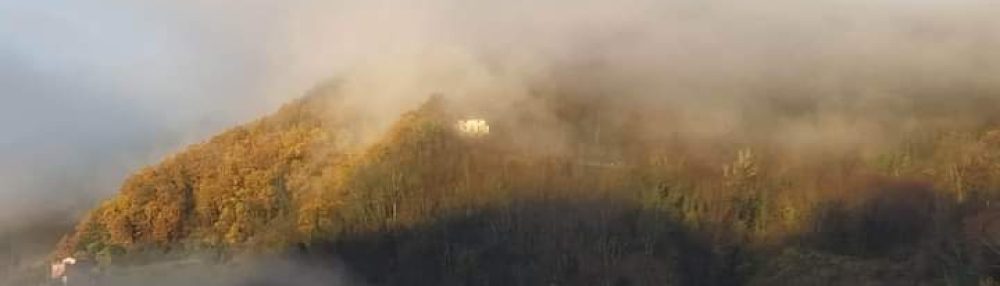
Infernal Snows

Yesterday it was water, water everywhere and nor any drop to drink! But we were not stuck in the Sargasso Sea surrounded by slimy things that crawled with legs upon the slimy sea. With all the rain and sleet we’ve been having Longoio suffered a burst aqueduct pipe and so we had to fill up our bottles from the local spring. Fortunately Gaia, our water company, proved very efficient and after some drilling the burst pipe was located and duly mended.

In the meanwhile I decided on a morning ride with just a sprinkling of rain to have a look at the snows which have fallen over our local mountains-

The otherwise very green Prato Fiorito, the haunt of Sabbath witches and the graveyard, through its landslides, of at least one village in the past, looked very snowy indeed.

My replacement scooter, this time a Honda after the old Aprilia Scarabeo had finally given up the ghost, managed the watery roads rather well.

The Refubbri river, normally so placid, had turned into a raging torrent with some spectacular waterfalls appearing.

There was a slight hint of sunshine this morning but who wants to go out in this weather now? I’m told that Abetone, our nearest ski centre just under an hour’s drive (or scoot…) away, has received another half metre of snow but regrettably ski centres throughout Italy are still closed as a result of the health emergency.

Which brings me to a very confusing linguistic point. The Italian government is now talking about its ‘recovery plan’, after the pandemic has finally gone away. It uses the term written in English. However, there is a similar sounding word in Italian, ‘ricoveri’, which translates as ‘hospital admissions’ – quite the opposite of the English ‘recovery’. So I never quite know when the news is good i.e. the ‘recovery plan’ is receiving increased funding, or whether the news is bad the ‘ricoveri’ are ever increasing!

I just wish Italians would be prouder of their beautiful language instead of importing foreign terms all the time into news items in the mistaken opinion that these have somehow more ‘authority’. Yes, they use that English word as well instead of saying ‘autorità’. This year it’s the seven hundredth anniversary of Dante Alighieri’s death. The ‘sommo poeta’, who laid down the guiding principles of the Italian language, would surely not have approved. Of course, there’s nothing very funny about the ‘Divine Comedy’ especially when Dante finds himself in the Inferno (now I am using Italian when I should say ‘hell’…but the brits have appropriated themselves in revenge of an Italian word to better describe certain ghastly conditions – like the one the world finds itself in right now). The word ‘comedy’ is used here to mean that Dante is writing in the low ‘vulgar’ or ‘comic’’ language of Italian instead of the high ‘tragic’ classical language of Latin.

The term ‘comedy’ can also mean that this wonderful poem, perhaps the greatest literary work produced in western civilization according to T. S. Eliot (who placed its themes of universality even above those of Shakespeare’s plays) does not, indeed, have a tragic end but rather culminates in that last line expressing the transcendental joy of the love that moves the sun and the other stars:

‘l’amor che move il sole e l’altre stelle.’

It is this line, and other quotes from Dante, which Lucca has sensibly turned into festive decorations for its city as these photos taken by a friend demonstrate.

Now that leads me to consider that my mum had a Dante exquisitely illustrated by John Flaxman, the neo-classical artist.  I wonder where that volume is now.

(Dante meets Beatrice)


A New Year Filled with Rain and Sleet

Yet another day of rain and sleet is assailing us here in Italy. The start of 2021 has not been very propitious what with the new covid mutant and the final act of the Brexit tragedy. At least, however, there are signs that the light at the end of the tunnel has not been a mirage. Things can only get better on the supposition that it would be difficult to have them get worst.

Actually, of course, staying in Longoio, a little village of barely twenty souls in a remote corner of the Apennine, is the best place to be in a pandemic.

Throughout the history of plagues the first thing any sensible person did was to clear out of overcrowded urban centres. Samuel Pepys, for example, fled to Greenwich, then very much a country retreat, and that wonderful compendium of tales by Boccaccio, the Decameron, is the result of a group of young people escaping the Florentine plague and seeking refuge in a villa on the surrounding hills.

(Early New Year’s Day at Longoio)

Blocked by the atrocious weather and by plague restrictions there is not much else to do but keep warm, weather the storm and read a good book (at the moment mine’s Goethe’s ‘Italian Journey’).

There will come a day, no doubt, when we will look back on these times with a certain nostalgia….

Merry Christmas / Buon Natale


This is a busy Christmas night
while all adore the little child.
Joseph brings in the hay to feed
the donkey on this night so mild.

The virgin mum with softest gaze
looks on the miracle that’s passed
and three young faces join with hers
upon a mystery so vast.

And from the mountains come the pipes,
gigantic figure from afar,
to play a gentle pastorale
upon this place of the great star.

Bright chubby angels congregate,
below the crib a dog keeps guard
and shepherd’s son presents a dove
while more are pointed to the yard.

What music may we hear this night,
what converse from all present here?
The sound of joy must echo far
and join us all in pleasant cheer!

(Traduzione)

NATIVITA’ (Domenichino)

Questa è una notte di Natale intensa:
mentre tutti adorano il piccolo bambino.
Giuseppe porta il fieno per nutrire
l’asino in questa notte così mite.

La mamma vergine con lo sguardo più morbido
guarda il miracolo che è passato
e tre giovani facce si uniscono a lei
su un mistero così vasto.
 
E dalle montagne arrivano le cornamuse.
Una figura gigantesca da lontano,
suona una dolce pastorale
in questo luogo sotto la grande stella.
 
I paffuti angeli brillanti si riuniscono;
sotto la culla un cane fa la guardia
e il figlio di pastore presenta una colomba
mentre più sono indicati al presepe.
 

Che musica possiamo ascoltare questa notte?
Di che cosa conversano tutti i presenti qui?
Il suono della gioia deve risuonare lontano
e unire noi tutti in un allegria piacevole!

Note; The painting of the Adoration of the Shepherds of c. 1607–10 by the Italian 17th century master Domenichino, previously in our school’s picture gallery, (Dulwich College)  was sold for £105,000 to the National Gallery of Scotland in 1971 to pay for roof repairs.