Calling All Wireless Set Lovers!

The fortress of Mont’Alfonso which crowns the hill dominating Castelnuovo di Garfagnana was in a sorry state not so long ago. Slowly crumbling away its only use was as a local’s small-holding complete with geese and goats.

Happily, thanks to EU money, the fortress has recently undergone an extensive restoration project: its walls are once again magnificently impressive and its guardhouses and gatehouses have been excellently reinstated.

Mont’Alfonso now hosts several events ranging from food initiative to beauty contests to art shows to car rallies. One of the most memorable of the events we have attended was that dedicated to the great Italo-Argentinian composer and creator of the Nuevo tango Astor Piazzolla whose family it was lately discovered originated from a village in Castelnuovo comune, that of Massa Sassorosso. This gorgeous event with live music and a barbecue is described in my post at

Don’t cry for me Sassorosso

The fortress was built as a garrison of the Duchy of Ferrara to defend the border with the Republic of Lucca. Constructed between 1579 and 1586, it was an Este military garrison in the 16th and 17th centuries and during the Napoleonic period (1805 – 1814) was part of the Principality of Lucca and Piombino.

The fortress was sold back to the Este property in 1814. At the beginning of the twentieth century it passed into the hands of private individuals. The fortress, which had already deteriorated over time, was further damaged by the appalling earthquake that hit the Garfagnana in 1920.

It was only from 1980, that an impressive restoration project has been carried out on the fortress greatly contributing to the cultural and economic revitalization of the upper Serchio valley.

The fortress is also planned to become an important alternative energy research hub rather like the one we visited in Wales: the Machynlleth alternative technology centre.

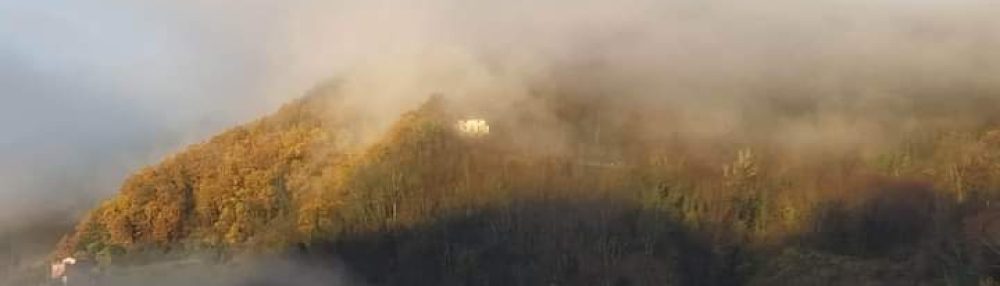
We found out another use for the fortress yesterday. After attending Santa Croce hospital Castelnuovo we visited Mont’Alfonso. It was a bleak foggy day and we were the only visitors present. In the ‘casa delle arcate’ – the former officers’ mess – we discovered an astounding museum dedicated to vintage wireless sets. It was truly a delightful discovery for us radio hams.

“Radio: Voice of History” is the title of the exhibition of over eighty rare and precious pieces, part of the collection donated by a certain Armando Goldoni. The utterly captivating and certainly nostalgic presentation is a sort of itinerary of the history of radio from its golden years of the 1920s through to the 1960s and from the first ‘crystal sets’ to the sophistication and fashionable design of an item which, before television was certainly the centre-piece of the domestic scene.

(All photos courtesy of Alexandra Cipriani)

The display aims at highlighting not only the technological and aesthetic evolution of the ‘wireless set’, but also its social and cultural function. From being a novelty in Italian homes it spread rapidly throughout the country becoming the first mass communication medium, used for news, political propaganda, both popular and classical music and sports commentaries.

There’s also a section, recounting the contribution of this area of Garfagnana to the history of radio through Francesco Vecchiacchi (1902-1955) who was born in Filicaia, a hamlet in the municipality of Camporgiano. Francesco worked at Magneti Marelli (which still exists today as a major automotive firm manufacturing car dynamos and electronic components), where he took over the direction of the Radio Laboratory directing his research towards new achievements in electronic technology, the transmission of radio signals through radio links and inventing, during the Second World War , innovative radar systems.

The free admission exhibition is open to visitors from Monday to Friday from 9 to 1 pm; on Tuesdays and Thursdays, in addition to the morning, also from 3 pm to 5 pm at other times by appointment only.) More information can be had by phoning 0583 – 643201 or emailing montalfonso@provincia.lucca.it.

Image00183

Christmas Crackers

Two sunny days in succession! Perhaps the weather might return to normal after almost two abysmally wet months. Another effect of global warming? Maybe…

Christmas events continue apace in our neck of the woods and will be rather happier in the (finally) blue Italian sky.

On Thursday, 11th December, at 21.00, there’s the Christmas concert in Bagni di Lucca’s library. Admission is euros 5 which goes for tomb restoration at the English cemetery and you must book through the librarian.

(The Christmas concert has since passed since I started this post and it was a supreme success with some gorgeous bel canto and verismo singing. Congratulations to Mr Cherubini and the De Montaigne Foundation for having organised such an exquisite evening ending with the traditional offering of prosecco and panettone.)


On Sunday, 15th December Fornoli holds its Festa delle Briciole (‘Crumbs’ fete) masterminded by Marco Nicoli. Christmas markets open up from 11 am and from 14.30 Santa Claus is in attendance at the parish hall.

78647322_3504460662927609_5888058914779430912_n

There are so many Christmassy things going on around Bagni and it could even be a white one too!

Here are just a few copies of leaflets I’ve been picking up around the place.

This one lists things happening in and around Bagni di Lucca:

presepe

This one lists all the best presepi or christmas cribs (for which our part of the world is particularly noted for) and other main seasonal events in our valley of the Serchio:

75472921_3410046292369047_3797527319103406080_o


IMG_20191214_0002


IMG_20191214_0001

And here are a few more to make a note of!

presepe 3

Plus our entertaining theatre season at the Teatro Accademico for next year:

presepe 4

That’s at least a few things to temporarily take our minds off the dismal events that have tried to cloud a merry Christmas in the still United Kingdom (I hope…).


La Visione di Blake

Non so quanto sia conosciuto il poeta e artista William Blake in Italia. Infatti, Blake non è nemmeno tanto letto in Inghilterra. Certo, le poesie contenute nelle sue collezioni ‘Canzoni d’innocenza e di esperienza’ sono tra le più lette sin dalle elementari (basta pensare a quelle dedicate alla tigre e all’agnello), e ‘Gerusalemme’, fa parte dell’ethos inglese quanto come fa parte l’inno di Nabucco nella coscienza degli Italiani.  Come tradussi nel mio post sulla visita di Gesu Cristo in Inghilterra (vedere https://longoio3.com/2018/03/31/quando-il-redentore-visito-linghilterra/ )

“E quei piedi nei tempi antichi
percorsero l’Inghilterra dai verdi monti?

E fu visto il sacro Agnello di Dio
sugli ameni pascoli d’Inghilterra?
E quel suo Volto Divino
splendere sulle nostre nuvolose colline?
E fu Gerusalemme costruita qui..?

Portatemi il mio arco d’oro ardente,
Portatemi le mie frecce di desiderio,
Portatemi la mia lancia: oh nuvole, apritevi!
Portatemi il mio carro di fuoco!
Non cessero’ la battaglia mentale
E né la spada mi dormirà in mano,
Finché non avremo costruito Gerusalemme
nella verde e piacevole terra d’Inghilterra.”

Ma i libri profetici di Blake? Chi li legge? Chi, insomma, riesce anche a capirli? Si è detto che Blake sia il più grande poeta inglese e il meno conosciuto. 
DSCN7282~2.JPG

Anche quando si legge Blake, non ci si rende conto di quanto le sue poesie facciano parte di una pagina illustrata: come incisore sposava le parole alle immagini in un modo inimitabile. Ecco la poesia sulla tigre dove l’illustrazione approfondisce sicuramente il concetto delle parole:

200px-The_Tyger_BM_a_1794

William Blake (1757 – 1827) non fu mai veramente apprezzato durante la sua vita. Molti lo consideravano pazzo! Ora è valutato una perssona fondamentale nella storia della poesia e dell’arte romantica e il suo estro creativo lo definisce uno degli artisti maggiori della Gran Bretagna. Produsse un’opera variata e simbolicamente ricca, che abbraccia l’interai immaginazione umana.

Sebbene Blake fosse considerato pazzo dai contemporanei per le sue idee idiosincratiche, è tenuto in grande considerazione per la sua espressività e creatività e per le correnti filosofiche e mistiche nella sua opera: i suoi dipinti e la sua poesia fanno parte essenziale del movimento romantico. Cristiano impegnato ma ostile alla Chiesa Anglicana (anzi, a quasi tutte le forme di religion organizzate), Blake fu influenzato dagli ideali e dalle ambizioni delle rivoluzioni francesi e americane. Fu anche influenzato da pensatori come Emanuel Swedenborg. Rivoluzionario prima del suo tempo, forse solo Shelley (che non inconcontrò mai) lo avvicina nel suo fervore.

La mostra al Tate Britain di Londra di William Blake (che continua fino al 2 Febbraio 2020) è forse la maggior ragione per trovarsi in questa città. L’altro giorno eravamo trasportati nel mondo straordinario di Blake: dalle sue prime poesie finora in stile neo-classico, ai singolari libri profetici. Era commovente poter vedere le sue creazioni da così vicino: poter saporire la delicatezza delle sue linee, vedere i colori con i quali la moglie dipingeva le sue incisioni, meravigliarsi dell’ampiezza della sua immaginazione…una freschezza sbalorditiva.

Sarebbe impossibile dare un resoconto di tutto quello esposto nella mostra; Blake, oltre a miniare i propri scritti, ha illustrato le opere di altri scrittori: il ‘Paradiso Perduto’ di Milton, per esempio, e parecchi libri della Bibbia. Molti di questi esempi sono in visione alla mostcreatra. Ecco una  selezione:


Mi concentrerò qui solo sugli appassionanti disegni fatti negli ultimi anni per la Divina Commedia di Dante nella traduzione che Carey fece nel 1812. Nel 1824, l’amico di Blake, l’artista John Linnell, gli commissionò una serie d’illustrazioni basate sulla Divina Commedia. Blake aveva allora circa sessant’anni. Un resoconto contemporaneo ci informa che creo’ cento acquarelli su quest’argomento “durante una malattia di due settimane a letto”.

Nella mia opinione sono tra le illustrazioni più belle che siano mai state fatte da alcun artista in alcuna epoca in alcuna parte del mondo.

Ecco il frontespizio

blakedanteportrait_0

Dante che corre via dalle tre belve:

Lo scritto sopra l’entrata all’inferno:

Francesca da Rimini:


Cerbero:

Il Papa simoniaco:


Beatrice che si rivolge a Dante dal carro:

Beatrice Addressing Dante from the Car 1824-7 by William Blake 1757-1827

L’ anima bella,

luce del nostro cuore,

vola coi angeli.


Leonardo da Vinci’s First Teacher

For Italy and for much of the world this is Leonardo’s year – the five hundredth anniversary of the death, as treasured guest of King Francis I at his Amboise palace, of perhaps the greatest polymath genius the world has known.

If curiosity killed the cat then it fed Leonardo’s mind, transporting it light years away from the often heavily blinkered universe he was born into.

All masters must be pupils first and Leonardo’s master was Andrea Verrocchio who began as a goldsmith, transferred to his greatest love, sculpture,


found time to paint a handful of pictures worthy to stand besides those of his main contemporaries, Ghirlandaio and Botticelli, and frescoed monasteries:


(Note the similarity between Verocchio’s and Leonardo’s Saint Jerome.)

PotW-45

Several of these paintings show the touch of an apprentice Leonardo. None more so that the two angels in Verrocchio’s baptism of Christ, in the Uffizi gallery of Florence.


It’s those angels in this painting which fully show the emerging genius of Leonardo and his particular speciality in their enigmatic smiles and their intricate drapery. Florence’s Strozzi palace exhibition, which is on until 14 July, celebrates Andrea Del Verrocchio as Leonardo’s teacher placing the young da Vinci in the context of the Italian renaissance and, in particular as one brought up in the colourful decorative Florentine school.

The exhibition, which has a special section at the Museo Nazionale del Bargello, brings together for the first time Verrocchio’s celebrated masterpieces and works by the best-known artists connected with his workshop in the second half of the 15th century. These include Domenico Ghirlandaio, Sandro Botticelli, Pietro Perugino and ….Leonardo da Vinci, his most famous pupil.

Here is a selection of paintings by those connected with Verrocchio’s workshop.


And here is the hand of Leonardo in this drawing of entwining grasses – he loved interweaving motifs – witness also his drawings of tresses and branches

Image00097

– indeed, in Milan’s Castello Sforzesco there’s a whole room he frescoed which transforms that space into a tangled forest.

The greatest treasure is left for the last exhibition room. It’s a terracotta sculpture of the Madonna and child from London’s V and A which stubbornly still attributes it to Rossellino despite its quite obvious Leonardesque features. Just that quizzical smile of the virgin gives it away!


It’s sometimes said that only one of Leonardo’s sculptures survives to this day. I believe there are three. In addition to the Virgin and child there’s an extraordinary Annunciation in the church of San Gennaro only a few miles away from us, near Collodi.


You can read more on this work in my post at

https://longoio2.wordpress.com/2015/04/07/crossing-over-at-villa-bove-san-gennaro/

There’s also another sculpture which is never seen as it’s locked away in some private collector’s vault. (Rather sad, this fact).

I shall ever remain in awe of Leonardo and just wish he’d completed a few more of his projects. Surely with da Vinci’s creative mathematical sense he might have explored the musical world and written something for the voice or for the instruments he invented? Who knows? Great geniuses shall ever be enveloped in the draperies of arcane secrets. It’s surely a great idea to walk the hills where the great enigma was born and brought up as we did and which is described in my post at:

https://longoio.wordpress.com/2013/04/25/a-walk-in-leonardo-da-vincis-hills/


Borgo is ‘My Flower’

Every April Borgo a Mozzano hosts a lovely flower festival.  On even numbered years it’s the azalea festival and on odd numbered years it’s the ‘my flower festival.’ Although the latter is on a smaller scale than the azalea festival it’s still a very lively and enjoyable event.

Image00112

The flower show is also a way of publicising the various towns and villages which make up the comune of Borgo a Mozzano. Here are some of the displays which I liked most, especially those with models of the villages they represented:

Here is Bagni di Lucca’s contribution:

Image00039

The forestry department had a poignant display, complete with model water bomber, reminding us of the terrible fire which raged for several days on our hills last month (see https://longoio3.com/2019/04/03/our-forests-on-fire/):

Image00102

Local schools had displays illustrating games from by-gone times:

Borgo’s symbol is, of course, the magnificent bridge spanning the Serchio river and built by order of the countess Matilda in the eleventh century.  Here it is represented with flowers:

Here is a selection of further displays. Note the Japanese cherry blossom garden, the real cat among the bunnies, the old agricultural items, the modern technology used in making necci (chestnut pancakes) and much else.

In addition to the street displays there were also art and photographic exhibitions.

The phenomenon of David Bonaventuri and his brilliant photography is on display in its all-defying virtuosity at Borgo a Mozzano’s Library until the 28th of April. The show is titled ‘Beyond Pain’, a reference to the fact that David had to have his left leg amputated in 2012 as a result of a work accident – absolutely not his fault – when a tree  fell on it. This has in no way limited David’s activities as a photographer and explorer of our area. In fact, at 5 pm on April 27th, at the Circolo dei Forestieri, a book on ancient rock engravings in our mountains in which he participated is being presented at the Sala Rosa of Bagni di Lucca’s circolo dei forestieri.

Meanwhile, here is a taster of the photography exhibition and its opening  ceremony (forgive the inevitable glass reflections).

It’s a real pity that the weather on Saturday wasn’t of the best. Sunday was much worst, however, with dismal downpours most of the day. I was, therefore, glad to visit when I did.

If you want to compare this year’s festival with that of the ones we have visited in previous years you can click on any of my previous posts regarding the event:

https://longoio.wordpress.com/2013/04/22/legging-it-in-leghorn/

https://longoio2.wordpress.com/2015/04/15/blooming-azaleas/

https://longoio2.wordpress.com/2016/04/13/astounding-azaleas-are-arriving/

https://longoio2.wordpress.com/2017/05/21/my-flower-is-at-borgo-a-mozzano/

https://longoio2.wordpress.com/2016/04/17/another-fabulous-borgo-azalea-festival/

https://longoio3.com/2018/04/15/borgo-blooms-again-for-its-azalea-festival/


Women in the Driving Seat

Photographic exhibitions have always played an important in the ‘Homage to Women’s week’ commemorating International Woman’s day at Bagni di Lucca Ponte’s Casinò. This year is no exception and I would like to concentrate on Sergio Garbari’s contribution to the event.

I can do nothing better than to translate the reasons Sergio has given for his photographic exhibition:

“WOMEN IN THE DRIVING SEAT”

Photographic exhibition by Sergio Garbari

Tribute to women 2019

Municipal Casinò, Bagni di Lucca 9-16 March 2019

I am returning to the theme of women in their work environment which I began last year with the “Kitchen” exhibition, dedicated to women at work in a restaurant kitchen. The girl I saw driving an ambulance in Bagni di Lucca is the starting point for this exhibition’s theme. I thought that finally, even in a “men’s” world, like that of rescue vehicle drivers, some sort of equality had finally opened, a step forward in appreciating women’s talent and ability. Many other women have made inroads in numerous other sectors of the world of work; by looking around I have found some splendid examples of commitment rewarded by esteem, consideration and trust. I have selected women that are not only thick-skinned behind the wheel of a vehicle, but who also have confidence in their life-style choices. Bars, shops, social services, journalism, pharmacies, live by these women’s energy and know-how. It was a pleasure to photograph them and I hope to have transmitted their intensity and brilliant spirit. Thanks to Tina, Emanuela, Rossana, Simona, Mara, Annalisa, Elisa, Veronica and Gaia.

Carry on trucking!

 Sergio Garbari

 sergarbari@tiscali.it

Here is a slide show of Sergio’s beautiful photos:

This slideshow requires JavaScript.

Not so long ago I shared a post in Bagni di Lucca’s community page stating that Sergio has another theme in mind relating to women who have come to the Bagni di Lucca area from outside. They could have come from any part of the world, from the UK to Australia, from Holland to Morocco.

I can think of many instances regarding women from outside locations employed in Bagni di Lucca. Just going through friends and acquaintances I can think of women working in holiday homes, women as artists (there were plenty of non-Italian artists at the Casinò exhibition, for example), women working as English teachers, women playing the piano for local choirs, women working in laundries women dog and cat-sitting, women running sports courses in rafting or pony-trekking, women involved in alternative therapies, women managing enterprises etc.

There are few photographers of the calibre of Sergio. I am quite sure that in time for next year many of you will, indeed come forwards and be part of an exhibition entitled ‘New women in Bagni di Lucca’.

Again please let me know if you’re interested in this project by sending me an email to fpettitt@gmail.com.

What’s on this Week-end at Bagni di Lucca

Despite the fact that Lent has now officially started and that, traditionally, we’re supposed to give up something, there’s no excuse for missing out on some very worthwhile events at Bagni di Lucca:

This Friday at 6 pm you are invited for a free aperitif and olive oil tasting at the Hotel delle Terme (that’s the one next to the thermal baths).

Image00001

One could then have a pizza in town before moving to the Casino for the free inaugural concert starring singers, Eleonora Tirrito and Valentina Bartoli, celebrating the start of women’s week.

On Saturday the art exhibition opens at 10 am.

At 5.30 pm in Bagni di Lucca’s Library (ex Anglican church) there will be a seminar entitled ‘Homage to Paolina Borghese Bonaparte’. It will include a documentary film Napoleon’s sister.

***

Incidentally, did anyone listen to that amazing concert on Radio 3 last night in which Rachel Podger and Brecon Baroque played the following pieces by renaissance and classical women composers which I doubt most men know anything about?

Francesca Caccini: Selections from Il primo libro delle musiche: ‘Romanesca’ No 4 Madrigal ‘Maria, dolce Maria’; No 34 Canzonatta ‘Fresche aurette’;No 28 Canzonatta ‘Non sò se quel sorriso’

Isabella Leonarda: Sonata duodecima, Op 16

Francesca Caccini: Ciaccona from Il primo libro delle musiche, ‘O chiome belle’ from Il primo libro delle musiche

Élisabeth-Claude Jacquet de La Guerre: Violin Sonata No 2 in D Les Sommeil d’Ulisse from Cantates françoises, No. 3

(You can hear pieces from the concert for a few more days at

https://www.bbc.co.uk/programmes/m0002zg9)

The fact is that only in recent years have ‘hidden’ women composers and artists come out of the cupboards power-freaked men have placed them in for too long.

Some women still ask why there’s an international woman’s day anyway and why there isn’t an equivalent men’s day. The problem is that for too long women and men have been treated un-equivalently. ‘Mendelssohn’, for example, brings to mind Felix and not his brilliant composer sister, Fanny from which he borrowed several of his themes and even passed off quite a few of her works as his own! To say nothing of ‘Schumann’ when Robert springs to attention and Clara, his wife, with her equally fine compositions is neglected. Indeed, Clara was brainwashed by the conventions of the time to give up composition when she married Robert and devote instead to caring for and nurturing her husband’s obviously ‘superior’ talent.

p0607zpp

(Recognize some of the hidden women composers of the past?)

Fortunately, such absurd views are now ever more being dispelled in the modern world. Well, in many places. I read today that Google is refusing to remove a Saudi government app that lets men track and control women. Through this imprisoning technology men are given power to grant and withdraw travel permission and set up SMS alerts when passports are being used by (their…) women.

Just for that situation there’s reason enough to continue to celebrate an international women’s day.


A 2019 Celebration of Women in Bagni di Lucca

One of the events that has put Bagni di Lucca firmly on the map – its international celebration of women and their creative achievements – is about to take place at Ponte’s Casino from the 8th to the 14th of this month. Don’t miss out!

Here is the calendar of events:

53092877_2399971390012839_5727100308077674496_n

And here are the contributing artists:

53429999_10158251150994691_3017073959750336512_n

I’ve written extensively about the Festa or ‘Omaggio alla Donna’ in my blog. For reference I include the main articles below. They are not only a record of previous events celebrating women and all organised by the indefatigable artist Morena Guarnaschelli but they also comment on various aspects of both the contributions and the difficulties of women in today’s ever-troubled world.

2013

https://longoio.wordpress.com/2013/03/09/16/

2014

https://longoio.wordpress.com/2014/03/09/la-festa-della-donna-2014/

2015

https://longoio2.wordpress.com/2015/03/15/una-serenata-stupenda/

2016

https://longoio2.wordpress.com/2016/03/07/23450/

2017

Magic Moments at Bagni di Lucca’s Casinò

2018

https://longoio3.com/2018/02/18/international-womens-day/

Indeed, my first post on the event also happens to be the third ever post I wrote. (The first blog post was on March 7th so now it’s six years that I’ve been continuously blogging. To-date there have been two thousand and eight posts from my hand.


The Cleaner: Abramovic in Florence

During a recent trip to Florence I visited the current exhibition at the Palazzo Strozzi. It’s a retrospective titled  ‘The Cleaner’, is dedicated to the revolutionary performance artiste Marina Abramovic and runs from 21st September 2018 to the 20th January 2019.

The exhibition itself is revolutionary too since it’s the first time that a woman is the protagonist at the Strozzi and that protagonist is literally strong meat to take. In other words, the exhibition is not for the faint-hearted.

What is a performance artiste anyway? Marina uses her body ‘without limits and boundaries’ to express her artistic concepts. There are over one hundred works illustrating her pioneering career which now spans over fifty years and there are over thirty performers contributing to the exhibition.

One enters the retrospective, or rather squeezes, between two nude performers who act as a sort of caryatid-like door frame. They re-enact (for each of Marina’s performance acts has been carefully choreographed and documented) ‘Imponderabilia’ dating from 1977 and which was closed down by the police when it was inaugurated in Bologna in 1977. How times have changed!

43258923_10215725902995117_4216544912616718336_n

The Strozzi’s renaissance rooms each hold a different aspect of this incredibly versatile artiste who graduated from Belgrade Art College. Luminosity, for example, has a nude (or naked?) performer on a cycle saddle suspended on a wall for thirty minutes under a gradually more intense light. Is this a metaphor for our life’s loneliness and its inability to react truthfully towards other humans?

DSCN3431_1

(Performer removed for this shot)

It’s also a metaphor for Marina’s life when, after an intensely artistic and physical relationship with German artist Ulay, separation takes place. This phase leads to perhaps Marina’s masterpiece. From opposite directions of the Great Wall of China, Ulay from the Gobi desert, Marina from the Yellow Sea each one walks a distance of 2,500 kilometres to meet in the centre for a brief greeting and quickly depart. The film illustrating this experience moved me greatly.

DSCN3403

The cramped Citroen van which Marina and Ulay made their home is also part of the exhibition in the courtyard of the Strozzi palace:

As a Serbian the horrific wars tearing the former Yugoslavia apart affected Abramovic passionately. Her performance reflection on this tragic period of human history was to clean a huge pile of bones of their blood and viscera to form a new blanched ossuary.

DSCN3414

Death is physically embraced as a filthy human skeleton in ‘Cleaning the Mirror’. Marina tries to clean it with a brush but merely transfers its dirt to her own body which becomes increasingly grimy.

DSCN3410_1

One also becomes a performer together with others. In one room there’s a task of separating rice from lentils and counting them. I confess I gave up after an hour.

DSCN3429_1

Do not miss the part of the exhibition in the basement of the Strozzi (Strozzina). It illustrates the early life and times of Abramovic and her studies in Belgrade where she rebelled against the academic concept of art as being the pursuit of beauty and where she first envisaged self-mutilation as an artistic expression.

It comes as no surprise that at the end of the exhibition one is somewhat exhausted – drained, in fact. This is why it’s useful to make one’s way to a bar for a stiff (no pun intended) drink afterwards.

DSCN3449_1

The power of the exhibition was unfolded in the weird dreams I had that night; nightmares, in fact which evolved as a huge canvas illustrating the enigmatic battle between life and death, self and the other, body and spirit, the unreality of everyday reality.

PS ‘Strozzi’, besides being the surname of the Florentine family who built the palace in the fifteenth century, also means ‘strangle’. Be warned. This is an exhibition which can strangle your hold on what you think is reality;  it truly cleans out your mind.


The Battle of Sommocolonia

You couldn’t get closer to the feel of what it must have been like in our area during World War Two than a visit to the encampment of allied forces at Villa Fiori last week-end. The historical gothic line re-enactment group were immaculately accurate in their uniforms and the women especially brilliant in their hairstyles and make-up.

For me, however, it was the incomparable range of military vehicles, including the original jeeps and the Moto Guzzi ‘Alce’ (meaning ‘elk in English) in production between 1938 and 1948, and which was designed for military and police use. I have rarely seen, not even in war museums, such flawlessly kept vehicles.

In the casinò there was a preview of a film on the Great War of (for Italy) 1915-8 to be premiered in Lucca this October. This was followed by a harrowing film on the battle of Sommocolonia, the biggest and bloodiest conflict during World war two in our area.

On Boxing day, 26 December 1944, the village of Sommocolonia, near Barga, was the scene of “Operation Wintergewitter”, an offensive conducted on the Gothic Line by the Axis Italian-German forces against US troops (92nd Division “Buffalo”), supported by the XI area partisan under the legendary ‘Pippo’. The US troops were black and under the unreservedly racist command of white American officers. Considered stereotypically lazy fighters, the troops were valiant in this last great battle on the Italian front. Shamefully, however, it was not until the 1990’s that their heroism was at last recognized by the USA.

Photos of the battle of Sommocolonia)

Image00109

(Nazi headquarters, interrogation centre and torture chamber in Ponte a Serraglio’s ex-Hotel de Russie.)

There were over 150 casualties among the allied forces (including John Robert Fox, posthumously decorated  with the American Medal of Honour) and 7 victims among civilians including a 6 month old baby, and over 50% of the villages buildings were destroyed by bombing. The last bombs, two Mk2 American hand grenades, were only removed and defused in July 2009.

(John Robert Fox. Posthumous Medal of Honor, 1997)

What was the objective of this German offensive? It’s still unclear although the allied thrust through the Apennines to liberate the remaining part of Italy under the Nazi-fascist puppet government of the Salò republic had to be delayed until April 1945. The Germans could have advanced to capture the munitions factory at Fornaci di Barga, (still in operation today but now manufacturing Euro coins). What was the point of wreaking death and destruction to a mountain village? There are parallels with the Ardennes ‘Battle of the Bulge’ in Belgium which took place at the same time for both operations were only to delay the advance of allied troops and the utter defeat of Hitler’s ‘master race’.

The pity of war, to use poet Wilfrid Owen’s phrase, was fully revealed to us that Saturday afternoon…