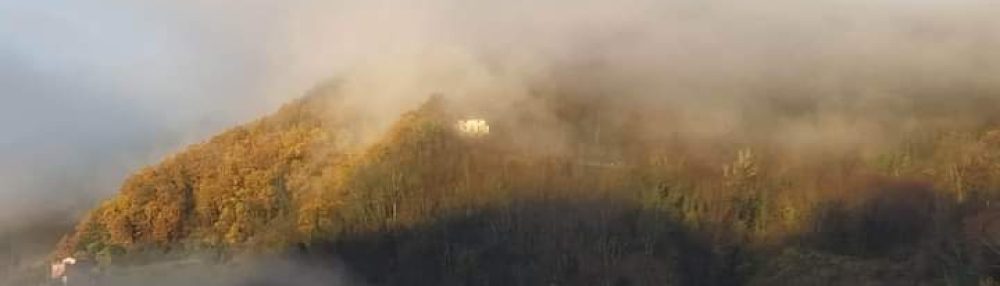
Springing Too Soon?

Those of you who use Facebook and have opted to become one of my Facebook friends will no doubt find out that there are more blog photographs and extra information available on my facebook page which is at the following link:

https://www.facebook.com/fpettitt

There is clearly no obligation for you to use this link or even apply for FB friendship with me: I have merely mentioned it in case you already use Facebook and want a quick way to access my blog at

https://longoio3.com/

***

Global warming is the biggest issue affecting our planet today and, although we have had our truly cold spells this winter it seems a long time since snow had lain on our village paths for any period of time. Indeed towards mid-day the sun shines on our valley with almost spring-like intensity and wild daffodils are appearing in the woods.

Certainly the weather is not what it used to be when I first arrived here almost fifteen years ago and it is very worrying. Some things we don’t miss of course: those sheets of ice and burst water pipes, for example, but I just wonder what spring will bring us – last year expensive forest fires occurred in the tinder-dry undergrowth – and as for summer…should I arrange a holiday in Iceland?

One thing I’ll look forwards to is the Viareggio Carnival. The extraordinary huge mechanised papier Mache floats are world famous and their grand parade will take place on the following days this year:

viareggio

Something absolutely not to be missed and something to take one’s mind off the awful event which will involve the lowering of one national flag at the European parliament. For how long I wonder?


Home Sweet Home

Just a bit of catching up now that I’m able to get back to my laptop. In case my blog readers were wondering what happened to me regarding medical matters, the coronarography at San Luca hospital Lucca did not go well. There was too much calcium in the heart arteries and to force one’s way through with a stent would have been tantamount to pushing a passage through a bottle with a very thin glass wall.

I was returned to Castelnuovo hospital and told to prepare for a major operation. I could choose between various hospitals for this to be carried out but chose Careggi hospital in Florence as it has a very good reputation and because I have some relatives who live close by. The ambulance came for me on the 3rd of January and I was almost immediately wheeled into the operating theatre. It was a very cold evening and the auxiliary staff had to keep warm in an adjoining room when not on duty.

I clearly cannot remember anything about the operation except to be informed, when waking up, that it was completely successful and that I was now fitted with four aortic by-passes and two heart valves. I was wheeled into the intensive care section where I felt like an accessory to that classic film ‘Alien’ since various tubes appeared to emerge from my body, which I could barely move, I remember feeling very thirsty but I was not in any particular pain. I was not very hungry and, indeed, managed to eat just enough of the ‘cibo’ bianco’ (white food i.e. semolina, rice, fruit pulp, ricotta cheese) to keep going.

Image00142

The hospital staff in all this was absolutely brilliant, even coping with that first night when I felt like I was in some ghastly endless quite nightmarish scenario. Around the third day I received my first visitor, who had to be clad in protective clothing. It was my wife’s Florentine cousin and I was sure glad to meet her! A couple days later I was transported out of intensive care into a ward I recognised as the one I had first been wheeled into when I was ambulanced to Careggi. Here Sandra finally reached me and it was so wonderful to see her again. (I think she must have been more concerned than I was about the whole palaver). It was not long now that my journey back to Castelnuovo Hospital began. Here I stayed in a ward until the doctors decided that I was in a safe enough condition to be discharged.

Image00154

It’s now a week that I am back home but the tough work begins! Already I’ve had a week of physio with two gym sessions and two cycle ones in good company with three other similarly afflicted patients and supervised by two very efficient lady psychotherapists. Today, it being such a sweet, almost spring-like day, I’ve managed my second walk down to the little local church and also indulged my first session on my laptop keyboard.

Image00178

I praise the Supreme Being for being where I am and with who I am now. I do feel really lucky and promise I shall regard each new morning that greets me with ever more gratitude.

Image00169


Bagni di Lucca’s Gateway to the Death Camp

In this sombre week recalling the entry of the Red Army into the Auschwitz death camp 75 years ago I came across this article written by journalist Emanuela Ambrogi and have translated it as it also fits very aptly with the article I too have written about Bagni Di Lucca’s own concentration camp once housed in the now ruinous edifice opposite the Grande Albergo delle Terme.

Daniela Pieri, witness of those dark days of 1944, tells of the departure, destination Auschwitz, of the Jews detained in the temporary camp set up at the Grande Albergo delle Terme.
Hidden in the garden of her house, at eight years of age, by the hotel, Daniela saw the Jews pass by who had been imprisoned in the camp. Escorted by soldiers from the Republic of Salò and the SS they were loaded onto the trucks that brought them to Florence, and from here to Milan to then be transferred to Auschwitz and its gas chambers. (Visited by Francis Pettitt in 2001).

The memory of that January 23, 1944 is vivid in the mind of Daniela Pieri, who witnessed the deportation with her 11-year-old sister MariaTeresa: «I remember that those poor people, a hundred people, despite the cold and snow, walked in a resigned line and practically in silence, even if someone moaned a sad lullaby that I will never forget ».

Daniela recollects the time when the Jews, especially Slavic ethnic Jews, were gathered in Bagni in its Grande Albergo delle Terme, which became the property of the Italian Youth of the Littorio: «I remember that this huge complex had quickly been transformed from a place that welcomed noble and wealthy people who arrived in luxurious carriages into a dismal barracks which couldn’t even be mentioned. There was a friend of mine, younger than me, who said she heard the cries of children, but adults told us to keep silent saying that we had dreamed everything. There was so much fear, the weather was very cold and oppressive. Just by chance, my brother Piero, 14, did not end up among the deportees. To bring something to eat at home he helped the concentration camp cook in the kitchen, but once he was surprised by a German officer and only the intervention of the cook allowed him to return home. The same cook made him get off the truck where my brother had been put together with the Jews destined for martyrdom. My mother also found it really bad: one morning she was walking with my brother in Ponte a Serraglio when she was seized by a German soldier. In the square, a bit of fuss was also created because they started throwing objects from a house onto the street. The soldier tried to kick the door and then asked for a hand grenade. In the chaos my mother and brother slipped away. Given the dangerous situation from home, we moved to Pieve di Monti di Villa where we lived as displaced people in a hut ».

«Everything was missing – Daniela recalls – even if for the kids it was almost an adventure. Herbs in the fields were collected and then cooked to try to make the pork lard edible. I really didn’t like it, but I got away with eating berries, hazelnuts, figs, chestnuts and everything that could be found walking around the fields. Almost eighty years have passed; maybe I cannot remember some recent events, but in my mind I see those sad scenes as if it were now. And that sad lullaby will never abandon me ».

I myself have written various posts on this terrible chapter of Bagni Di Lucca’s past. Only a few years ago a plaque was finally placed on a building which, once clothed in opulence and glory (Puccini was a guest, for example, and wrote act two of his opera ‘the girl of the golden west’ there), now stands in its gothick horror as a symbol of man’s inhumanity to man.

May it never be rebuilt!

If you enjoyed this post, please consider clicking the Like button or leaving a comment. It lets me know that my writing is reaching people.

Monte Rondinaio

One doesn’t have to go far from Bagni di Lucca to indulge in serious mountain trekking. To the west of the Serchio valley lie the rocky Apuans rightly called alps because of their geomorphology.

To the east lie the Appennines and although they are described as gentler and more forested than their Apuan counterparts this is not always the case.

Mount Rondinaio is among the highest in the Tuscan-Emilian Apennines and, after Monte Giovo (1991 meters above sea level), the highest in the municipality of Pievepelago. Its height (1964 m) approaches the 2000 m threshold.

Like Monte Giovo and Alpe Tre Potenze Monte Rondinaio is crossed by 00, the path of the Apennine ridge, and acts as a border between the province of Modena and the province of Lucca. It is included in the Apennine Park of Frignano.

The best way to reach the top of Monte Rondinaio via path 00 from Bagni di Lucca is to go to the next valley up of Tereglio and travel to the top of the old grand ducal road to reach the passo del Giovo col.

The majestic range comprising the Rondinaio and Giovo peaks are quite at odds with the average view of Italy’s backbone, the appennines.

The ridge overlooks a mini lake district; Lake Baccio, Lake Turchino and Lake Torbido all lie in the shadow of these mighty mountains.

Monte Rondinaio, which is easily climbable without ropes is divided by the Monte Giovo massif by the North Pass, reachable only through a demanding path, and is divided by the Alpi Tre Potenze near Abetone by the Giovo Pass, also called Foce a Giovo, which with its almost 1700 meters above sea level is the highest Tuscan-Emilian Apennine pass that can be reached via an unpaved road. Towards Emilia, the ridge across the South Pass develops a last buttress called Rondinaio Lombardo, overlooking Lake Turchino.

From the top of the Rondinaio the panorama is superb: on one side the Garfagnana and the Apuan Alps, on the other the Valle delle Tagliole with its villages of Ca ‘di Gallo, Ronchi and Rotari.

It’s noticeable how our side of the appennines are a sort of scarp slope when compared to the gentler northern slopes dipping down towards the Po valley.

I look forwards to redoing the Rondinaio route: looking at my photos from a few years back truly wets my appetite.

Mud, Mud Glorious Mud

It’s not so much the cold but the damp that has got us this autumn and winter season at Bagni di Lucca. The seemingly perennial rainy days have turned garden walls into mossy banks and our shoulders and knees in creaking joints.

Image00065

What more salubriousness then than a course of mud baths in our spa town of Bagni di Lucca?

It’s lucky when our doctor’s wife is herself a doctor and head of the medical team overseeing admittance to the thermal baths. We first got a prescription from our doctor for the mud therapy. Yesterday morning we headed for our appointment and were given the all-clear from his wife.

The baths have a long and distinguished history with such notables as Montaigne, Shelley, Heine and Puccini taking the waters here. Montaigne declared them the finest he’d come across and the most effective cure for his own complaints. Heine disported with a ballerina near the baths and departed, too, much improved in health (the little mountain cottage where they met is still there and some local vineyard tenders pointed out out to me.)

Image00060

Shelley bathed in the volcanic streams springing from the thermal hill and Puccini spent a summer here composing the second act of his opera, ‘The Girl of the Golden West.’

Having stripped in readiness for the mud to be applied to my own joints I was shocked to find the mud turned out to be incredibly hot (around 40 degrees centigrade). However, I was persuaded to remain and after around twenty minutes in a mud cocoon I was led first to a shower, then to a bath and finally to a couch where my relaxation, cleanliness and relief was complete.

Emerging from the cubicle I made my way through graciously painted rooms to the bar and exited into yet another gloomy and grey day at Bagni di Lucca.

Anyway, I have to say I did feel a lot better after this muddy session; the mud seemed to work a more effective relief than the English mud I used to pick up on the rugby playing fields of my school and, therefore, I’m looking forwards to the next six sessions of this therapy.

Christmas Crackers

Two sunny days in succession! Perhaps the weather might return to normal after almost two abysmally wet months. Another effect of global warming? Maybe…

Christmas events continue apace in our neck of the woods and will be rather happier in the (finally) blue Italian sky.

On Thursday, 11th December, at 21.00, there’s the Christmas concert in Bagni di Lucca’s library. Admission is euros 5 which goes for tomb restoration at the English cemetery and you must book through the librarian.

(The Christmas concert has since passed since I started this post and it was a supreme success with some gorgeous bel canto and verismo singing. Congratulations to Mr Cherubini and the De Montaigne Foundation for having organised such an exquisite evening ending with the traditional offering of prosecco and panettone.)


On Sunday, 15th December Fornoli holds its Festa delle Briciole (‘Crumbs’ fete) masterminded by Marco Nicoli. Christmas markets open up from 11 am and from 14.30 Santa Claus is in attendance at the parish hall.

78647322_3504460662927609_5888058914779430912_n

There are so many Christmassy things going on around Bagni and it could even be a white one too!

Here are just a few copies of leaflets I’ve been picking up around the place.

This one lists things happening in and around Bagni di Lucca:

presepe

This one lists all the best presepi or christmas cribs (for which our part of the world is particularly noted for) and other main seasonal events in our valley of the Serchio:

75472921_3410046292369047_3797527319103406080_o


IMG_20191214_0002


IMG_20191214_0001

And here are a few more to make a note of!

presepe 3

Plus our entertaining theatre season at the Teatro Accademico for next year:

presepe 4

That’s at least a few things to temporarily take our minds off the dismal events that have tried to cloud a merry Christmas in the still United Kingdom (I hope…).


No Damp Squib at the Living Crib

Postponed from the previous Sunday because of the torrential rain Pieve di Monti di Villa’s ‘presepe vivente’, or living crib, almost seemed destined for another deferment or even a cancellation because of the atrociously wet weather we’ve been having continuously since the end of October. Certainly, I didn’t feel keen to visit the presepe: the louring skies were truly menacing.

Image00065

Pieve di Monti is only about four miles as the crow flies from Longoio but it’s over twice that distance by road. That’s because, from Longoio, one has to go down winding roads to the Lima valley, proceed to Ponte and then ascend to Pieve di Monti di Villa. There is an alternative route via Montefegatesi but that route is often subject to landslides and, with the current weather, is not a good bet.

Something about Pieve di Monti di Villa which normally commands beautifully extensive views towards the Apennines: (Not last Sunday though!)

Image00001

The village first appears on maps in the eleventh century and was called Villa Terenzana, the name deriving from Terentius, an ancient Roman landowner. A standard golden handshake for retired Romans who had served in the legions was to be given land and the foundation of several villages in our area is due to that custom.

The village developed in the middle Ages around the castle of Villa Terenzana and the parish church of San Giovanni Battista. With the population increase in the nearby village of Monti di Villa, its name was changed to Pieve di Monti di Villa. In 1833 it counted 227 inhabitants.

Do not think that these villages were inhabited by mute inglorious Miltons. I’ve pointed out in previous posts that many have given birth to noted persons like naturalist Antonio Vallisneri (from Trassilico) and composer Nicolao Dorati (from Granaiola). Pieve di Monti di Villa was the birthplace in 1855 of a distinguished explorer, Adamo Lucchesi.

Lucchesi studied at Lucca’s Seminary and, aged sixteen, set off from Genoa for Argentina. In Buenos Aires he worked on a river boat on the Paraná, Uruguay and Paraguay rivers, and explored the virgin forests they traversed. He also explored the Alto Paraná region and, in 1883, discovered the Guairá waterfalls.

Returning to Lucca in 1906, Adamo devoted himself to philanthropic initiatives such as the “Giuseppe Mazzini” school (commemorated in the plaque below) and an institute for emigrants which provided them with a basic education that would allow them to avoid becoming mere labourers.

In 1936 he published “In South America – Alto Paraná and Chaco. 1875-1905” describing his expeditions. Adamo Lucchesi died in 1940.

Like all the villages in our area Pieve di Monti di Villa has its fair share of beautiful buildings. Foremost among them is the Pieve or parish church.

Image00079

Dedicated to Saint John the Baptist it was founded in the twelfth century, rebuilt in 1446 and again between 1760 and 1776. It has a single nave and transept, and preserves the apse of the original medieval building. The bell tower was rebuilt in 1892.

Inside the church there’s an organ by Domenico Matteoni dated 1776 and a set of crystal chandeliers from the 17th century.

At the entrance of the village, to the right of the fountain, is the sixteenth century Palazzo Gabrielli. A member of this family was Paolo Gabrielli (1832-1908) who emigrated to London, and became a pupil of the exiled founder of modern Italy, Giuseppe Mazzini. As part of the presepe’s display, the villa’s elegant living room was an excellent place to demonstrate the art of weaving using the loom.

There are also the ruins of the Castle of Villa Terenzana but I was unable to locate these.

Despite the disappointment of poor weather and the consequent reduction of visitors Pieve di Monti di Villa’s presepe was beautifully presented. Indeed, the day kept dry while all around Pieve it rained. A miracle perhaps?

Traditional craftsmen displayed their skills whether it be in carding wool and stuffing mattresses, or interleaving rush chair seats or grinding maize or repairing shoes or threading baskets or sharpening knives or making new brooms: all activities which, until a few years back were regularly carried out in the village:

There was even a old village school class with children learning the alphabet by singing a song:

Image00084

Food and drink was abundant: I enjoyed a sausage sandwich and in the local osteria had a glass of mandarin punch.

Image00074

Music was supplied by a guitar and accordion duo.

Image00026

(Sara and Brunello)

The steep cobbles were spread with sawdust in several sections since the wet weather had made them so slippery.

Image00016

I did not stay, however, until the evening to see Mary and Joseph arrive with the baby Jesus and occupy their places in the stable, followed by the Three Wise men. It was becoming too dark for me to get back home. Here, however, are some pictures of the event taken by a visitor who stayed on.

presepefin

(Photo Courtesy of Sonia Massei)

Well done to Pieve di Monti di Villa and its enterprising inhabitants! The mountain villagers were not discouraged by the gloomy weather but put their best into making this event truly entertaining and a wonderful way to inaugurate the Christmas season.


Archie – our New Feline Arrival

It all started with a request I read, a couple of weeks back in Facebook, from a couple who had bought a farm near Montaltissimo, a village they described (and as many truly are) rather more peopled by cats than by humans. They already had two dogs and the cats didn’t really get on well with their canines. Could they find homes for them? Of the photographs shown of a kitten tom and a kitten queen (born end of June this year) I chose the tom. Our feline family had lacked a male since the death of Napoleon just before the Christmas of 2017.  Perhaps this tom might fit the bill?

I met with the couple, a little daughter and the kitten tom last Tuesday at Fornoli’s bar Serra. We transferred the tom from one cat basket to another on one of the bar’s tables much to the delight of some customers. However, the morning’s weather looked ominous. Another day of incessant rain? Oh no!

tom

Anyway, our new arrival (after a brief visit to our vet who has his practice close by, for a quick check-up) was securely strapped, in his basket, on the back of my scooter and we reached home without getting soaked.

Archie, as we have decided to call him (though maybe not what he calls himself – all cats have, as you know, their own secret names) quickly began to explore his new surroundings which, of course, includes the queenly trio Carlotta, Cheekie and Corneglia. Would he get on with them? Would they accept him?

Old (14) Corneglia took him into her care almost immediately.

She gave Archie a lesson on how to catch a (mechanical) mouse.

Archie was hypnotised by our fire’s flames (as cats inevitably are).

Image00030

Then there was that special feline treat of playing with the christmas tree (though happily without too much bauble boxing).

Image00032

And, last but not least, what Italian cat cannot resist dipping into a plate of spaghetti?

Image00013

I’m sure we’ll have years of fun and games with our new tom, Archie, all thanks to that FB insert.


Santa Claus is Coming to our Town!

Are you already deep in preparations for the Christmas festivities or are you instead trying to avoid what you feel is humbug? (No matter…like Scrooge you’ll change….I hope).

In the area around Bagni di Lucca seasonal festivities are in full swing.  Festive lighting is springing up and the traditional presepe Christmas crib is appearing not only in its customary sites but also in new ones. Such is the case with the Fornoli presepe, near our vet, with its life-size statues supplied by the Fontanelli firm which has specialised in figurines for well over a century. I took pictures of it during the day.

And the scene is even more picturesque in the evening.

fornoli pres

(Photo courtesy Marco Nicoli)

This week-end starting at 10 this Saturday 14 December until Sunday evening there’s la ‘Valle di Santa’.  Santa Claus will land in Bagni di Lucca and for two days he will take up residence in the Villa Webb in the old part of Villa at the terme. There children can meet him and give him their letters. Meanwhile, the streets of the town will be filled with craft, food and wine market stands. There also be  several street artists. As always, entry to Santa’s House is free.

la-valle-di-babbo-natale-bagni-di-lucca

Also starting this Saturday on December 7th it’s time for the third walk among the one hundred nativity scenes at Montefegatesi, our highest (at altitude 2762 feet) village. It’s part of the ‘Valle dei Presepi’ program. Actually, last year there were more than one hundred and eighty presepi! See my account of this amazing display last year at https://longoio3.com/2018/12/10/christnas-cribs-here-there-and-everywhere/.

The Montefegatesi day starts at 11 am with the opening of food and wine stands and Christmas markets. One can taste delicious local delicacies in a heated tent. At 3 pm Santa Claus arrives. At 4.00 pm there’s a procession with Christmas carols all the up to the Dante monument to place the Infant Jesus in the highest crib of the Commune. A flight of lanterns will take off into the skies accompanied by the reading of some poems by local poet Egeo Bartoli.

If you miss the show don’t worry; the cribs will be on display until 6 January.

The living crib at Pieve di Monte di Villa was postponed from last Sunday to this Sunday 8th December because of bad weather. This time the met has set the day as fair and so it should be after all the catastrophic rainfall we’ve been getting every day since the end of October! This living presepe is shared among three enterprising villages in our comune: Granaiola, Monti di Villa and Pieve di Monti di Villa, This year it’s the latter who will have the honour of hosting the event. It’ll have a hard task to beat last year’s display at Monti di Villa which I described in my post at https://longoio3.com/2018/12/03/a-living-christmas-in-the-appenines/

presepe-1-dicembre-pieve-di-monti-di-villa

Do leave your car at the Villa Fiori car park at Ponte a Serraglio and take the shuttle bus there in order to avoid clogging up the narrow roads!

It’s also time for the next concert in the ‘Incontri Musicali – i luoghi del bello e della cultura’ series. This one takes place on Sunday 8th December at 5.15 PM at Valdottavo’s Colombo theatre and features the “The Wagons” ensemble playing an original selection of music by seven composers from the four corner of the world and devised by Girolamo Deraco and Alessandro Sesti.  Knowing the quality of the last three concerts (the only ones, unfortunately I was able to attend) I am really looking forwards to being present at this one!

There is a panoply of other events coinciding with these in our valley but unfortunately (or not?) we can’t all be cloned so I’ve only chosen the above as being the most representative of this weather-wisely superb opening to Christmas season. I hope that those of you here will be able to make it to some of them and support our valley’s truly remarkable creative initiatives.


Remembering a Woman’s Murder at Bagni di Lucca

On the afternoon of Tuesday 7th December 2010 in Via Contessa Casalini, the street which surrounds Bagni di Lucca’s Casalini gardens, near the church of the Sacred Heart and by the entrance of the driveway leading to a doctors’ surgery, Cala Perez Kaliannys, a 27-year-old Cuban girl, who was taking a walk with her cousin, was killed with nine pistol shots. First, two shots were fired into her chest; then another seven were released when Cala Perez was already on the ground and practically lifeless. A skinny young man wearing a leather jacket was seen walking away after the shooting. Meanwhile, on the other side of the gardens children were leaving the local school at the end of their classes. The local police quickly rushed in to protect them telling those outside to immediately lie down flat.

The search began for Cala’s presumed killer, Leonard Grifsha, a twenty-six year old Albanian construction worker employed by a Ponte a Serraglio company. Carabinieri from all stations in the Serchio valley were mobilised and, coordinated from centres at Lucca and Castelnuovo Garfagnana, to search for the killer, who had had a relationship with the victim in the past months.

Friends and acquaintances were questioned and, overnight, checkpoints set up along the main roads to and from the Garfagnana. The army at San Marcello Pistoiese also joined in along the mountain area leading to Abetone on the Brennero road. The search continued, too, around Lucca with considerable numbers being involved.

Three days later, on 7th December, Leonard Grifsha was captured as he tried to pick up his belongings in Ponte a Serraglio and confessed to the murder. In all probability Grifsha was preparing to escape to Albania. At the time of capture he was unarmed. Grifsha told the Carabinieri, however, that he had thrown the gun in the Lima River. A search for the murder weapon was made but I’m not sure whether it was ever found.
For three days and three nights Grifsha had hidden in the woods behind my house at Longoio where someone may have given him shelter from the bad weather. According to the carabinieri’s investigations, the Albanian had been trained in Germany as a paramilitary and had even fought in Afghanistan so he would have been used to roughing it in all conditions.

Grifsha fully collaborated with Lucca’s Public Prosecutor Salvatore Giannino, and was assisted by his lawyer Luca Cantini. He was then taken to the San Giorgio prison in Lucca. A trial followed and the murderer was condemned to life imprisonment.

What was the motive for the murder? It was mainly because Cala had refused to continue her relationship with Grifsha and also because, apparently, Cala had been receiving money from the Albanian to buy a flat in Florence which, however, she was sending back to her relatives in Cuba.

Cala, born and bred in a country we have visited and love but which we realize is quite impoverished because of US sanctions, had met a friend of ours from Bagni in Cuba. He fell in love with her, and she grabbed the opportunity of his offer of marriage to escape to a more prosperous country like Italy. Our friend paid for the considerable cost of the wedding (which was quietly questioned among some of our friend’s relatives).

Cala already had a son from a previous relationship and brought him along with her to Bagni di Lucca where he was entered at the local school.  He has since turned into a very personable young man who we met since his step-father lives in the same house where we used to visit Sam Stych, a retired librarian and world Boccaccio authority, originally from Birmingham, and who died in 2018 at the age of 101. Indeed, Cala’s son was very helpful towards Sam in several ways, for example, sorting out his television channels, helping with his meals and dressing him.

Our friend confirmed that Cala, his separated wife with whom, however, he remained on good terms, had been threatened by the Albanian and that she was afraid, but had not had the courage to report the situation to the Carabinieri for fear of reprisals.

And that is the problem. So many women, particularly in Italy which has one of the highest feminicide rates of the world – six hundred in the past four years – with an average of one woman murdered by a jealous husband/partner every other day (and showing little sign of diminishing) are scared of denouncing their cruel companions for fear of reprisals. There are so many cases where, even if a woman denounces her partner’s abuse, the police take little action and the social services are not always as prompt as they could be. Regrettably, the UK can hardly be held up as a good example of what to do in these terrible situations: I heard recently on the news that a violent husband, who had been imprisoned, was not only released before the completion of his sentence but also was returned the house keys by the police: he promptly returned to the family home and murdered his wife.

Without in any way mitigating the circumstances of the tragic event that occurred in Bagni di Lucca nine years ago it is clear to me that putting a woman brought up in the more easy-going mores of a country like Cuba together with a man bred in a world where honour and shame ruled supreme in a patriarchal world was asking for trouble if the relationship soured. However, Bagni di Lucca did not expect anything as awful as what happened. I remember being interviewed by national television and as I was eating my pizza at a local bar finding myself on screen. (I just said that the whole of Bagni di Lucca was shocked at the event.)

Last year Bagni di Lucca comune decided to place a now iconic red bench, symbolising the blood spilt by the murder of women by their possessive men, near to the spot where Cala was assassinated.

Image00032

Last month on the day dedicated to the memory of these women the red bench was inaugurated by the mayor who in his speech stated that Bagni’s municipal administration would spare no efforts in the fight against violence on women and is cooperating with associations helping to prevent such crimes and offering protection to the victims.

Image00031

A further initiative regarding violence on women will be the installation of another red bench, on December 9, in Montefegatesi; the same day when the village’s now famous the nativity scenes will be opened to the public. That is, indeed, I feel a fitting coincidence: the mother of the baby Jesus could be no better patron for those in search of a solution to a terrible and deep-seated cultural and psychological problem which invests the world well beyond the boundaries of Bagni di Lucca.

Image00034

I would finally add that Cala’s Facebook page still remains, not so much as a consciously memorial page but one which is yet more poignant since it suddenly stops at that fateful day in 2010 with a comment in Spanish.

‘descansa en paz’ – which translates as ‘rest in peace.

Thanks to a major campaign organised by the Croce Rossa to collect funds, Cala was returned to her country of birth and lies buried in Cuba where her grave is regularly visited by her relatives and her ex-husband.

cala

https://www.facebook.com/kaliannys.perez


Image00033