The Old Church (Part 3).

But the mountains remember.

The stones remember.

The shadows remember.

My great-uncle Alsworthy, according to the story I found in his desk in a sunny room of his old mansion in Worcester County, drew a circle of salt on the church threshold, engraved with symbols older than Rome.
Also included were those he found in a Mithraeum during his Roman walks, a figure symbolizing the victory of the light of goodness and truth over the darkness of demonic forces.

In his hand he held a crucifix.

He murmured Latin prayers in tune with harmonics hidden among the mountains.

The shadows trembled, writhing in anticipation.

The water of the Howling Den, frozen and blessed, hissed and steamed, flowing over the threshold.

Insects spiraled upward, forming chains of golden light.

Sage and myrrh traced an ancient pentagram.

The fire turned into blue and green flames, tornadoes that captured malice.

When the ritual ended, the mountains exhaled a long relief.

Residual echoes.

Remains linger: petrified faces in the caves, screams fused with those of the Howling Den’s victims.

Indistinct shapes appear along the walls of the refuge: fleeing monks, twisted faces.

Insects trace golden arches across the mountaintops.

Whispers, fragments of the ritual, brush the ears.

The Big Church hovers above the fire: blackened walls, twisted ivy, gaping door… alive in miniature.

My great-uncle returned to London.

The fame of his exploits reached the Vatican.

The Holy Father recognized the grandeur of his deed: Alsworthy became Chief Exorcist for Great Britain.

He had purified a place of ancient darkness, where human malice and mountain magic intertwined.

As I finished my story, the fire flared up one last time.

The shadows retreated into the corners.

The insects rose to the ceiling, leaving golden threads.

The mountains seemed to be drawing closer.

The whispers faded, but remained suspended.

The refuge breathed, alive with memories, with magic.

“Where did you hear all this?” someone whispered.

I smiled.

“Calm down. I heard it all from the mouth of Reverend Alsworthy, my great-uncle, as I told you. A man of lion-like courage and impeccable learning.”

For a long moment, the mountains seemed to listen.

The insects flapped their wings in unison.

And though silence returned, each of us knew:

The story was not over.

She was alive.

Still moving.

Still waiting.

Still suspended in the infinite cosmos of magic.

The Old Church (Part Two)

It all begins with my great-uncle, the Reverend Hugo Alsworthy.

Sent to Papua New Guinea to preach to the Orokaiva, headhunters and keepers of ancient secrets, a savage people adorned with necklaces made of human skulls and bright bird-of-paradise feathers.

Hugo Alsworthy was fearless. Intelligent. Stubborn.

He remembered that a young English heir had disappeared there months earlier, chasing rumors of lost temples and hidden jewels.

He was found, or at least his head was found, hanging atop a totem pole.

The news made the headlines: exciting, mysterious, dangerous.

My great-uncle escaped this fate thanks to his medical training.

He cured the tribal ruler’s daughter of a foot infection with a dose of penicillin.

To the tribe, he had become a god.

To him, only duty.

Restless, he returned to London.

During a health vacation in Italy, wandering, after the usual visits to the Roman Forum and the Colosseum, among the dusty shelves of the Vatican Library, where he had been invited by an old cleric friend, he discovered a manuscript on the Chiesaccia of Fornovolasco, in the middle of a Bible first translated into Italian by a scholar from Lucca named Diodati, during the Renaissance.

And there, listeners, the true story began, included in the supposedly lost Fornovolasco codex.

The manuscript slept for centuries in the shadow of the Apuan Alps.

The stones remember. The wind remembers.

When words are spoken aloud, the mountains draw closer.

The ancient spirits stir from their long slumber.

They open invisible eyes.

They breathe.

Insects trace arcs in the air, illuminating peaks and valleys.

The shadows behind me ripple, forming towers and cliffs alive with memories.

The audience leans in, mesmerized, suspended on the edge of time, between the real and the invisible.

Fornovolasco is a charming village at the entrance to the Turrite di Gallicano valley.
It has a history tied to the iron and steel industry, having been founded by master blacksmiths from Brescia.
The name, in fact, means “Volasco Furnace,” a common surname in that northern Italian town.

There are several splendid walks starting from Fornovolasco and descending from the summit of the queen of the Apuan Alps, Pania della Croce.

Fornovolasco remains hidden.

The valley folds in on itself.

Cliffs like sentinels scan the horizon.

Gray houses cling to the shade.

An arched bridge crosses a stream murmuring ancient litanies.

The air carries whispers of iron, of fire, of lost lives.

I speak their names.

The shadows on the walls writhe: kneeling friars, then grotesque, contorted forms.

Insects gather near the fire, pulsating to the rhythm of my heart, illuminating these ghostly apparitions.

Beyond the bridge, the path climbs beneath the branches of chestnut trees.

Sunlight filters like green fire.

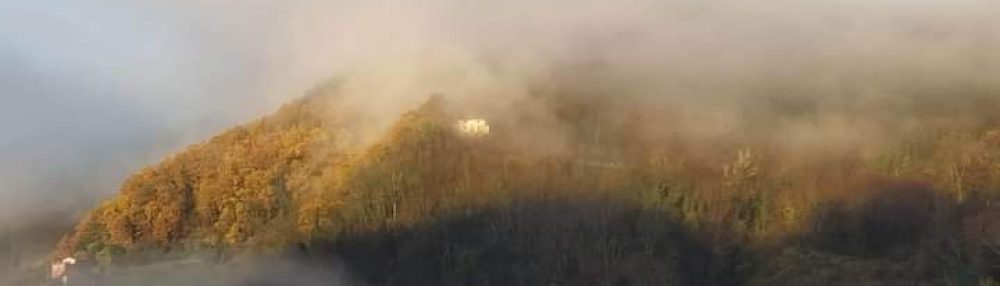
There it is: the Chiesaccia, the Evil Church.

The portal gapes like the mouth of a beast.

Blackened walls, twisted ivy.

Bats sleep among the hollows of the altars, guardians of secrets inaccessible to man.

The chronicles of Lucca testify that this place was known and feared as early as the 13th century.
In the Libelli extimi Lucanae Diocesis of 1260, the Chiesaccia appears among the humblest sanctuaries that owed allegiance to the Parish of Santa Felicita in Valdicastello, once guarded by the Augustinian order.

Yet, the road that crossed their threshold was no ordinary pilgrimage route.

When darkness fell, even the owls held their breath.

The Chiesaccia served primarily to welcome and refresh travelers who, for business or pilgrimage, headed from Garfagnana toward Versilia and the sea through the Foce di Petrosciana.

It is said, however, that these friars were not as pious and merciful as they would have us believe.
In fact, travelers who stopped to receive hospitality at this monastery were never seen again.

The reason?
During the night, the friars indulged in cannibalism and ate the poor wayfarers alive, perhaps with a little salt and pepper.

During these “special” evening banquets, the monastery bells rang out throughout the valley.

Hearing the nocturnal sound of these deadly bells, the local faithful knew that the friars had feasted that night too.

Another version links the derogatory term “Chiesaccia” to the fact that the monks, if not outright killed them, frightened and preyed on the wayfarers and pilgrims who passed along the Petrosciana trail.

What can one say? Legends don’t arise by chance.

The bells tolled alone, slow and somber.

Those who heard them trembled and whispered: “The friars are feasting again.”

Some said it was fantasy; others that the friars were bandits disguised as saints.

But the mountains remember.

Stones remember.

Shadows remember.

The Old Church (Part 1)

I’m Freddy Peters.

An entomologist by profession…

And yet, tonight, I’m not just that.

I’m something else.

Something suspended between the world of the living and the breath of the mountain.

The Transapuan trail winds through twisted roots, moss glistening with rain, wet leaves reflecting the moon like small secret mirrors.

Every rustle in the trees, every sigh of the wind, every trembling leaf carries with it a forgotten song, ancient, invisible, that vibrates in the heart.

I walk alone.

But here, solitude doesn’t weigh.

Here, solitude is waiting.

It’s a suspended tremor.

It’s an omen.

The mountain breathes with me.

The mountain listens.

The mountain leads me toward something I can’t yet see… but I feel it’s been waiting for me, invisible, inevitable, forever.

The rocks breathe.

The roots move like sleeping snakes.

The ground pulsates beneath my footsteps.

Every leaf, every drop of dew, every strand of moss vibrates with the memory of time.

The wind carries echoes of ancient footsteps, of forgotten voices, of presences no human eye has ever seen.

Hours of walking.

And then, among the rocks, a flickering light.

A tiny cabin, growing like a sprout among ancient stones.

As if the mountain itself had cultivated it, waiting for me.

The smell of burning wood, of smoke, of hot food envelops me.

Time slows.

The shadows breathe.

Every breath becomes a thread that binds my body to the place, to the time, to the magic.

The mountaineers watch me.

In their eyes shines something ancient, secret: wisdom, memory, curiosity that spans centuries.

They are not just men.

They are keepers of stories.

Mountain spirits dressed in flesh and blood.

Walking souls among us, guarding invisible secrets.

They offer me barley and wild boar soup.

Every bite tastes of earth, roots, fire, tradition.

I listen to their stories, and my mind, usually ready to catalog and observe, slows, bends, merges with the silence.

Every sound, every breath, every small movement is woven into an invisible yet living fabric, suspended between present and memory, between dream and reality.

The CAI group is having fun telling local stories and legends.

“But won’t you tell us a story too?” insists one of the group.
The others agree.

They want me to tell a story full of magic and demonic forces.

The experience of a compatriot of mine comes to mind.
Perhaps they’ll appreciate it if I tell it?

I apologize for my imperfect Italian, but their patient eyes encourage me.

I sit by the fire.

I begin to speak.

The flames flicker.

The shadows breathe on the walls.

Sparks rise and dance like little, crazy stars.

Insects with golden wings emerge from the corners, tracing invisible maps in the air, following the movements of my hands like brushes of light.

Even the mountains outside seem to bend toward us, drawn by the sound of words, their mysterious echoes, their hidden sighs.

The boundaries between me and the world dissolve.

I am no longer Freddy Peters, the solitary entomologist.

I am a narrator suspended between dream and reality.

Weaver of lights, shadows, sighs, and silences.

Every sound, every smell, every spark becomes part of the story.

My skin vibrates from the cold mixed with the heat of the fire.

My hair rises in invisible currents.

My heart beats in unison with the fire and the mountain itself.

When I hesitate to speak, the silence is not empty.

It is filled with invisible presences, luminous echoes, wonder suspended in the air.

The mountain listens.

The refuge responds.

I no longer belong only to myself: I belong to time, to light, to the magic that breathes in every breath, in every spark.

I am Freddy Peters…

But I have become much more: a storyteller, an explorer, a weaver of dreams.

Between the fire and the fog, my story and the magic merge, inseparably, as if they had always been one.

Bonfire Night

Today, in the United Kingdom, Bonfire Night will be celebrated once more. The fireworks, the smoke, and the crackling wood recall the failed plot of 1605, when Guy Fawkes and his companions sought to destroy the Houses of Parliament, to kill King James, and to restore a Catholic monarch to the throne. For high treason, Fawkes was condemned to be hanged, drawn, and quartered: a gruesome spectacle to reaffirm the power of the state and the Protestant order.

November 5 is shadowed by another memory. On this day, centuries later, Guenther Podola, a German of Polish descent, was hanged in Wandsworth Prison after being found guilty of killing a police officer during a burglary. He became the last man to be executed in Britain for that specific crime, though not the last to hang. That grim milestone would come a few years later.

I was a child then. Our family visited my uncle’s house on the very day Podola died. My father, eager for us to take part in local celebrations, pressed a pound note into the hands of my brother and me so that we could buy a small bundle of Brocks fireworks. His wife, my mother, born in Italy, accepted the custom outwardly but felt something different stirring beneath the surface.

I remember her that night, holding a sparkler in her hand, the sparks flickering across her face. She mentioned, gently but firmly, that her own mood was tempered by sadness at Podola’s hanging. I suspect she also understood something unspoken in the tradition itself: that Guy, or Guido as he was known when fighting for the Spanish against England, had been a Catholic like her, in a land that had defined itself in opposition to her faith.

This sense of sorrow was deepened some years later when another uncle, much loved by us all, was killed returning from the great Bonfire Night festivities at Lewes. We were meant to meet him there, but in the days before mobile phones we could not find him in the crowds. The chance to share the night together slipped away, and fate did the rest. Many years later, I was grateful to meet his widow again, now remarried, in the company of my own wife, completing a circle that had been left suspended in grief.

Yet despite these shadows, I have continued to find joy in Bonfire Night. Sandra and I once braved the crowds to attend the Lewes celebrations together: not so much for the spectacle, but to witness the old, uneasy echoes of anti-Catholic sentiment still lingering in the air. We also gathered many times with friends in Edenbridge, one year arriving through a fog so thick it felt like another world entirely, me weaving past stalled cars on a motorbike.

More recently, we found ourselves at Alexandra Palace, where North London’s great firework display flared above the city in brilliant colour. That night felt wholly inclusive, free of old hostilities, simply celebratory and bright.

I sometimes wonder why people persist with home fireworks at all, when accidents injure so many every year. It seems wiser, and kinder, to join together at communal displays where the spectacle is grander and the danger less personal.

Here in Italy there is, of course, no Bonfire Night. Yet there are other fire feasts. In Cerreto, the end of winter is marked with flames and procession. Across the Garfagnana in winter, bonfires flare on hilltops to herald the season of cold and of gathering. These rituals have helped me rediscover what the fire of November might signify. Not vengeance. Not division. But the turning of the year, the endurance of community, the warmth of shared humanity as winter approaches.

Now, with our own cast-iron stove glowing, fed by wood from our land, we hold our own small fire festival. As the days grow short and the cold draws in, we gather around its warmth, celebrating the elemental gift of fire itself. The ability to make fire marks the threshold between savagery and civilization. And in our quiet home, it marks something else too: the continuity of memory, of family, of love carried across seasons.

As St Francis wrote in his poem praising creation:

‘Praise my Lord, for brother fire, for whom you illuminate the night, and he is beautiful and cheerful, robust and strong.’

Here, the flames are gentle. And they are ours.


Notte dei Falò

Oggi, nel Regno Unito, si celebra ancora una volta la Notte dei Falò. I fuochi d’artificio, il fumo e il crepitio della legna ricordano il fallito complotto del 1605, quando Guy Fawkes e i suoi compagni cercarono di distruggere il Parlamento, uccidere Re Giacomo e ripristinare un monarca cattolico sul trono. Per alto tradimento, Fawkes fu condannato all’impiccagione, allo sventraggio e allo squartamento: uno spettacolo raccapricciante per riaffermare il potere dello Stato e dell’ordine protestante.

Il 5 novembre è oscurato da un altro ricordo. In questo giorno, secoli dopo, Guenther Podola, un tedesco di origine polacca, fu impiccato nella prigione di Wandsworth dopo essere stato riconosciuto colpevole dell’omicidio di un agente di polizia durante un furto con scasso. Divenne l’ultimo uomo a essere giustiziato in Gran Bretagna per quello specifico crimine, anche se non l’ultimo a essere impiccato. Quel triste traguardo sarebbe arrivato qualche anno dopo.

Allora ero un bambino. La nostra famiglia andò a trovare mio zio proprio il giorno in cui morì Podola. Mio padre, desideroso che prendessimo parte alle celebrazioni locali, mise una banconota da una sterlina nelle mani di me e mio fratello per comprare un piccolo mazzo di fuochi d’artificio Brock. Sua moglie, mia madre, nata in Italia, accettò l’usanza esteriormente, ma sentì qualcosa di diverso agitarsi sotto la superficie.

La ricordo quella sera, con una bengala in mano, le scintille che le guizzavano sul viso. Accennò, con gentilezza ma con fermezza, che il suo umore era temperato dalla tristezza per l’impiccagione di Podola. Sospetto che avesse anche capito qualcosa di inespresso nella tradizione stessa: che Guy, o Guido come era conosciuto quando combatteva per gli spagnoli contro l’Inghilterra, era stato cattolico come lei, in una terra che si era definita in opposizione alla sua fede.

Questo senso di dolore si intensificò alcuni anni dopo, quando un altro zio, molto amato da tutti noi, fu ucciso di ritorno dai grandi festeggiamenti della Notte dei Falò a Lewes. Avremmo dovuto incontrarlo lì, ma all’epoca in cui non esistevano i telefoni cellulari non riuscivamo a trovarlo tra la folla. L’occasione di condividere la notte insieme svanì e il destino fece il resto. Molti anni dopo, fui grato di incontrare di nuovo la sua vedova, ora risposata, in compagnia di mia moglie, chiudendo un cerchio che era rimasto sospeso nel dolore.

Eppure, nonostante queste ombre, ho continuato a trovare gioia nella Notte dei Falò. Sandra e io una volta sfidammo la folla per partecipare insieme alle celebrazioni di Lewes: non tanto per lo spettacolo, quanto per testimoniare i vecchi e inquieti echi del sentimento anticattolico ancora aleggianti nell’aria. Ci siamo anche riuniti molte volte con gli amici a Edenbridge, un anno arrivando attraverso una nebbia così fitta che sembrava un altro mondo, mentre io zigzagavo tra auto ferme in moto.

Più di recente, ci siamo ritrovati all’Alexandra Palace, dove il grande spettacolo pirotecnico di North London brillava sulla città con colori brillanti. Quella notte sembrava totalmente inclusiva, libera da vecchie ostilità, semplicemente festosa e luminosa.

A volte mi chiedo perché la gente continui a fare fuochi d’artificio in casa, quando ogni anno gli incidenti feriscono così tante persone. Sembra più saggio e gentile riunirsi in spettacoli collettivi, dove lo spettacolo è più grandioso e il pericolo meno personale.

Qui in Italia, ovviamente, non esiste la Notte dei Falò. Eppure ci sono altre feste del fuoco. A Cerreto, la fine dell’inverno è segnata da fiamme e processioni. In Garfagnana, in inverno, i falò ardono sulle cime delle colline per annunciare la stagione del freddo e del raduno. Questi rituali mi hanno aiutato a riscoprire cosa potrebbe significare il fuoco di novembre. Non vendetta. Non divisione. Ma il volgere dell’anno, la resistenza della comunità, il calore di un’umanità condivisa con l’avvicinarsi dell’inverno.

Ora, con la nostra stufa in ghisa accesa, alimentata dalla legna della nostra terra, organizziamo la nostra piccola festa del fuoco. Mentre le giornate si accorciano e il freddo si fa sentire, ci riuniamo attorno al suo calore, celebrando il dono elementare del fuoco stesso. La capacità di accendere il fuoco segna la soglia tra barbarie e civiltà. E nella nostra casa silenziosa, segna anche qualcos’altro: la continuità della memoria, della famiglia, dell’amore che si perpetua attraverso le stagioni.

Qui, le fiamme sono gentili. E sono nostre.

Come scrisse San Francesco nel suo Cantico delle Creature:

“Laudato sii, mi’ Signore, per frate foco, per il quale illumini la notte, ed egli è bello e lieto, robusto e forte”.

The Bells Beneath San Frediano

In Lucca sound is the oldest ghost.
It moves through the streets like incense through cloisters—heard, but never seen. Yet nowhere does it linger more strangely than in the Piazza San Frediano, where the golden mosaic of Christ glitters above the square like a sun that has forgotten how to set.
They say that on certain nights—cold, still nights when the moon is low and pale—a faint chiming rises from beneath the church. Not from the bell tower, which stands tall and proud, but from the ground itself, as though the earth were tolling for its own soul.

I. The Restorer
Giulia Venturi arrived in Lucca one November, hired to clean the mosaic that had watched over the piazza for eight hundred years. She was a conservator from Florence, precise and sceptical, used to pigments and scaffolds, not legends. But the first night she stood beneath the façade, the city unsettled her. The wind smelt of incense though no church was open; and beneath her boots she thought she heard a murmur, like chains dragged across stone.
She took a small room near Via Fillungo, in an old house where the landlord warned her never to work past midnight. “After twelve,” he said, “the bells beneath wake up.” She laughed. “All the bells of Lucca are awake by then,” she replied.
The next evening she climbed her scaffolding. The mosaic’s tesserae—lapis, malachite, and gold—shone like dragon scales. But as she polished the face of the ascending Christ, she noticed something odd: faint smudges of soot along the halo’s edge, as if from smoke long extinguished.
When she leaned closer, she caught a whisper—not a voice, exactly, but a vibration in the air, rhythmic and metallic. It sounded, impossibly, like bells tolling far below her.

II. The Legend
The sacristan, old Nello, found her the next morning pale and wide-eyed.
“You heard them, didn’t you?” he said. “The campane sepolte—the buried bells.”
He told her the story: centuries ago, when Lucca was torn by plague and heresy, a sect of mystics had taken refuge beneath San Frediano. They claimed to hear angels singing through the earth. The church, fearing contagion of both body and soul, sealed the crypt and entombed the sect within. To silence their blasphemy, their bells were buried too. “But the earth remembers,” Nello whispered. “And when sin grows thick above, the bells below begin to toll.”
Giulia dismissed it as folklore. Yet that night, as rain lashed the square, the sound returned—clearer now, closer. Seven notes, slow and sorrowful, echoing from beneath the flagstones.

III. The Descent
Driven by equal parts fear and fascination, Giulia searched the archives. She found a parchment from 1633 mentioning a “scala sotto l’altare maggiore”—a staircase beneath the high altar.
At dusk she slipped inside the church, lantern in hand. The basilica was empty, its apse aglow with votive light. Behind the altar, half-concealed by drapery, she found a sealed iron grille.
The key still hung nearby.
She turned it. The lock gave with a sigh, like a sleeper roused from a century’s dream. A draft of cold air rose from below, smelling faintly of wax and salt. She descended.
The stairs spiralled into darkness. Walls damp with centuries closed around her. At last she reached a chamber whose ceiling glimmered faintly with mineral veins. There, half-buried in rubble, stood three ancient bells—green with corrosion, bound by chains.
Each was inscribed with a name: Fides. Spes. Caritas.
Faith. Hope. Charity.
As she reached out to touch the first, it vibrated under her hand. A deep note filled the chamber—not struck, but breathed. Around her, the shadows thickened, forming indistinct human shapes. The air throbbed with a sound between chant and lamentation.
The walls began to shimmer, revealing faint frescoes—faces of monks with closed mouths, eyes uplifted. Their lips were sealed with gold leaf.
Then a voice spoke from the darkness:
“We were the faithful who would not be silenced.
When they sealed us below, we rang our prayers to the stones.
The city above forgot, but the stones remembered.”
Giulia fell to her knees. The bells vibrated again, their tones overlapping into a chord so deep it seemed to pulse within her ribs.
She awoke at dawn at the foot of the altar, the grille closed behind her.

IV. The Toll
Since that night, the mosaic above San Frediano gleams with an uncanny new brightness—as if washed in light from within. Pilgrims say that when you look closely at the face of Christ, his eyes reflect moving figures below, as though the buried faithful still worship in the crypts beneath.
And sometimes, when evening falls and the piazza empties, a faint chime rises from underfoot. Those who listen carefully count three notes only—Faith, Hope, and Charity—ringing in slow, sorrowful measure, like a heart that refuses to die.

Giulia left Lucca soon after, her restoration complete. Yet in Florence, she keeps a single tessera she found loose within the mosaic—a fragment of gold that hums faintly when held to the ear.
It hums to the rhythm of buried bells.


Le campane sotto San Frediano

A Lucca, il suono è il fantasma più antico.
Si muove per le strade come l’incenso nei chiostri: udito, ma mai visto. Eppure, in nessun luogo aleggia più stranamente che in Piazza San Frediano, dove il mosaico dorato di Cristo brilla sulla piazza come un sole che ha dimenticato come tramontare.

Si dice che in certe notti – notti fredde e silenziose, quando la luna è bassa e pallida – un debole rintocco si levi da sotto la chiesa. Non dal campanile, che si erge alto e fiero, ma dal terreno stesso, come se la terra stesse suonando per la propria anima.

I. La restauratrice

Giulia Venturi arrivò a Lucca un novembre, incaricata di pulire il mosaico che aveva vegliato sulla piazza per ottocento anni. Era una restauratrice fiorentina, precisa e scettica, abituata a pigmenti e impalcature, non a leggende. Ma la prima notte che passò sotto la facciata, la città la turbò. Il vento odorava d’incenso, sebbene nessuna chiesa fosse aperta; e sotto gli stivali le parve di sentire un mormorio, come di catene trascinate sulla pietra.

Affittò una piccola stanza vicino a Via Fillungo, in una vecchia casa dove il padrone di casa la avvertì di non lavorare mai oltre mezzanotte. “Dopo mezzanotte”, disse, “le campane sotto si svegliano”. Lei rise. “Tutte le campane di Lucca sono sveglie a quell’ora”, rispose.

La sera successiva salì sull’impalcatura. Le tessere del mosaico – lapislazzuli, malachite e oro – brillavano come scaglie di drago. Ma mentre lucidava il volto del Cristo che saliva, notò qualcosa di strano: deboli macchie di fuliggine lungo il bordo dell’aureola, come di fumo spento da tempo.

Avvicinandosi, colse un sussurro: non una voce, esattamente, ma una vibrazione nell’aria, ritmica e metallica. Sembrava, incredibilmente, il rintocco di campane molto più in basso.

II. La Leggenda

Il sacrestano, il vecchio Nello, la trovò la mattina dopo pallida e con gli occhi sbarrati.

Le hai sentite, vero?

Le campane sepolte.

Le raccontò la storia: secoli prima, quando Lucca era dilaniata dalla peste e dall’eresia, una setta di mistici si era rifugiata sotto San Frediano. Affermavano di sentire gli angeli cantare attraverso la terra. La chiesa, temendo il contagio sia del corpo che dell’anima, sigillò la cripta e seppellì la setta al suo interno. Per mettere a tacere la loro bestemmia, anche le loro campane furono sepolte. “Ma la terra ricorda”, sussurrò Nello. “E quando il peccato si fa denso in alto, le campane in basso iniziano a suonare.”

Giulia liquidò la cosa come folklore. Eppure quella notte, mentre la pioggia sferzava la piazza, il suono tornò, più chiaro ora, più vicino. Sette note, lente e dolorose, che echeggiavano da sotto le lastre di pietra.

III. La discesa

Spinta da paura e fascino in egual misura, Giulia frugò negli archivi. Trovò una pergamena del 1633 che menzionava una “scala sotto l’altare maggiore”.
Al crepuscolo entrò furtivamente nella chiesa, con la lanterna in mano. La basilica era vuota, l’abside illuminata da una luce votiva. Dietro l’altare, seminascosta da un drappo, trovò una grata di ferro sigillata.

La chiave era ancora appesa lì vicino.

La girò. La serratura cedette con un sospiro, come un dormiente risvegliato da un sogno secolare. Una corrente d’aria fredda salì dal basso, con un leggero odore di cera e sale. Scese.

Le scale si snodavano a spirale nell’oscurità. Pareti umide di secoli si chiusero intorno a lei. Finalmente raggiunse una stanza il cui soffitto luccicava debolmente di venature minerali. Lì, semisepolte tra le macerie, c’erano tre antiche campane, verdi per la corrosione, legate da catene.

Su ognuna era inciso un nome: Fides. Spes. Caritas.

Fede. Speranza. Carità.

Quando allungò la mano per toccare la prima, questa vibrò sotto la sua mano. Una nota profonda riempì la stanza, non suonata, ma respirata. Intorno a lei, le ombre si addensarono, formando figure umane indistinte. L’aria pulsava di un suono a metà tra un canto e un lamento.

Le pareti iniziarono a luccicare, rivelando deboli affreschi: volti di monaci con la bocca chiusa, gli occhi rivolti verso l’alto. Le loro labbra erano sigillate con foglie d’oro.

Poi una voce parlò dall’oscurità:

“Eravamo i fedeli che non volevano essere ridotti al silenzio.
Quando ci sigillarono sotto, noi risuonammo le nostre preghiere alle pietre.
La città di sopra dimenticò, ma le pietre ricordarono.”

Giulia cadde in ginocchio. Le campane vibrarono di nuovo, i loro toni si sovrapposero in un accordo così profondo che sembrò pulsarle dentro le costole.

Si svegliò all’alba ai piedi dell’altare, con la grata chiusa dietro di lei.

IV. Il rintocco

Da quella notte, il mosaico sopra San Frediano risplende di una nuova, misteriosa luminosità, come se fosse stato inondato di luce dall’interno. I pellegrini dicono che quando si guarda attentamente il volto di Cristo, i suoi occhi riflettono figure in movimento sottostanti, come se i fedeli sepolti lo adorassero ancora nelle cripte sottostanti.

E a volte, quando cala la sera e la piazza si svuota, un debole rintocco si leva da sotto i piedi. Chi ascolta attentamente conta solo tre note – Fede, Speranza e Carità – che risuonano con ritmo lento e doloroso, come un cuore che si rifiuta di morire.

Giulia lasciò Lucca poco dopo, a restauro completato. Eppure, a Firenze, conserva un’unica tessera che ha trovato sciolta all’interno del mosaico: un frammento d’oro che emette un debole ronzio se avvicinato all’orecchio.

Ronza al ritmo delle campane sepolte.
The River Bride of Nozzano

They say that in the valley where the Serchio winds between willow and reed, the air is never still.
The mist walks like a woman there.
At twilight she gathers the scent of wet earth and candle smoke from distant farms, and her touch leaves the grass silvered with dew.

But only those who have lost something hear her whisper their names.

I. The Engineer

When Marco Della Rena, a civil engineer from Lucca, came to oversee the floodworks near Nozzano Castello, he thought the villagers’ talk of the Sposa del Fiume—the River Bride—was mere folklore. He believed in water levels, not ghosts.

Yet the place unsettled him.
Each evening the fog rose early, veiling the ruined battlements in a pale, opalescent glow.
Frogs stilled when he passed.
Once, while marking out a drainage line, he saw a handprint glistening on the inside of his measuring glass—small, delicate, formed of pure condensation.

He told himself it was nothing.
He began to dream otherwise.

II. The Story

At the osteria that night, the old ferryman told him the tale.

Long ago, when Lucca’s nobles warred among themselves, a Guinigi daughter was promised to a knight from Pisa.
The day before her wedding she fled to the river, unwilling to leave her city.
They found her bridal veil snagged in the reeds but never her body.
Since then, the River Bride appears when the Serchio changes course—to reclaim what men try to master.

Marco laughed politely, yet could not shake the feeling that the river was watching him, waiting for him to finish his embankment.

III. The Call

It was near midnight when the flood came.
Rain like molten iron hammered the plain; the Serchio rose in silence first, then in fury.

Marco ran to the levee.
Through the rain he saw her—a figure in white standing where the floodlights faltered, her veil streaming like mist.
She turned her face toward him, and though he could see no features, he knew she was smiling.

“Not walls,” she said in a voice like water over stone. “Bridges.”

The earth beneath him shifted; the new embankment cracked like an eggshell.
He fell to his knees, certain the torrent would take him—but the water curved around his body, folding like wings.

When dawn came, the village was untouched.

IV. The Proof

Days later, the workers found Marco’s blueprints changed.
The ink had run, reshaping the lines: the levee replaced by a series of graceful arches—bridges spanning the Serchio in a design no one recognized, delicate yet structurally perfect.
The style was ancient, unrecorded in any archive.
He signed the plans in silence.

When the bridges were built, each arch was found to bear a faint, natural pattern in the stone like the trace of a bridal veil.

V. The Legacy

Now, on certain damp evenings, lovers cross the bridges and leave garlands of white flowers in the water.
The locals say the River Bride has forgiven men their arrogance.
Others claim she still waits beneath the surface, weaving her hair through the current, patient as eternity.

And if you walk there at dusk, between the last song of the blackbirds and the first call of the frogs, you may see the mist rise into the shape of a woman—
and the reflection of the bridges will tremble as if the river itself were breathing.


La Sposa del Fiume di Nozzano

Si dice che nella valle dove il Serchio serpeggia tra salici e canneti, l’aria non sia mai immobile.
La nebbia cammina lì come una donna.
Al crepuscolo coglie il profumo della terra bagnata e del fumo delle candele dai poderi lontani, e il suo tocco lascia l’erba argentata di rugiada.

Ma solo chi ha perso qualcosa la sente sussurrare i propri nomi.

I. L’Ingegnere

Quando Marco Della Rena, un ingegnere civile di Lucca, venne a supervisionare i lavori di bonifica vicino a Nozzano Castello, pensò che i discorsi degli abitanti del villaggio sulla Sposa del Fiume fossero solo folklore. Credeva nei livelli dell’acqua, non nei fantasmi.

Eppure quel luogo lo turbava.
Ogni sera la nebbia si alzava presto, velando i bastioni in rovina con un pallido bagliore opalescente.
Le rane si immobilizzavano al suo passaggio. Una volta, mentre tracciava una linea di drenaggio, vide l’impronta di una mano luccicare all’interno del suo misurino: piccola, delicata, fatta di pura condensa.

Si disse che non era niente.
Iniziò a sognare diversamente.

II. La storia

Quella sera all’osteria, il vecchio traghettatore gli raccontò la storia.

Molto tempo prima, quando i nobili lucchesi erano in guerra tra loro, una figlia dei Guinigi fu promessa sposa a un cavaliere pisano.
Il giorno prima delle nozze, fuggì verso il fiume, non volendo lasciare la sua città.
Trovarono il suo velo nuziale impigliato tra le canne, ma mai il suo corpo.
Da allora, la Sposa del Fiume appare quando il Serchio cambia corso, per reclamare ciò che gli uomini cercano di conquistare.

Marco rise educatamente, ma non riusciva a scrollarsi di dosso la sensazione che il fiume lo stesse osservando, aspettando che finisse il suo argine.

III. La chiamata

Era quasi mezzanotte quando arrivò l’alluvione.
Pioggia come ferro fuso martellava la pianura; Il Serchio si sollevò prima in silenzio, poi con furia.

Marco corse all’argine.
Attraverso la pioggia la vide: una figura vestita di bianco in piedi dove i riflettori tremavano, il velo che fluttuava come nebbia.
Si voltò verso di lui e, sebbene non riuscisse a distinguere alcun volto, capì che stava sorridendo.

“Non muri”, disse con una voce come acqua sulla pietra. “Ponti”.

La terra sotto di lui si mosse; il nuovo argine si incrinò come un guscio d’uovo.
Cadde in ginocchio, certo che il torrente lo avrebbe travolto, ma l’acqua gli si incurvò intorno al corpo, ripiegandosi come ali.

Quando spuntò l’alba, il villaggio era intatto.

IV. La prova

Giorni dopo, gli operai scoprirono che i progetti di Marco erano cambiati.
L’inchiostro era colato, ridisegnando le linee: l’argine era stato sostituito da una serie di eleganti archi: ponti che attraversavano il Serchio in un disegno che nessuno riconobbe, delicato ma strutturalmente perfetto. Lo stile era antico, non registrato in nessun archivio.
Firmò i progetti in silenzio.

Quando i ponti furono costruiti, si scoprì che ogni arco recava un debole motivo naturale nella pietra, come la traccia di un velo da sposa.

V. L’eredità

Ora, in certe sere umide, gli innamorati attraversano i ponti e lasciano ghirlande di fiori bianchi nell’acqua.
La gente del posto dice che la Sposa del Fiume ha perdonato agli uomini la loro arroganza.
Altri sostengono che attenda ancora sotto la superficie, intrecciando i capelli nella corrente, paziente come l’eternità.

E se ci si cammina al tramonto, tra l’ultimo canto dei merli e il primo richiamo delle rane, si può vedere la nebbia sollevarsi nella forma di una donna,
e il riflesso dei ponti tremerà come se il fiume stesso respirasse.

Guinigi Tower

I’ve had a very positive response to the start of my stories from Lucca. So I thought I’d carry on the series with this one of the Guinigi tower – the one well-known because of the Holm oaks that grow on top of it.

Enjoy!

The Angels of the Guinigi Tower

From anywhere in Lucca you can see it: the Guinigi Tower lifting above the roofs, its crown of holm oaks defying gravity and reason. The trees have stood there for centuries, drinking mist and sunlight from the air, their roots buried not in soil but in the brick itself. Some say they keep the tower alive; others that they are its souls.

I. The Botanist
Elena Sarti came to study them one hot summer when the air over the walls shimmered like glass. She was a botanist from Bologna, precise, secular, and fascinated by anomalies. The oaks, she discovered, should not have survived—there was no real depth of earth, only a thin layer of humus and the crumbling mortar of medieval masonry.
Yet when she took her first core sample, the auger came up sticky with resin that smelt faintly of incense.
At night, the tower unsettled her. The branches rustled though there was no wind; birds circled it but never landed. And from the courtyard below she sometimes heard a faint chiming, like metal struck softly by feathers.

II. The Guardian
Old Signora Guinigi, the caretaker, watched Elena’s work with wary courtesy. Her family had tended the tower for generations.
“You may measure the trees,” she said, “but do not climb after sunset. The air changes.”
“What do you mean?”
The woman looked toward the leaves above. “That’s when the angels walk.”
Elena laughed. “There are no angels, signora.”
The old woman only crossed herself. “Then pray the night proves you right.”

III. The Ascent
Elena waited until Midsummer’s Eve to disprove the superstition. She carried her instruments, her notebook, and a small lamp, climbing the 230 steps into the crown. The city spread below her like a labyrinth of red roofs and moonlit alleys. The trees whispered in a language she almost understood.
As she knelt to measure the bark, the air grew suddenly cold. A pale mist unfurled from the branches. Within it, shapes moved—tall, radiant, neither wholly human nor winged, but suggesting wings, as if light itself had learned the gesture of flight. Their faces were featureless, yet she felt them watching her with infinite patience.
She tried to speak but her voice failed. One of the figures bent toward her and touched the trunk of the nearest oak. At its touch, the bark split to reveal veins of shining dust.
“Not trees,” the thought came into her mind. “Roots of remembrance.”
The figure turned its gaze downward, and she saw that the roots reached through the tower, threading the brick and stone all the way to the soil of Lucca below—into the graves of forgotten chapels, the foundations of vanished houses, the bones of saints.
“Every prayer,” the voice murmured, “grows upward through us.”
The light flared. The wind rose in a circle around her, scattering her notes like leaves. When it ceased, the terrace was empty, the oaks perfectly still.

IV. The Proof
Elena found herself at the foot of the tower at dawn, her hands streaked with gold dust. She told no one what she’d seen, but when she examined her samples she found that the resin contained microscopic fragments of bone ash—human, ancient, sanctified.
She sent her report to Bologna with no conclusions.
That night, the caretaker told her quietly, “The angels accepted you. The tower breathes easier.”

V. The Blessing
Sometimes, when evening light falls just so, the shadow of the Guinigi Tower stretches across the city like a ladder. Pigeons avoid it. Lovers walking below feel a tremor of calm. And those who look up at the oaks swear they glimpse silhouettes among the branches—motionless figures made of the same gold dust that once fell upon a frightened scientist’s hands.
Lucca, they say, is still held in their canopy, each leaf a listening ear turned toward heaven.


Ho avuto una risposta molto positiva all’inizio dei miei racconti su Lucca. Così ho pensato di continuare la serie con questo sulla Torre Guinigi, quella famosa per i lecci che le crescono in cima.

Buon divertimento!

Gli Angeli della Torre Guinigi

Da qualsiasi punto di Lucca si può vedere: la Torre Guinigi che si erge sopra i tetti, la sua corona di lecci che sfida la gravità e la ragione. Gli alberi sono lì da secoli, a bere nebbia e luce solare dall’aria, con le radici affondate non nel terreno ma nei mattoni stessi. Alcuni dicono che mantengano viva la torre; altri che ne siano l’anima.

I. La Botanica
Elena Sarti venne a studiarli in una calda estate, quando l’aria sopra le mura luccicava come vetro. Era una botanica bolognese, precisa, laica e affascinata dalle anomalie. Scoprì che le querce non avrebbero dovuto sopravvivere: non c’era uno spessore di terra reale, solo un sottile strato di humus e la malta sgretolata della muratura medievale.
Eppure, quando prelevò il suo primo campione di carotaggio, la trivella risultò appiccicosa di resina che odorava vagamente di incenso.
Di notte, la torre la turbava. I rami frusciavano nonostante non ci fosse vento; gli uccelli le volteggiavano intorno ma non si posavano mai. E dal cortile sottostante a volte sentiva un debole tintinnio, come metallo colpito dolcemente dalle piume.

II. Il Guardiano
La vecchia signora Guinigi, la custode, osservava il lavoro di Elena con cauta cortesia. La sua famiglia si prendeva cura della torre da generazioni.
“Puoi misurare gli alberi”, disse, “ma non salire dopo il tramonto. L’aria cambia.”
“Cosa intendi?”
La donna guardò verso le foglie in alto. “È allora che camminano gli angeli.”
Elena rise. “Non ci sono angeli, signora.”
La vecchia si fece solo il segno della croce. “Allora prega che la notte ti dia ragione.”

III. L’Ascesa
Elena attese fino alla vigilia di mezza estate per smentire la superstizione. Portò con sé i suoi strumenti, il suo taccuino e una piccola lampada, salendo i 230 gradini che portavano alla cima. La città si estendeva sotto di lei come un labirinto di tetti rossi e vicoli illuminati dalla luna. Gli alberi sussurravano in una lingua che quasi capiva.
Mentre si inginocchiava per misurare la corteccia, l’aria si fece improvvisamente fredda. Una pallida nebbia si srotolò dai rami. Al suo interno, si muovevano forme: alte, radiose, né del tutto umane né alate, ma che suggerivano ali, come se la luce stessa avesse imparato il gesto del volo. I loro volti erano inespressivi, eppure li sentiva osservarla con infinita pazienza.
Cercò di parlare, ma la voce le mancò. Una delle figure si chinò verso di lei e toccò il tronco della quercia più vicina. Al suo tocco, la corteccia si spaccò rivelando vene di polvere lucente.
“Non alberi”, pensò. “Radici del ricordo.”
La figura abbassò lo sguardo e vide che le radici si estendevano attraverso la torre, infilandosi nei mattoni e nelle pietre fino al suolo di Lucca sottostante, nelle tombe di cappelle dimenticate, nelle fondamenta di case scomparse, nelle ossa dei santi.
“Ogni preghiera”, mormorò la voce, “cresce verso l’alto attraverso di noi”.
La luce si accese. Il vento si levò in un cerchio intorno a lei, disperdendo i suoi appunti come foglie. Quando cessò, la terrazza era vuota, le querce perfettamente immobili.

IV. La prova
Elena si ritrovò ai piedi della torre all’alba, con le mani striate di polvere d’oro. Non raccontò a nessuno cosa avesse visto, ma quando esaminò i campioni scoprì che la resina conteneva frammenti microscopici di cenere d’ossa: umana, antica, santificata.
Inviò il suo rapporto a Bologna senza trarre conclusioni.
Quella notte, il custode le disse a bassa voce: “Gli angeli ti hanno accolta. La torre respira più facilmente”.

V. La Benedizione
A volte, quando la luce della sera cade proprio lì, l’ombra della Torre Guinigi si estende sulla città come una scala. I piccioni la evitano. Gli innamorati che passeggiano sotto di loro provano un fremito di calma. E chi alza lo sguardo verso le querce giura di intravedere sagome tra i rami: figure immobili fatte della stessa polvere d’oro che un tempo cadde sulle mani di uno scienziato spaventato.
Lucca, dicono, è ancora racchiusa nella loro volta, ogni foglia è un orecchio in ascolto rivolto al cielo.