A Giorgione Beauty

Italy abounds in walled towns but nowhere so than the north-east. Not surprising when one considers this area is the main crossroads between nordic, slavonic and mediterranean groups. Among the creme de la creme of walled towns are Montanara, Cittadella and Castefranco.

We had lunch in an excellent place called, appropriately La Torre as it was next to the town’s main gateway. The silent centre of this beautiful town has a conventionally neo-classical cathedral which harbours one of the world’s great paintings by an artist which approaches Leonardo in his transcendental mystery. It’s Giorgione’s pala or ceremonial depiction of the virgin and saints.

Next to the cathedral is the painter’s house with a wonderful decorative frieze, also by his hand.

It’s our second visit to this wonderful town and its frisson remained ever the same.

A Different Kind of Butterfly House

Last month I helped out in a wedding as celebrator of marriage vows.  The words were put together by Lisa Redgrave who is creator and director of the nuptial magic that is called ‘Hitched in Italy’ and whose web site is at http://www.hitchedinitaly.com/.

The words, which were very beautiful, started:

Friends and Family of the bride and groom welcome and thank you for being here on this important day.

We are gathered together to celebrate the very special love between ***** and *****, by joining them in marriage.

All of us need and desire to love and to be loved.

Let me say I am not a vicar or priest – just an enlivener of special occasions. The actual legal marriage ceremony was performed in Lucca’s noble palace which I have described at

https://longoio2.wordpress.com/2017/03/28/a-meeting-with-the-mayor-of-lucca/

I’ve assisted a couple of times at Lisa’s beautifully organized wedding events which are always set in stunning settings such as aristocratic villas and rustic villages. The one I attended, however, must take the crown for uniqueness. Nicknamed ‘Casa farfalla’ (Butterfly house) the house has to be one the most original modern building in the Lucchesia or indeed in the world. Designed by Michel Boucquillon and Donia Maaoui, artists, architects and designers the estate spreads its wings on the hills just to the south of Lucca.

The ensemble consists of a villa, a guest house and a pool, all proving that contemporary architecture married to technology can create a new magic. There is a harmony between the buildings and their environment which only the most traditional architecture would have been able to capture. Yet the project is as up-to-date as it gets.

The main building has an openable roof with two wings fanning out at an angle of 30 degrees (hence the name). This structure is operated by six hydraulic pistons. The opened-out roof can thus provide natural ventilation to the house and can also give its lucky occupants the reality of literally dreaming and sleeping in a starlight hotel.

Being invited in such an extraordinary place is quite a privilege. For more information on using the location for both receptions and holidays see the following sites:

https://www.tripadvisor.it/VacationRentalReview-g187898-d8486807-CASA_FARFALLA-Lucca_Province_of_Lucca_Tuscany.html

https://www.facebook.com/pg/MICHEL-BOUCQUILLON-Architect-Designer-171419476353987/photos/?tab=album&album_id=254180831411184

For me, apart from having the chance of being invited to participate in a happy event, the most extraordinary feature of the house, together with its award winning design (an award shared with Renzo Piano’s London’s Shard) are the most wonderful views it has towards the city of Lucca.

PS If you are interested or know anyone who is interested in having an otherworldly wedding ceremony in a stunning location beautifully and professionally organized for you do check our Lisa Redgrave’s web site at

Home


A New View of Longoio

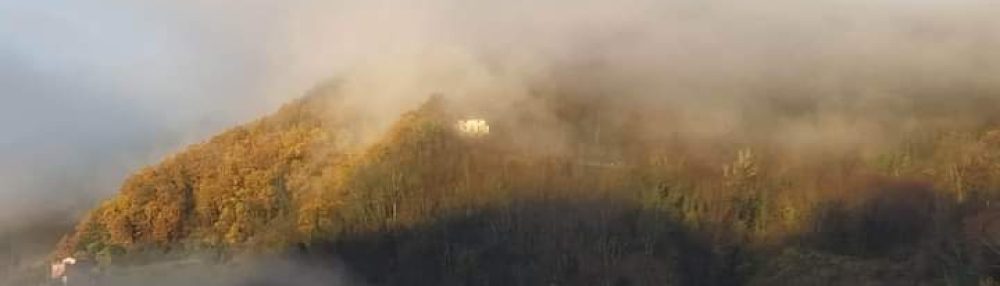
It’s usually quite easy to get a photo of one’s village from the other side of the Lima valley. Just take the road up to Benabbio and Granaiola and Pieve di Monte di Villa and several other villages this side of the river are easily spotted. Not so easy with our village Longoio and its neighbour Mobbiano. This is because they’re tucked away in a valley which has no road facing it on the other side of the Lima valley.

Looking at the map I decided that the best way to photograph our villages would be to take the Benabbio road and then head eastwards through the Pizzorne woods. The other day we did just this and found an Ideal place to take our photos. Remember, Longoio is seen to the left and Mobbiano is seen to the right. The mountain above is called the Monte Incoronata.

An Orangery Full of Music at the Palazzo Bove


The palazzo Bove is a favourite of ours both for its location and for the variety of musical events it offers. It’s an elegant aristocratic summer villa dating back to the seventeenth century and is beautifully situated at the summit of the ancient village of San Gennaro above Collodi. The palazzo used to be the summer residence of Lucca’s archbishop Giuseppe Palma. At the end of the eighteenth century it was sold to the Scatena-Burlamacchi family and is now the residence of Count Bove. The sumptuous interior with an original eighteenth century kitchen and a frescoed private chapel was previously shown to us by the count.

The first event we attended at the Palazzo was a tango evening (see my post at https://longoio.wordpress.com/2013/08/09/intangible-tango/ ) and we have returned regularly for both vocal and instrumental concerts.

Last night we attended a premiere – not of the music, which was familiar – but of the pianist. Michele Franceschi played his first public recital. He is studying at Lucca’s famed Boccherini conservatoire. As with all debut concerts there was a certain degree of nervousness and some mistakes in the performance but this did not detract from the general opinion that Michele is, m Continue reading

The Wolf’s Lair

The Val di Lima abounds in castles as befits an area which is at the boundary between one former power and another. Pistoia, Florence, Pisa and Este have all fought over this area in the past. ‘Limes’ is Latin for boundary and, apart from the name of our river, its root forms the basis for at least one local village name, for example, Limano.

The problem is that the majority of these castles lie in ruins and are often overgrown so that one has to tramp through spiky undergrowth to reach them. The only truly visible castle is that at Lucchio and even Lucchio is largely ruinous. To see completer defences one has to travel up the Serchio valley. There one came come across such marvels as Verrucole castle and forte Mont’Alfonso.

We have to distinguish between castles and forts. The definition of a castle is that of a defensive building erected before the advent of firepower with high walls, bastions and machicolations. A fort, on the other hand, doesn’t date much earlier than the sixteenth century and has lower, thicker. more slanted walls, no machicolations and is built to resist canons and muskets.

There are remnants of other castles in the Val di Lima, for example at Casoli and also on the hill above the Pieve di Controni but do not expect Italian versions of Caernarvon castle. The most you’ll come across is remains of cyclopic masonry which are often incorporated in more recent dwelling.

Benabbio’s castle has been the subject in recent years of considerable archaeological research by the University of Pisa. It was, therefore, with great interest that we participated in an open day at the castle yesterday.

There are two ways to approach the castle. First there’s a steep footpath which takes one through Benabbio village and into the chestnut forest above. Second there’s a do-able track on a 4 X 4 vehicle a little distance outside Benabbio, starting at the little chapel of the Madonna on the way to the Trebbio pass.


We used the second route, hitched a lift up and then walked down afterwards (around half-an-hour).

We were too late for the grigliata festa but this didn’t matter anyway as we’d already eaten. A very knowledgeable young lad showed us around the church dedicated to Saint Michael the archangel which once was in the castle and, indeed, formed part of its walls

We’d been to the church before when a shock discovery in the churchyard revealed remains of many corpses who died of the ‘morbo asiatico’, in other words cholera. My theory is that this disease was not locally transmitted through the water supply (as was the case in London) but by soldiers returning to their village after fighting the Crimean war in the 1850’s. (A contingent of Italian soldiers had been sent at the invitation of Emperor Napoleon III in the hope that the Piedmontese government would get support from France to fight the Austrians, regain Lombardy and thence, Italian unification. The funerary stones state that the soldiers landed at Genoa. That wasn’t the only place they caught the disease: the majority of soldiers in the Crimea didn’t die from bullet wounds but were in fact victims of cholera, successfully cured by the famous lady of the lamp, Florence Nightingale.

(I wrote an article for the Corriere di Bagni di Lucca on this very theme in 2006 which I’ve now copied onto Facebook if you can read Italian).

To return to happier subjects. The church of San Michele has been beautifully restored with its wonderful timber beam roof masterfully rebuilt according to traditional methods. It’s not often that this church is open to the public and, indeed this was the first time I’d entered into this remarkably spacious structure which was Benabbio’s original church.


The Vicaria Della Val di Lima were at the castle greeting us up with deafening shots of their harquebuses.


There were refreshments, a tombola (bingo) session and a very friendly atmosphere permeated the castle. One substantial wall of this former stronghold the Lupari family remains. I wish it could have spoken of its former times to us!


Benabbio is definitely a village to linger in and there’s history and stories around its every corner. For example, did you know that Benabbio has its own theatre, the ‘Eden’, dating back to 1780, where such Italian greats as Totò appeared on the stage and where the audience included Elisa Baciocchi, princess of Lucca and Napoleon’s sister. Certainly the theatrical link continues to this day since Dutch film star Thekla Simona Gelsomina Reuten’s mother hails from Benabbio. (Thekla, who visits Benabbio on a regular basis has acted on BBC television too : ‘Hidden’, ‘Restless’).
A Day in the Pizzorne

There are remedies close at hand in the Lucchesia if one has become overheated during the recent weeks of ‘Lucifer’ or the ‘African bubble’: a heat wave that has afflicted most of Italy until recently. The seaside and the banks of our Lima River are great ways of cooling down. My favourite , however, is to head for the mountains and plateaux which surround us.

The Pizzorne is one such altipiano – plateau – on our way back to Longoio from Lucca. Since Lucca is just 16 feet above sea level and the Pizzorne reach a height of 3,500 feet that makes a difference of 3,484 feet. As temperatures drop 5.4 degrees centigrade per 1000 feet it’s easy to see that, on average, it’s going to be at least 15 degree colder on the Pizzorne – and that’s not including the wind factor and the forest shade.

The Lucchesi, like so many other inhabitants of Italian cities surrounded by hills and mountains are lucky in a way that those living in flatter countries, like the UK, are not. Every Italian city has its hill station easily reachable within a short drive. There is no excuse for sweltering in the summer heat of a city when there are so many delectably cooler places in the surrounding hills.

Yesterday we decided to return home from Lucca via the Matraia road which leads off from Marlia. The views from this road are stratospheric.

At one point we could closely see the whole of old Lucca surrounded by its tree-lined walls and its grass moat. You’ll spot Lucca in this photo below.

We quickly reached the Pizzorne plateau on our classic 4 X 4 Panda. Here, there’s a scattering of houses and a little centre with a sweet chapel.

Further afield is the ancient abbey of San Bartolomeo surrounded by an ample lawn – a popular picnic spot. Although the building was closed we managed to sneak this view through part of the window.

Nearby is the Aldebaran bar and restaurant  which doubles as a mountain refuge in the winter. Here one can either order a take-away meal or eat in the restaurant. Incidentally, Aldebaran is the brightest star in the constellation of Taurus and the 14th brightest star in the heavens. It certainly is a bright spot among the Pizzorne.

After a noisy night of thunderstorms, yesterday was actually a little chilly so we decided to eat in the restaurant which is delightfully kitsch as these photos show.

We started off with farfalle pasta with venison and nuts, which was absolutely heavenly: the combination of all-dente pasta, hazelnuts and deer was, indeed, very special.

We did, however feel a little guilty about a cervo (deer) looking at us just round the corner.

This dish was followed by chunks of venison with sautéed bietola (chard) and chips.

We skipped the dessert as we were already pretty full but decided on a coffee.

Our journey from le Pizzorne descended down through Pariana which seemed to us to be largely untouched by holiday homes and still very much a working community. Without anything of special interest in itself Pariana must be an excellent centre for walking and mountain biking. The road linking it to the Pizzorne was only completed relatively recently.

We then reached Botticino and the valley of the ‘cartiere’ or paper mills. There is a particular beauty about the old industrial buildings which the more modern extensions clearly lack.

Thence it was a climb via Boveglio over the Trebbio pass to Benabbio with its wonderful views of the Apuan Alps. We’ll be back to this town today for there’s going to be a grigliata festa in the ground of the castle of the Lupari, which has been the subject of fascinating archaeological digs.

So in one day we found a more equable climate, superb views, uncontaminated nature, food to die for and a fair smattering of historical interest. Such are the delights in our part of the world!


Valley Hopping in the Eastern Apuans

I’m a lover of valley hopping: going from one valley to another over a steep road, whether by car or taking to footpaths.
We were recently in Massarosa and decided to get to the Val Freddana on a steep road which passes by the beautiful Pieve a Elici. We’d been at the Pieve recently for a fabulous concert (see https://longoio3.com/2017/08/06/a-wonderful-place-to-experience-the-end-of-time/). This time we took in a visit to the idyllic hamlet of Luciano.

This place, which you miss if you blink, was founded by a roman legionary called Lucianum on land given to him when he retired from imperial service. In the nineteenth century it became the hide-away place for several important figures in Italian cultural history: poet Carducci, Pellegrini, patriot Luigi Carlo Farina and artist Michele Marcucci, whose works embellish several churches in the Lucchesia: Colle di Compito and Pieve di Elici itself.
It’s a delightful hamlet and is luckily being restored and brought back to life by its handful of inhabitants.

Going north from Luciano one descends into the Val Freddana and the main road to Camaiore, but not before turning left into one of the most scenic drives in the whole of the Apuane. The road takes one over the passo Lucese into the Val Pedogna which is familiar to us who live here as the valley that leads through Piegaio to Diecimo.

At this stage in our peregrination we’d become somewhat peckish and stopped at an eating–place I hadn’t visited for ages. The ‘Bar Ristorante Lucese’. It was a truly welcome stop!

The restaurant is famed for its Cinghiale (wild boar) but all its cooking is to a very high standard. Furthermore, it’s still a place which serves one with dishes from which one can take for oneself the quantity one actually wants to eat. Other restaurants give you your meal on an individual plate with no hope of being able to divide and share it among your dinner table friends.

We chose maccheroni al Cinghiale, Cinghiale itself and fried vegetables. Everything was cooked to a perfect T. The Cinghiale melted in one’s mouth – it was the tastiest we’d eaten for a very long time. We also didn’t feel guilty about eating meat as there is a plague of Cinghiale in Tuscany destroying crops and they need to be culled. What better way to recycle them than in one’s stomach!
The fried vegetables were cooked in the lightest pastella and were especially moreish.

The bill was true value for money and did not include those increasingly added extras like cover and service.
The ambience was typical of a characteristic mountain restaurant and the hosts were friendly. We could not have wished for more!

There’s an FB page on the ristorante at

https://www.facebook.com/ristorantelucese/

We then climbed down the Lucese passo passing the Galgani iron works. Unfortunately Mr Galgani wasn’t there but we have already visited his amazing relic of early industrial archaeology. (See my post at https://longoio.wordpress.com/2013/10/24/back-to-the-iron-age/ )

Thence it was an easy ride down the Val Pedogna to meet the hallucinating busy main road up the Serchio and thence home after a perfect day whose main object (need I remind myself) was to attend that early morning medical appointment at Massarosa.

Iconic Faces According to Pollacci

The original concept, started by local artist Kety Bastiani, of holding exhibitions in the foyer of Bagni di Lucca town hall has, after a short lapse, continued. The current one features drawings of well-known personalities from the world of film, sport, politics and show biz and are, in my opinion, well-produced.

Bruno Pollaci is a painter, graphic artist, and director of Pisa’s art academy. His exhibitions are portrait homages to those who have influenced him most and left a very significant mark in our recent history. This does not mean that all those portrayed are flawless. They have all received criticism in varying degrees but, nevertheless, have become part of our historical landscape, particularly in Italy, The medium used ranges from charcoal, to sepia, to red chalk and watercolour. All these drawings were done between 2016 and 2017.

See how many of them you can recognize. It shouldn’t be that difficult. And if you can’t spot all these iconic figures just drop into the town hall foyer and find out!


The exhibition is on until August 26th during standard town hall opening hours.

Rain, Rain Come Again!

Italy’s hottest summer since 2003 shows little sign of easing up, at least in the central and southern part of the country. In northern Italy recent impetuous storm and flash floods have caused widespread destruction and some deaths too. Here in Bagni di Lucca, however, there are water shortages (although our fountains are still flowing) and the mayor has had to put up the following signs which basically state the importance of conserving water and avoiding any use of the precious liquid outside household use.

In some areas over seventy per cent of crops have been destroyed and, amazingly, the grape harvest or vendemmia which is not due for at least another month seems close at hand.

Today, however, skies are grey and we are even promised a couple of acquazzoni (showers). That’s a relief!

Of Birthdays

Everyone’s birthday should be praised, if not by all at least by oneself. It’s miracle in this world today that we manage to live yet another year. But the number of years I have reached this day are as nothing to that attained by Sandra’s mum. Just reverse the numbers in my age and you’ll see how old she is.

I think that Sandra’s mum is a prime example of how to grow old gracefully. Apart from the conventional wishes given to me I should say that the real wishes today go to her for having undertaking a journey , at her age, certainly fraught with perils, to reach Sandra and me in our little Apennine haven.

So, I say, the very best wishes to Elia. It’s wonderful to have sixty niners and ninety sixers together on this birthday eve! And with our favourite cats too…